
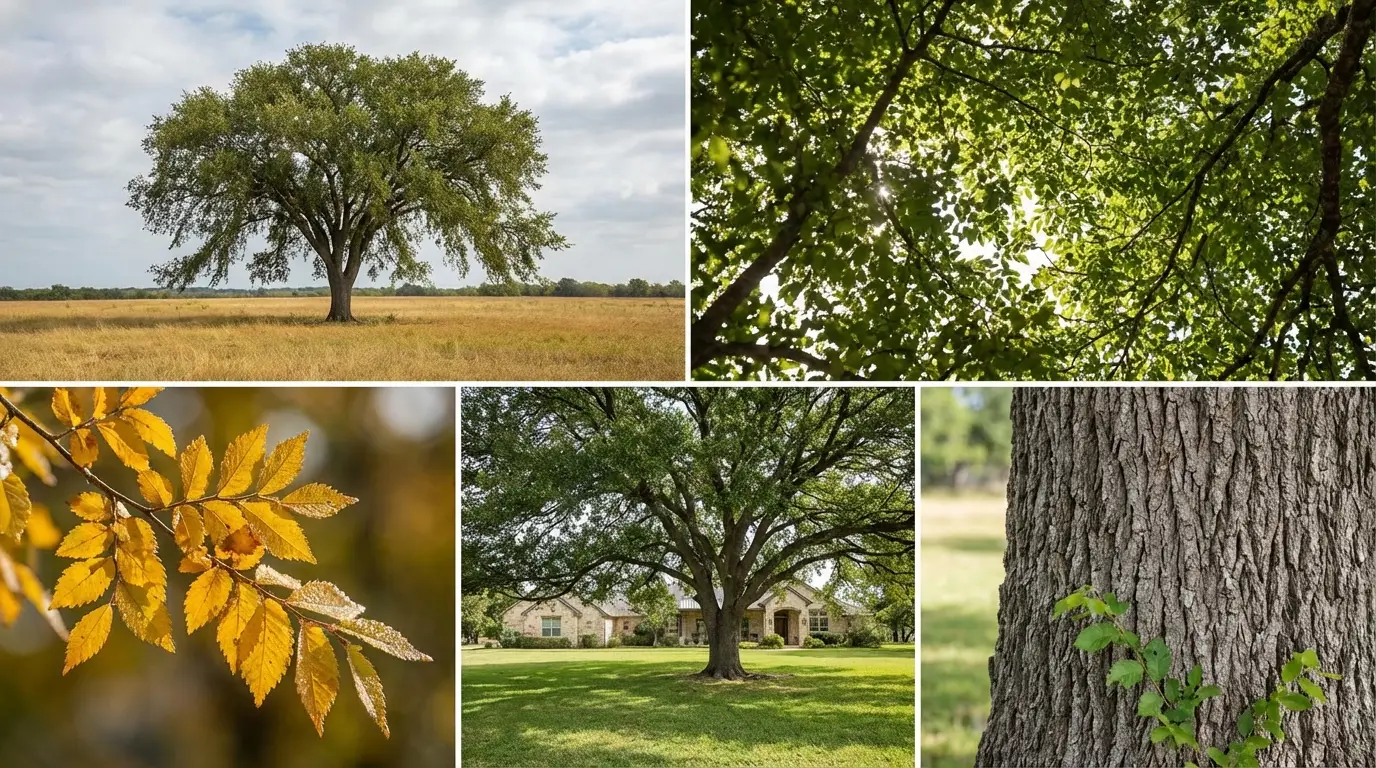
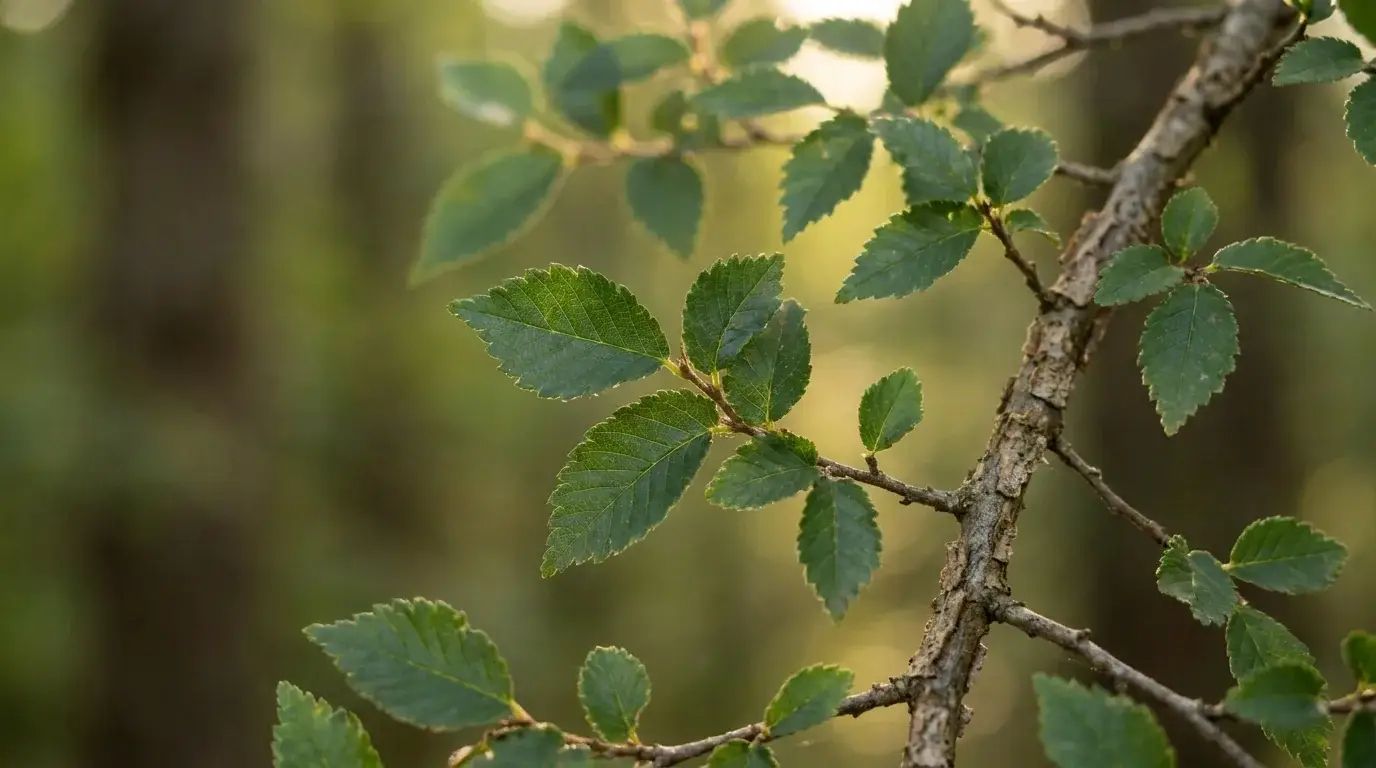
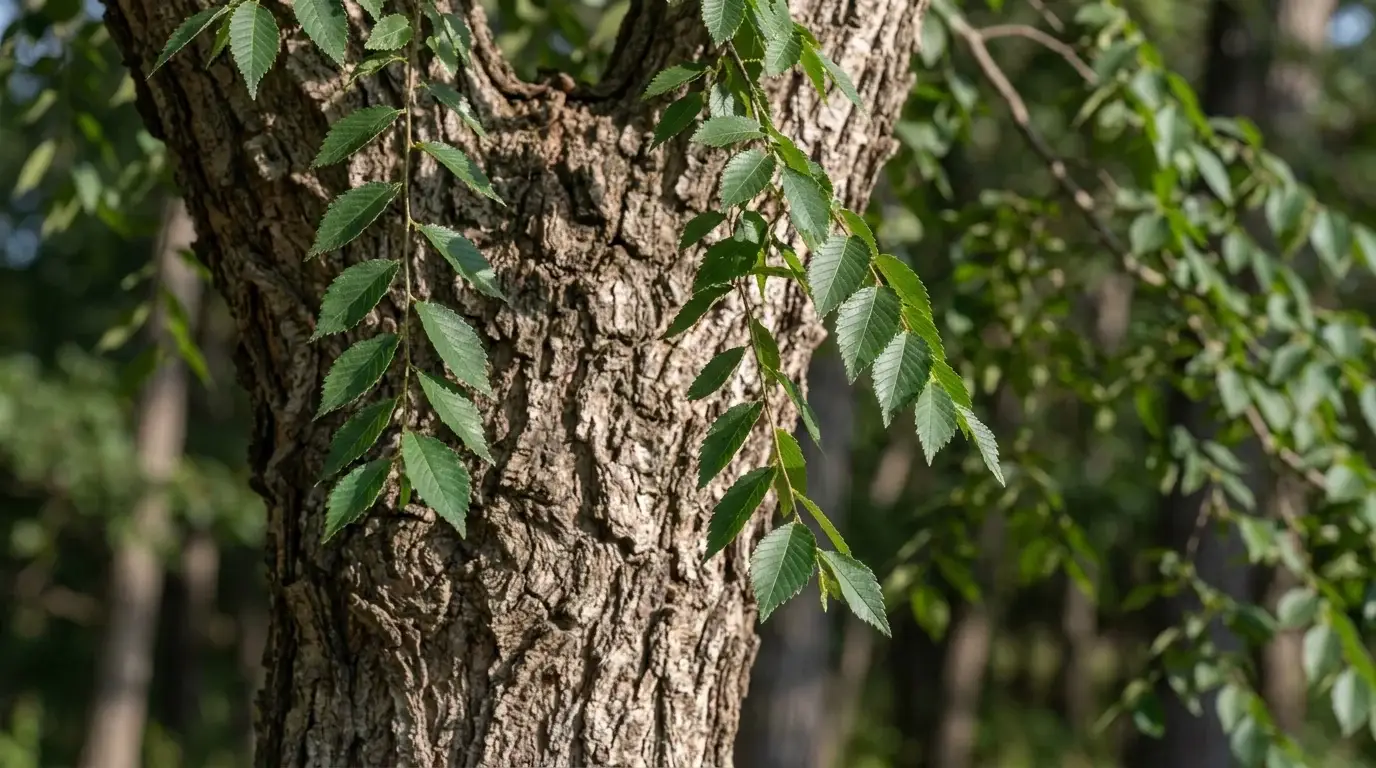
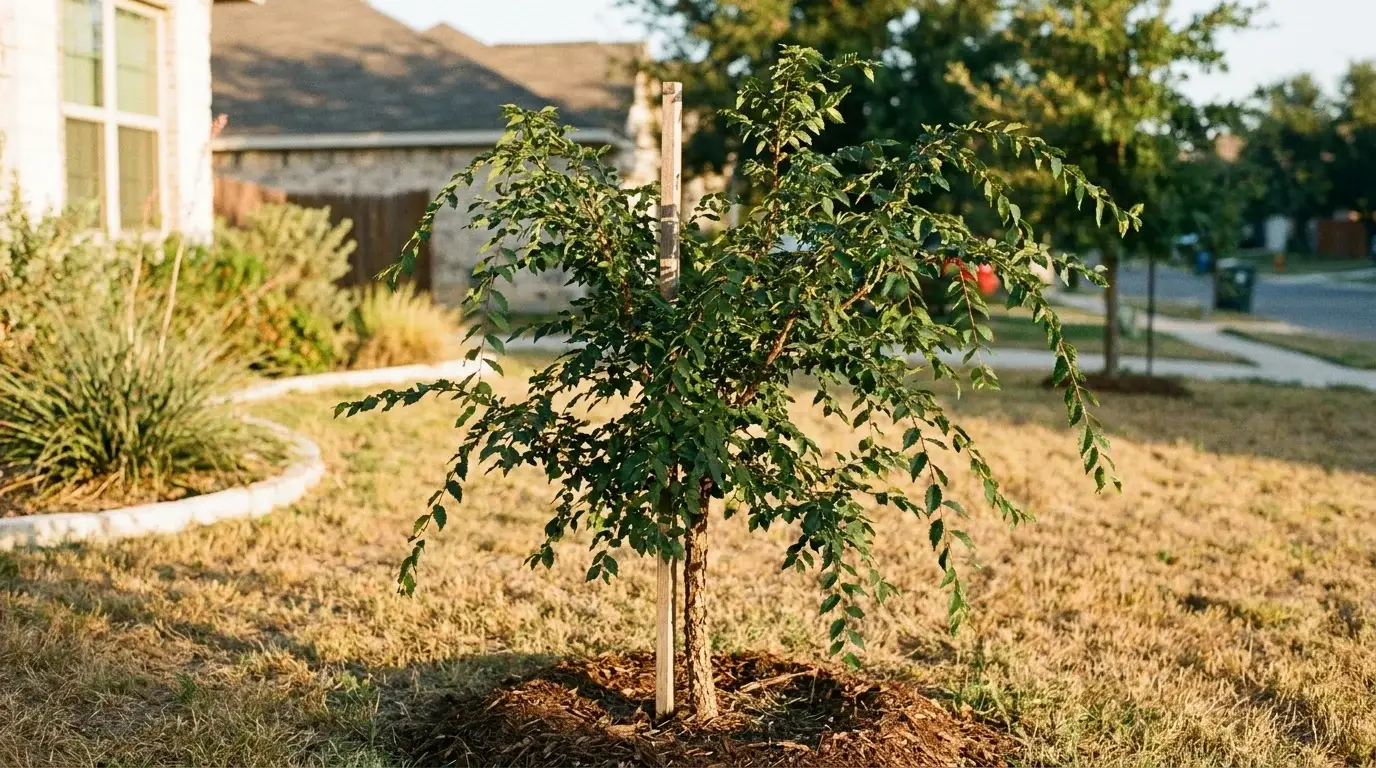
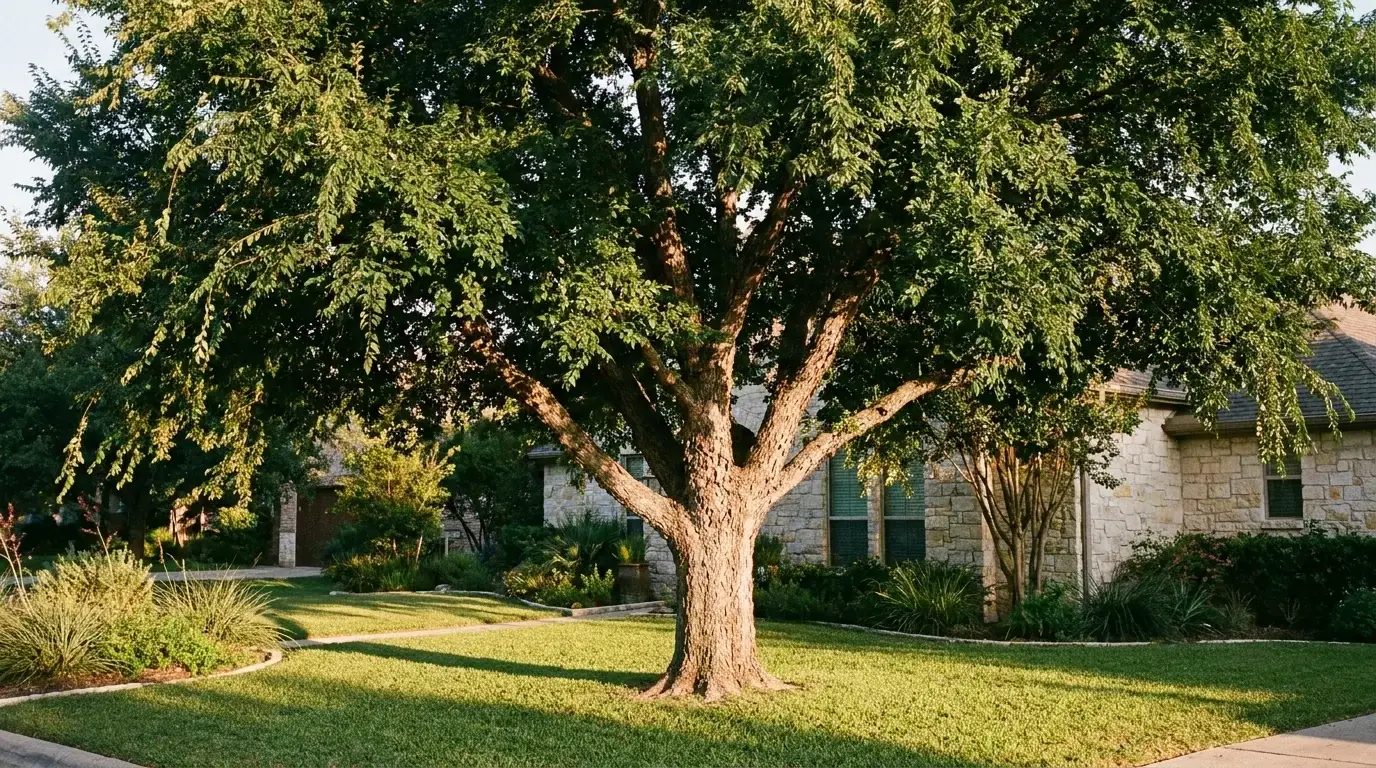
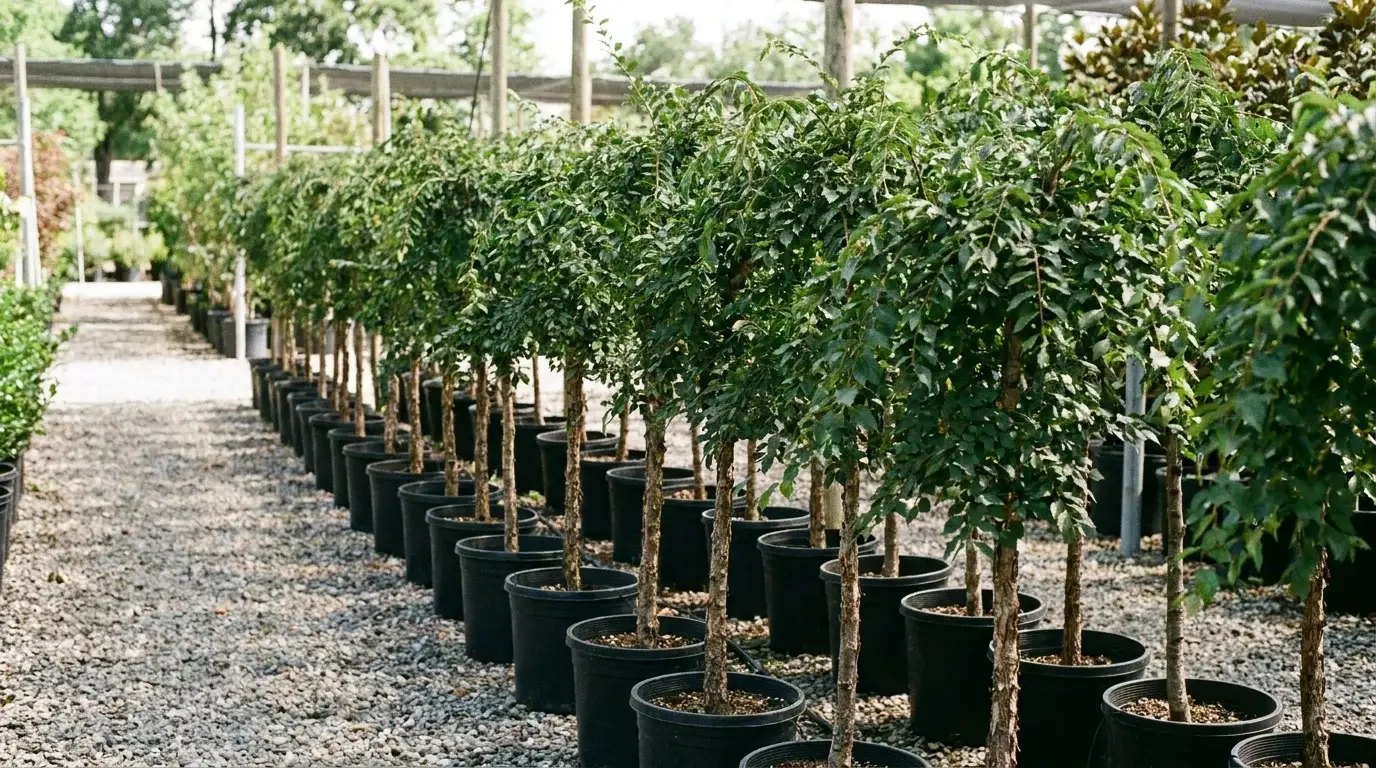
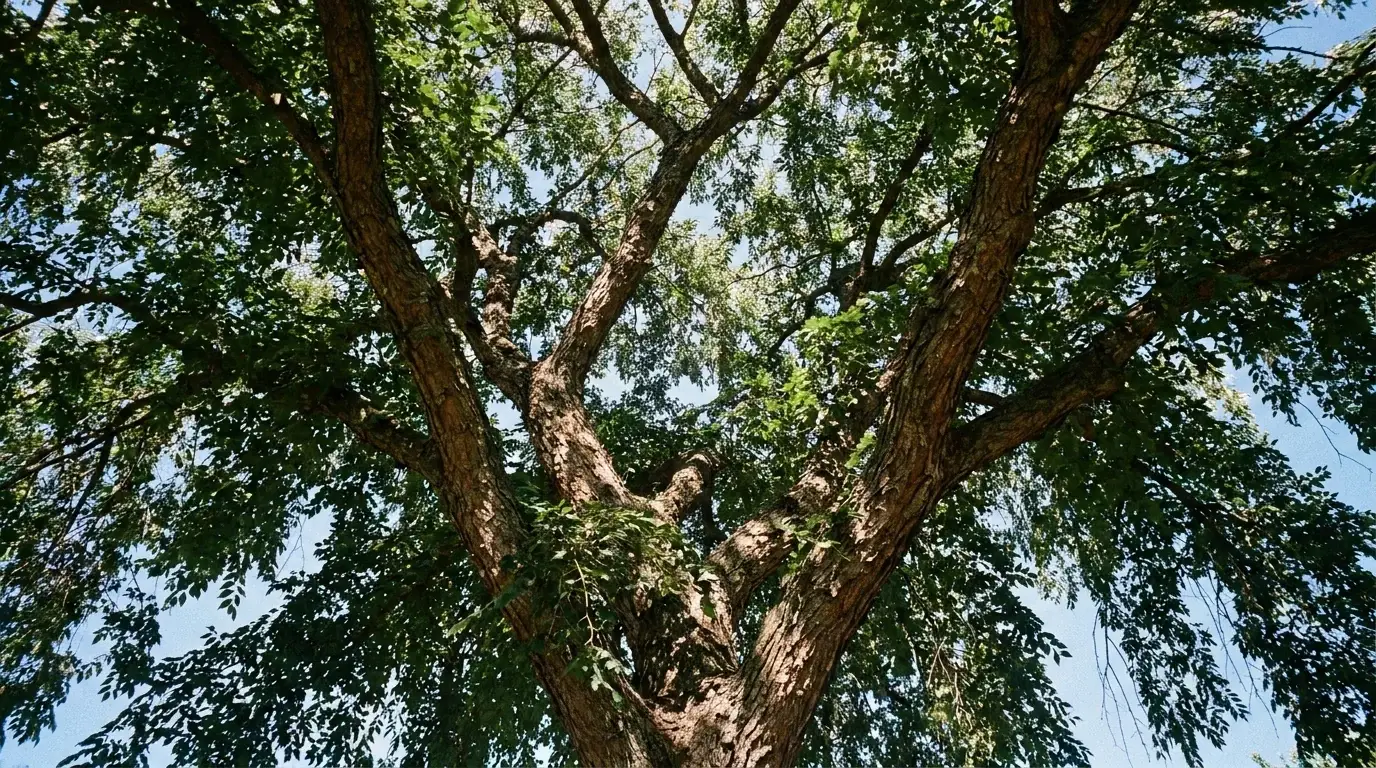
The Cedar Elm (Ulmus crassifolia) is the most common native elm in Texas and one of the toughest shade trees for San Antonio’s heat and alkaline soils. It grows quickly, tolerates drought once established, and provides reliable shade with a graceful vase-shaped canopy. Alfaro Tree Sales has been growing and planting Cedar Elms at our 40-acre nursery in Atascosa since 1976.
Two of San Antonio’s most reliable shade trees — here’s how they compare.
Expected height after planting a 4” caliper tree (18–22 ft at install).
Deep water 2–3×/week for the first growing season. After year 1, once per week. By year 2–3, rainfall is usually sufficient.
Thrives in SA’s alkaline soils without amendment. Apply a balanced 10-10-10 fertilizer in early spring after the first year.
Prune in late winter (Jan–Feb) to maintain shape. Remove dead, crossing, or rubbing branches. Cedar Elms respond well to structural pruning when young.
October through March is ideal. Summer installs require extra watering for the first 60–90 days.
Choose your tree at our nursery or by phone. We deliver it to your property.
Machine-dug hole, native soil backfill, deep watering, and mulch ring installed.
Written care instructions plus a 30-day establishment check from our crew.
Cedar Elms grow 2–3 feet per year under good conditions in San Antonio, reaching 40–50 feet within 15–20 years. Growth depends on soil, sun exposure, and watering during establishment.
Yes. Once established (1–2 years after planting), Cedar Elms are highly drought-tolerant and well-adapted to San Antonio’s hot, dry summers.
Yes — Cedar Elms turn golden yellow in fall, typically in November. They’re one of the few native Texas trees with reliable fall color.
Cedar Elms grow faster (2–3 ft/yr vs. 1–2 ft), have fall color, and are deciduous. Live Oaks are evergreen with wider canopy spread but grow more slowly. Cedar Elms are also less susceptible to oak wilt.
October through March is ideal. Our team plants year-round — summer installs just require more attentive watering for the first 60–90 days.
We offer Cedar Elms from younger trees to large, mature specimens with immediate shade impact. All are field-grown at our 40-acre nursery in Atascosa. Call (210) 622-9875 or visit to see current inventory.
Yes. We provide professional delivery and planting across the San Antonio metro and surrounding areas. Our team handles transport, planting, mulching, and post-care guidance. Request a free quote.
Cedar Elms drop their leaves in late fall/early winter, which is typical for deciduous trees. They produce small samaras (winged seeds) in fall but are not considered excessively messy compared to other shade trees.