
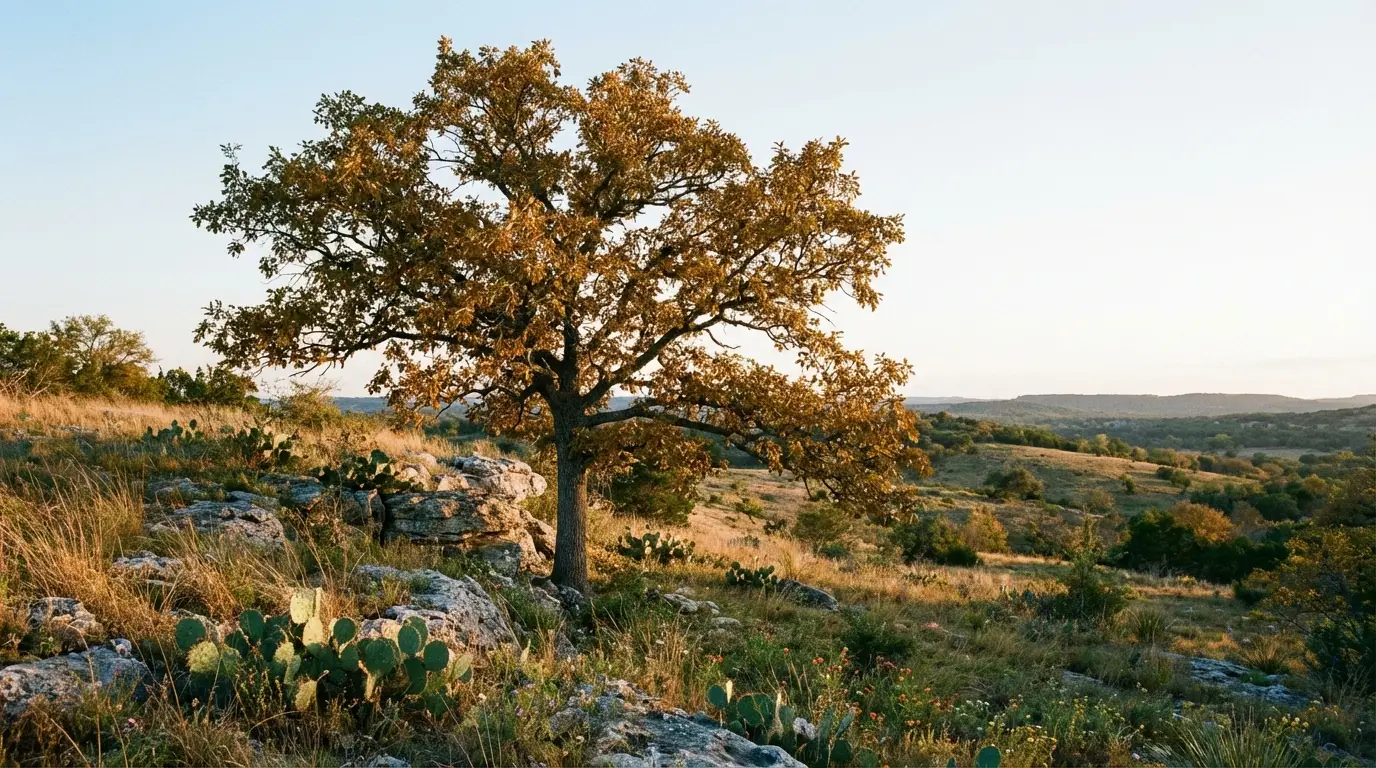
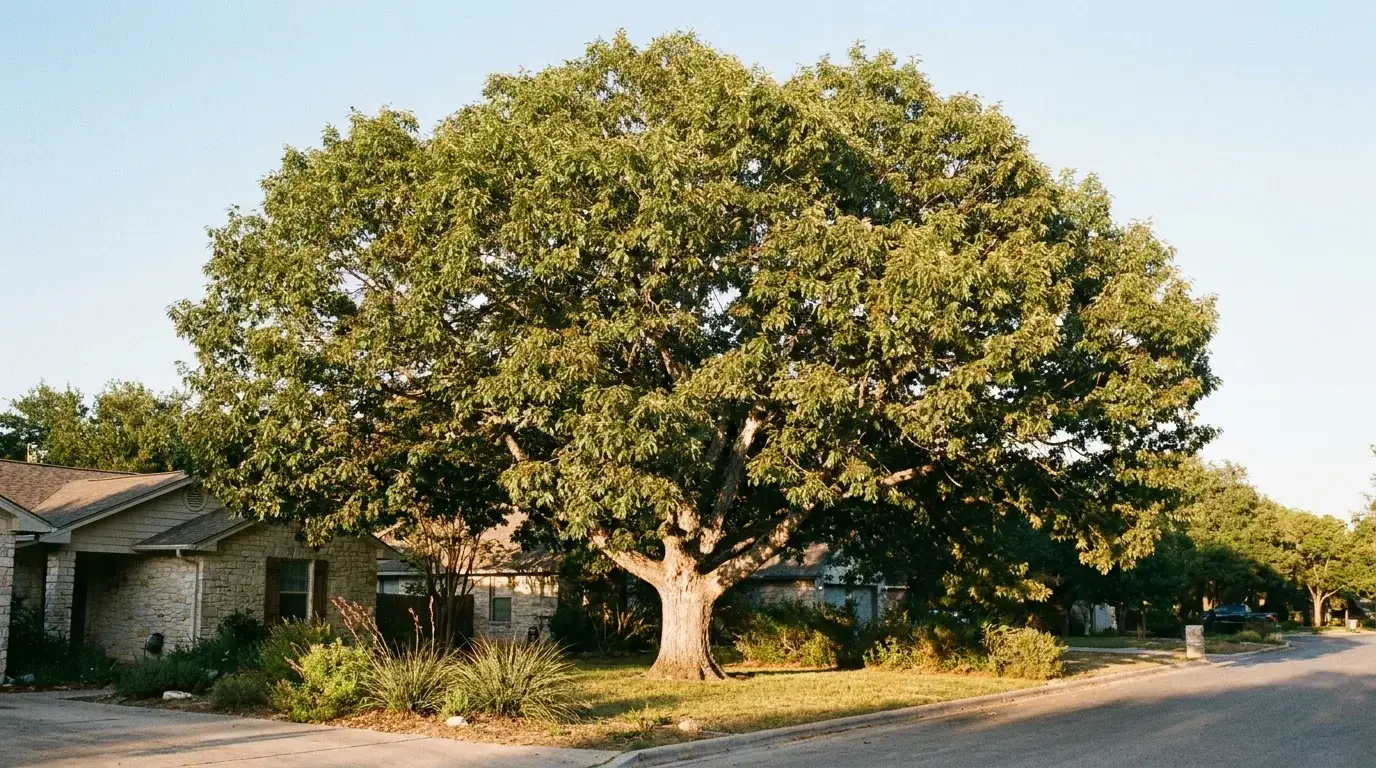
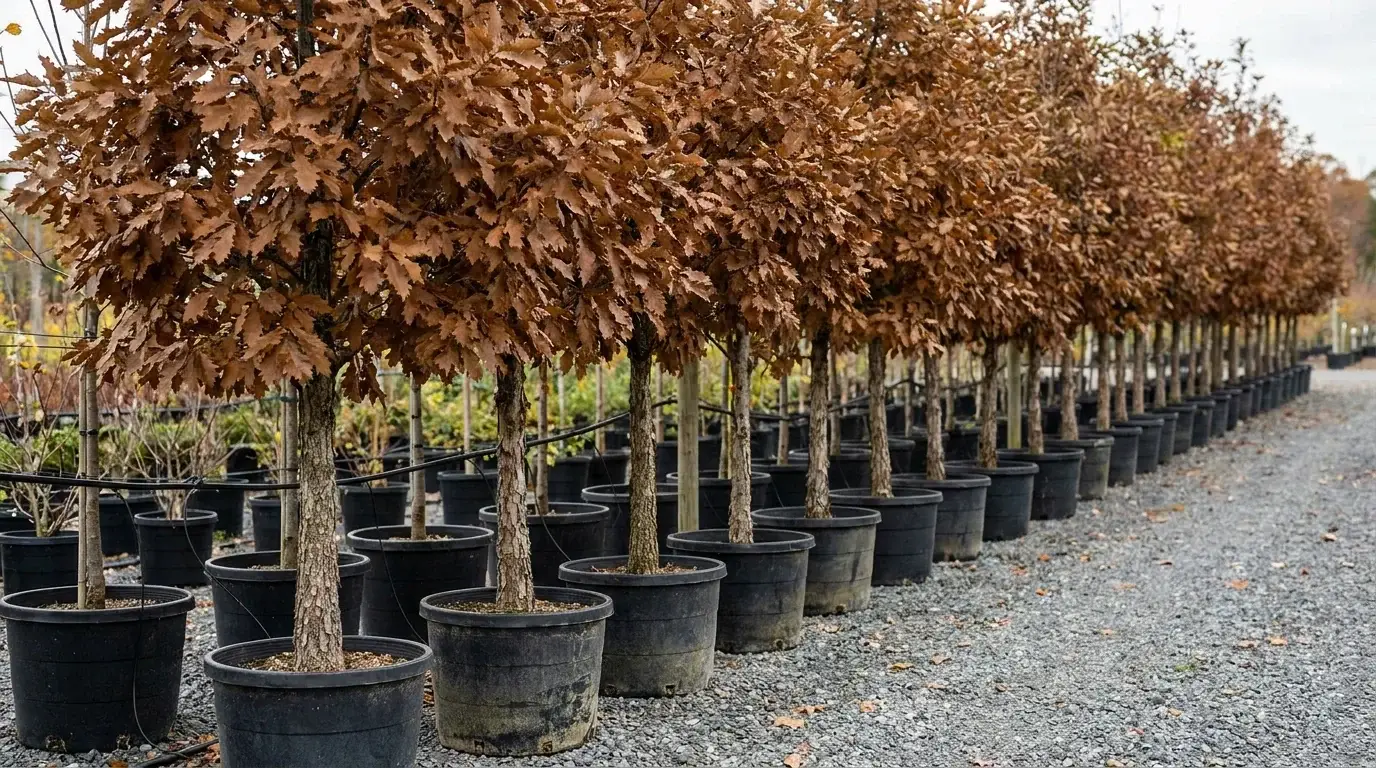
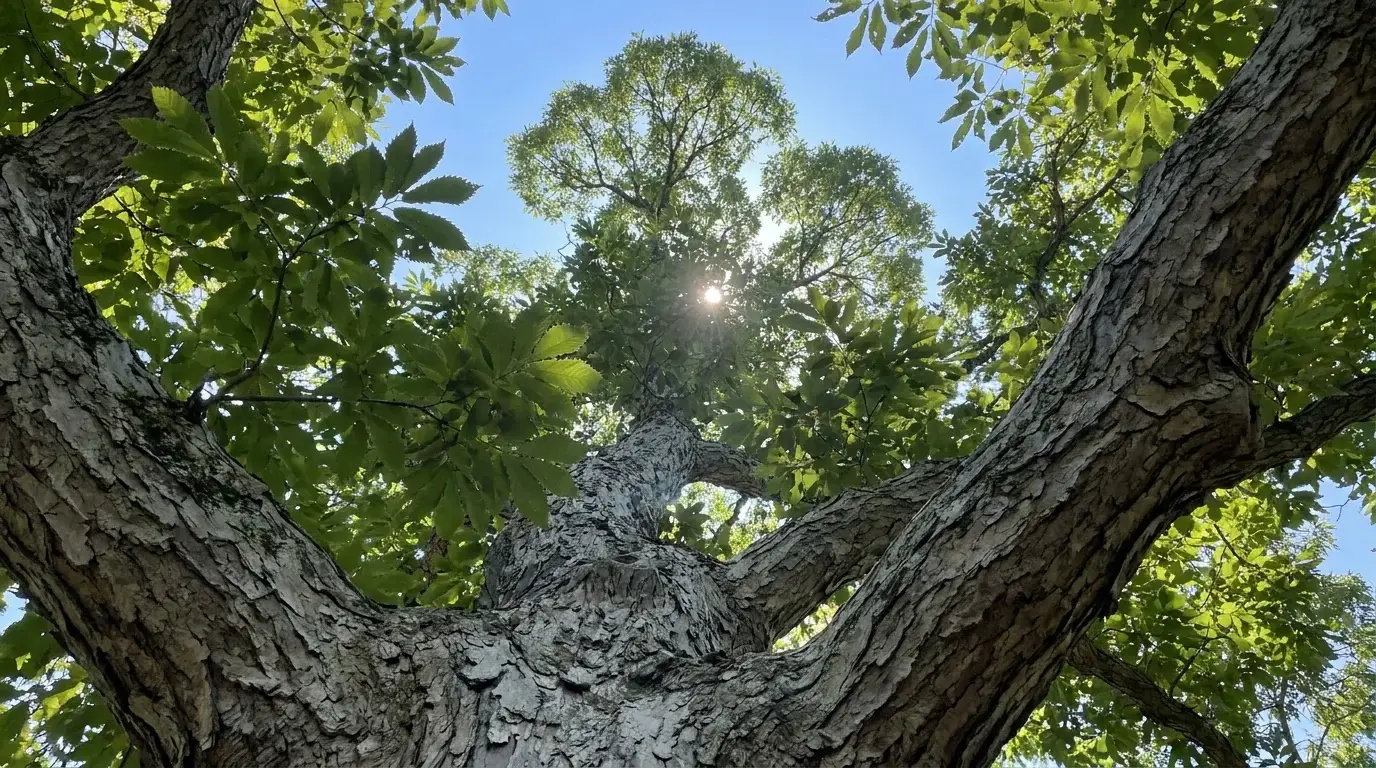
The Chinquapin Oak (Quercus muehlenbergii) is one of the best native oaks for San Antonio’s alkaline, limestone-rich soils. With attractive chestnut-like leaves, yellow-bronze fall color, and a stately canopy reaching 40–60 feet, it’s an underappreciated gem. Alfaro Tree Sales grows Chinquapin Oaks at our 40-acre nursery in Atascosa.
While many trees struggle in San Antonio’s highly alkaline, limestone-based soils, the Chinquapin Oak actually thrives in these conditions. It’s one of the best oaks for properties with shallow, rocky soil over limestone bedrock.
Two great shade oaks for SA — one loves limestone even more.
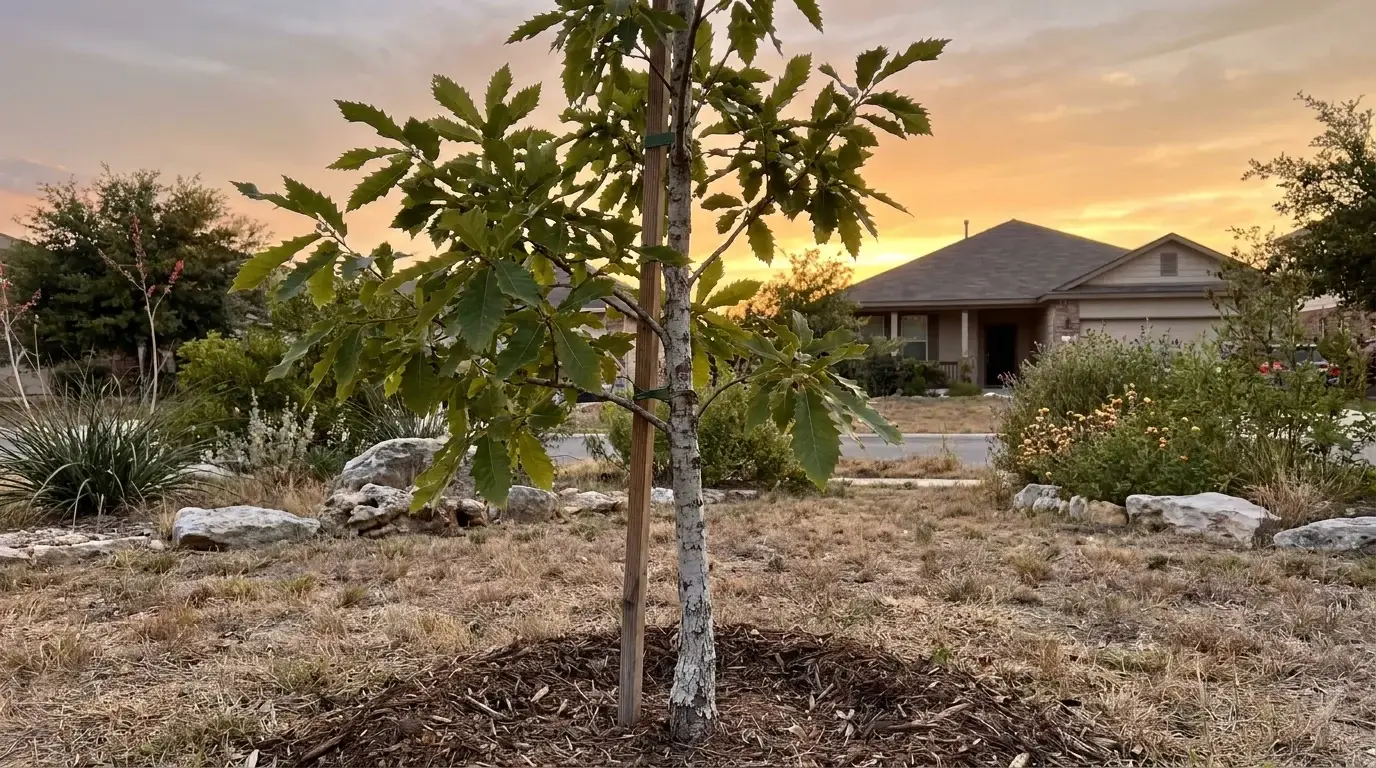
Expected height after planting a 3” caliper tree (12–16 ft at install).
Deep water 2–3×/week for the first season. Once established, quite drought-tolerant with supplemental water only during extended dry spells.
Perfect for SA’s alkaline limestone soils — no amendments needed. Light fertilization in spring after year 1.
Prune in mid-winter. Develop a strong central leader when young. Minimal pruning once mature.
October through March is ideal. Fall planting allows root establishment before summer.
Choose your tree at our nursery or by phone. We deliver it to your property.
Machine-dug hole, native soil backfill, deep watering, and mulch ring installed.
Written care instructions plus a 30-day establishment check from our crew.
Chinquapin Oaks grow 1–2 feet per year, which is moderate. They compensate with excellent longevity and a beautiful mature form.
Yes. As a member of the white oak family, Chinquapin Oaks show good resistance to oak wilt disease.
They’re one of the best oaks for our alkaline, limestone soils. Many oaks struggle with iron chlorosis in our soil, but Chinquapins thrive.
Yes — they develop attractive yellow-bronze fall foliage, typically in November.
October through March is ideal. Year-round planting available with proper watering.
We offer Chinquapin Oaks from younger trees to mature specimens. Field-grown at our nursery in Atascosa. Call (210) 202-4284.
Yes. Professional delivery and planting across the SA metro. Request a free quote.
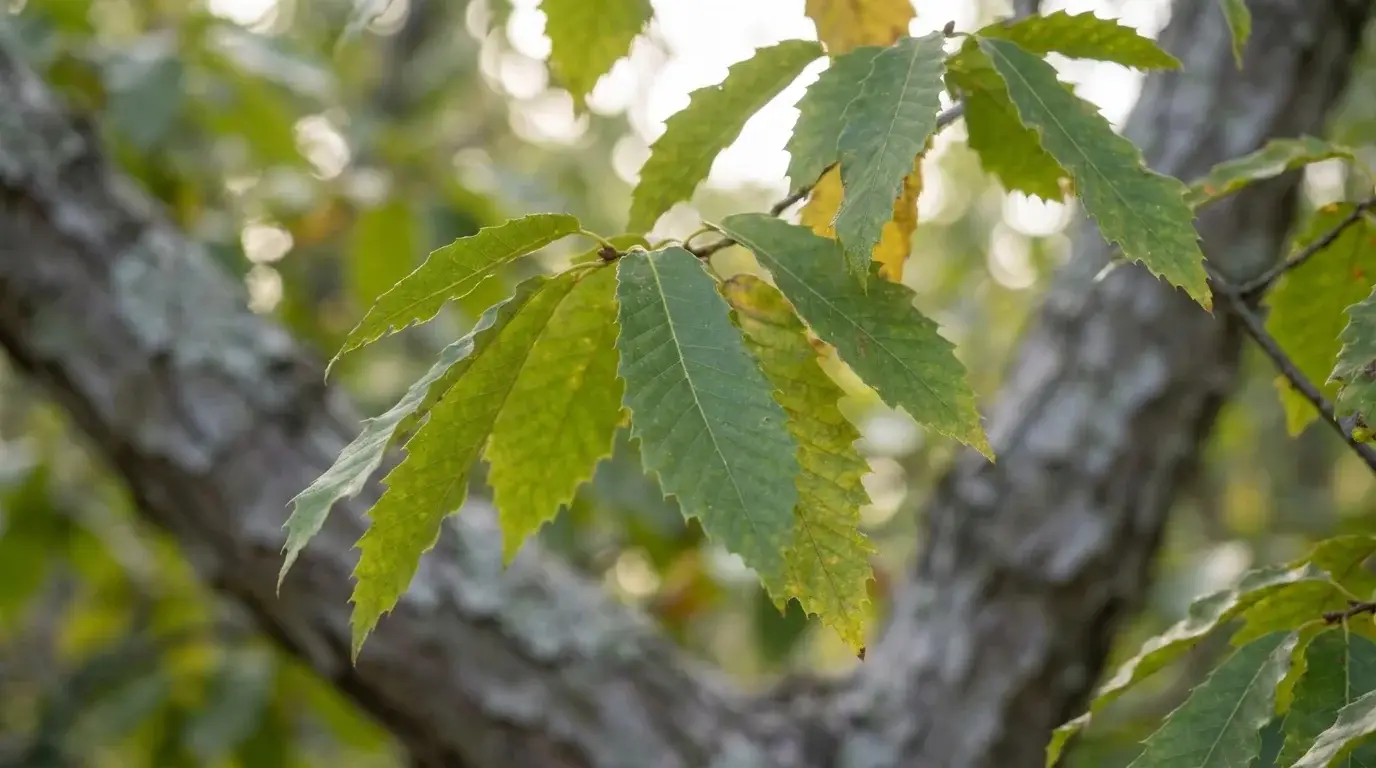
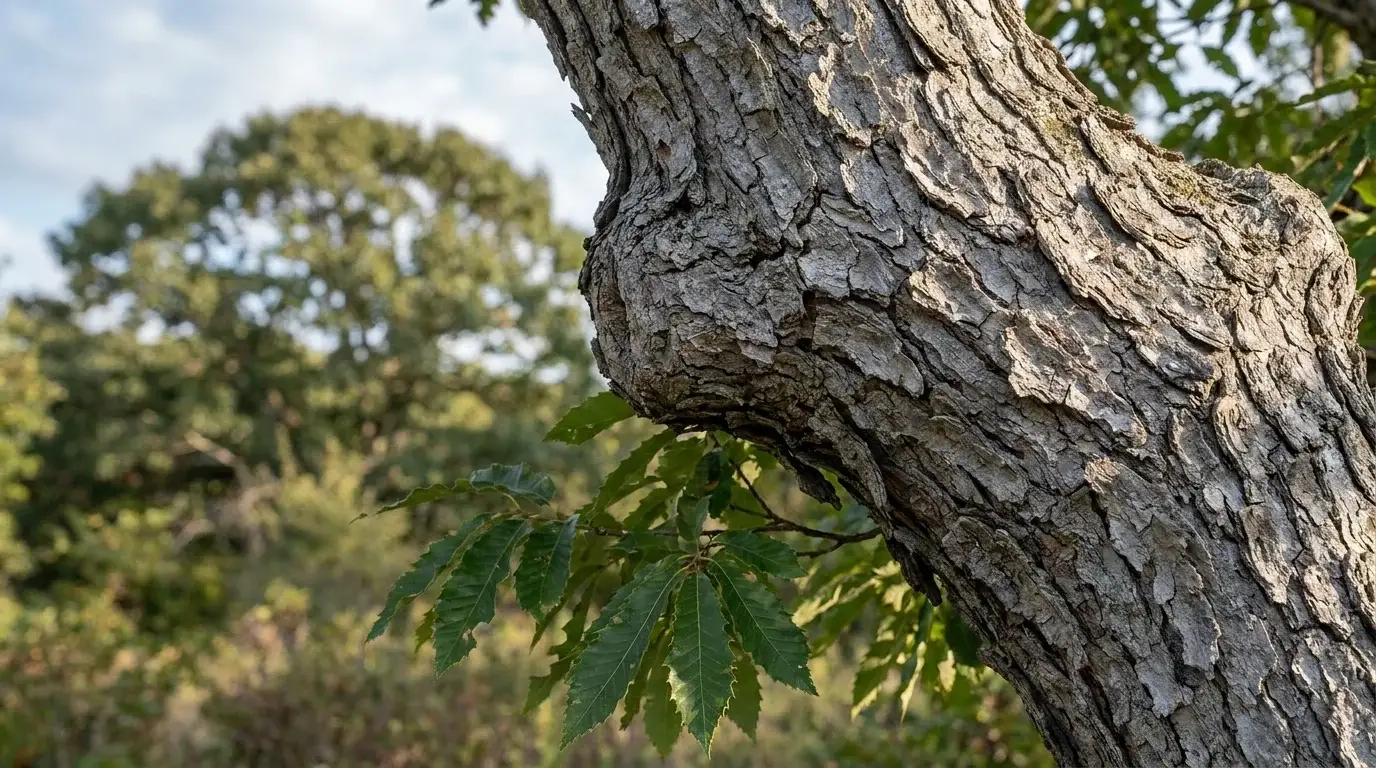
The leaves are distinctive — they resemble chestnut leaves with coarse, pointed teeth along the margins, unlike the lobed leaves of most oaks.