
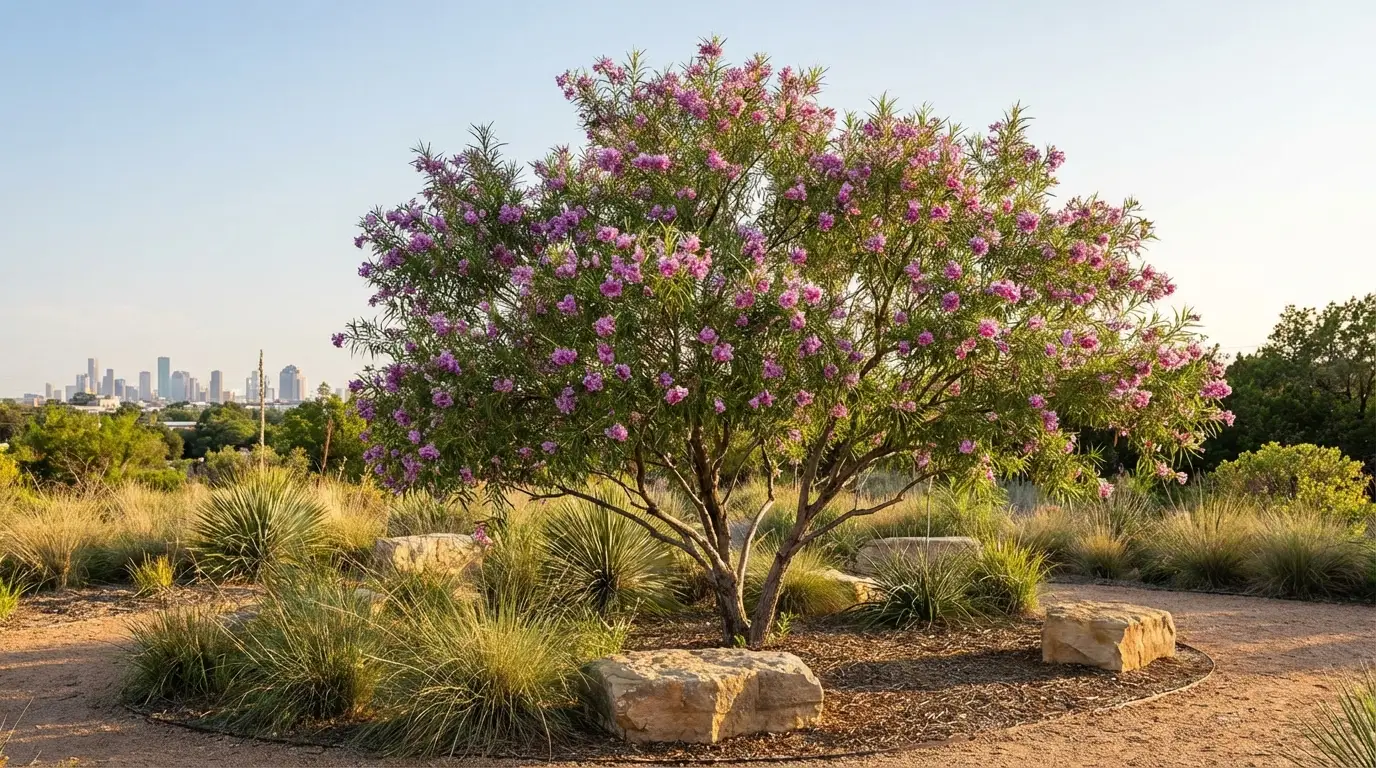
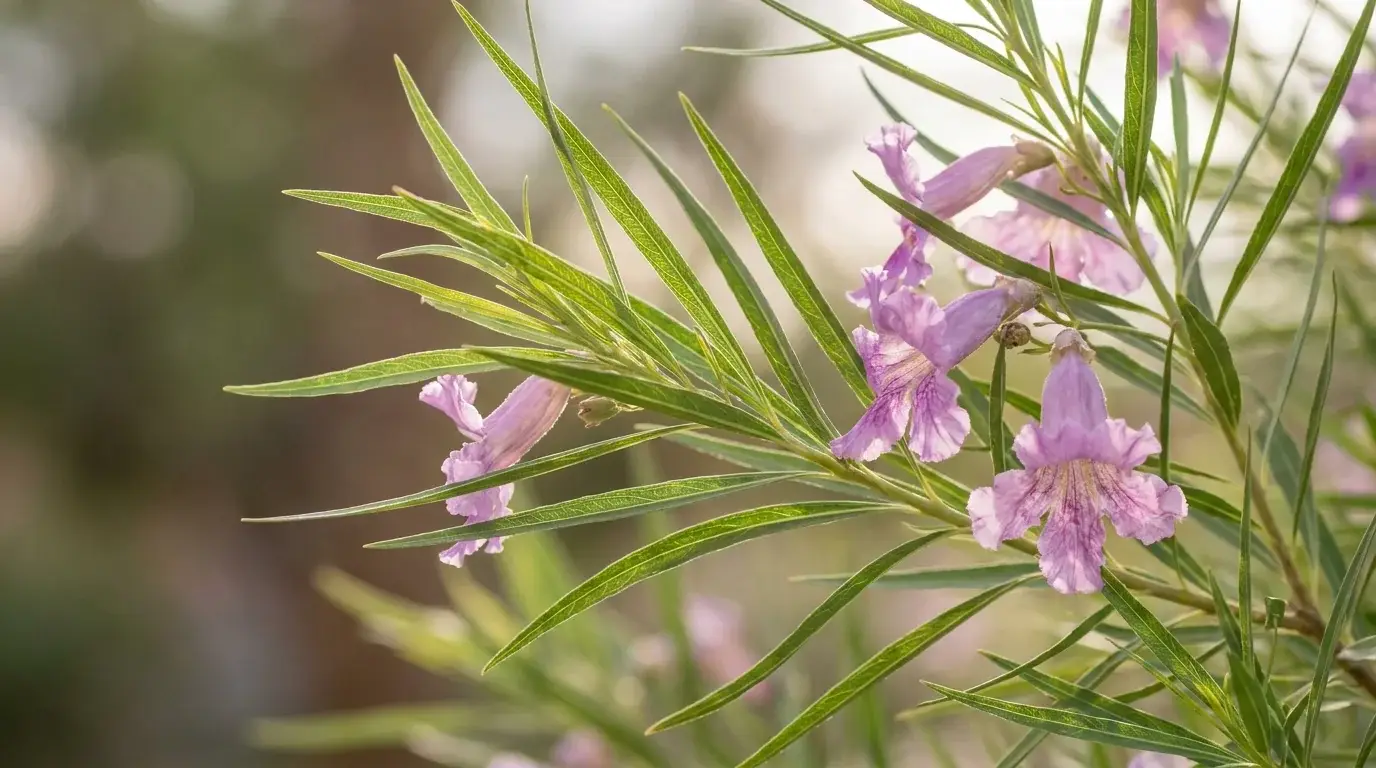
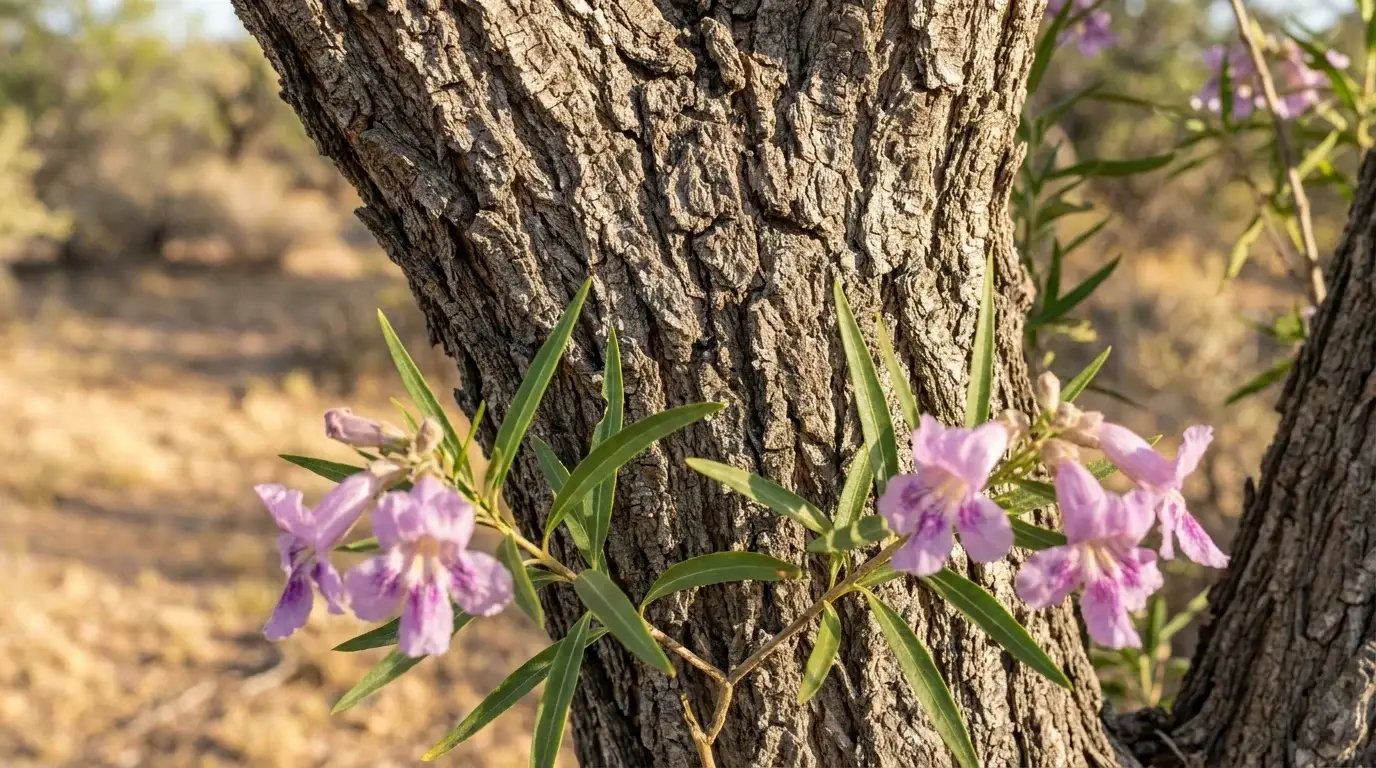
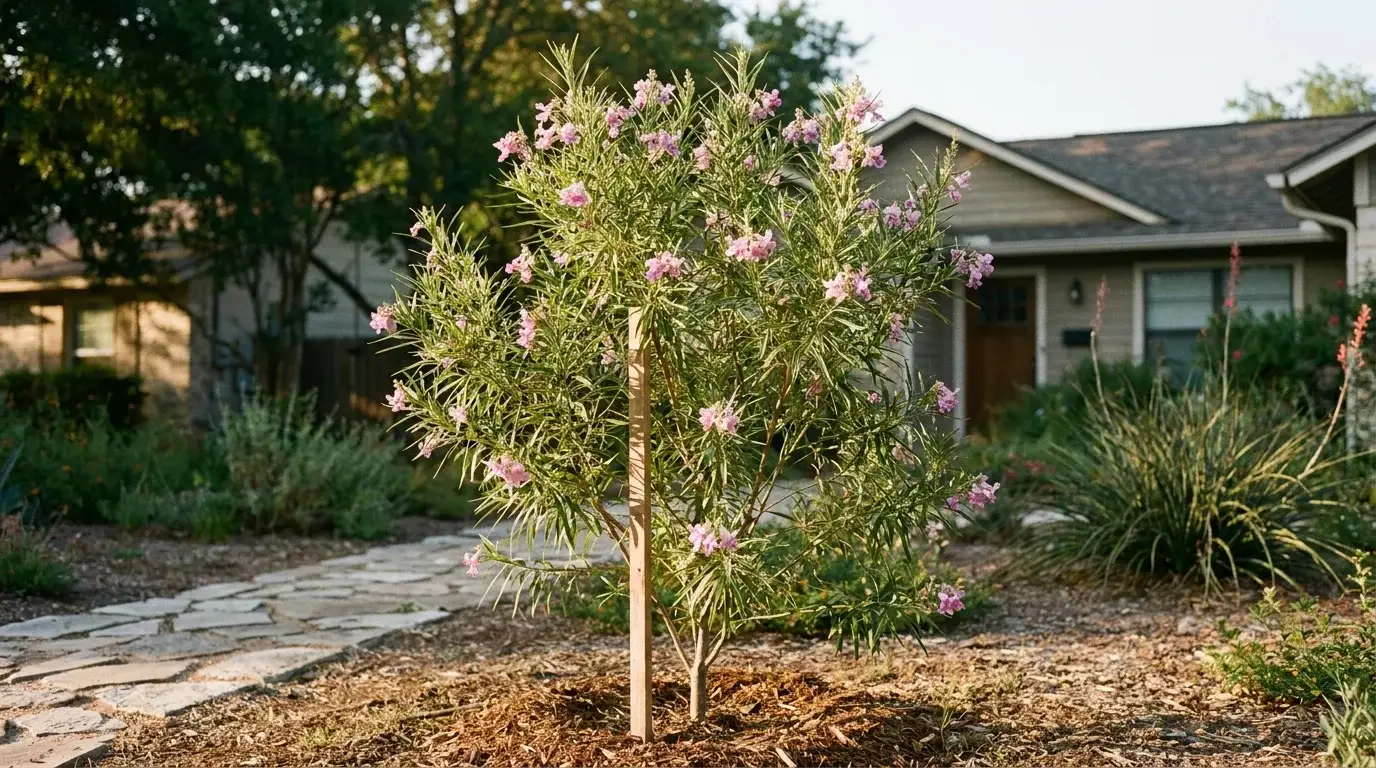
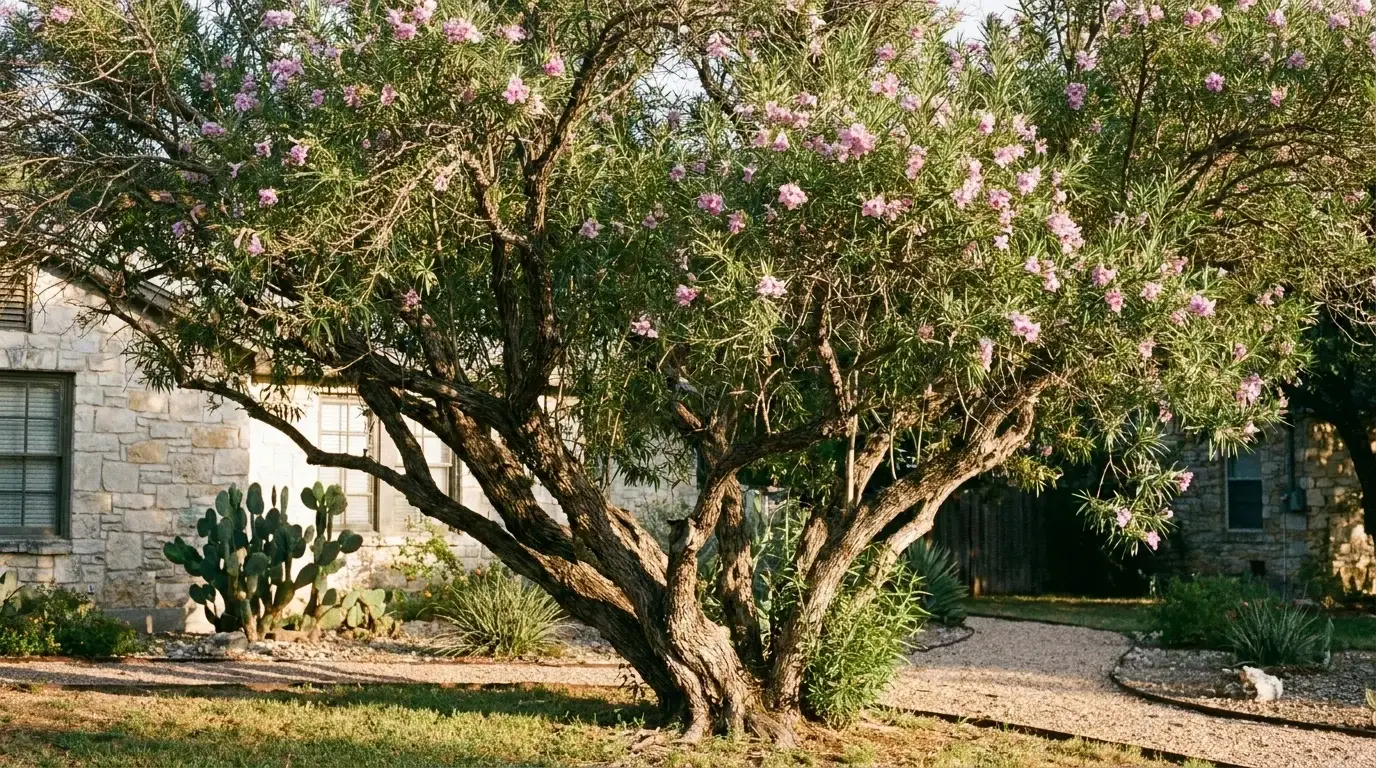
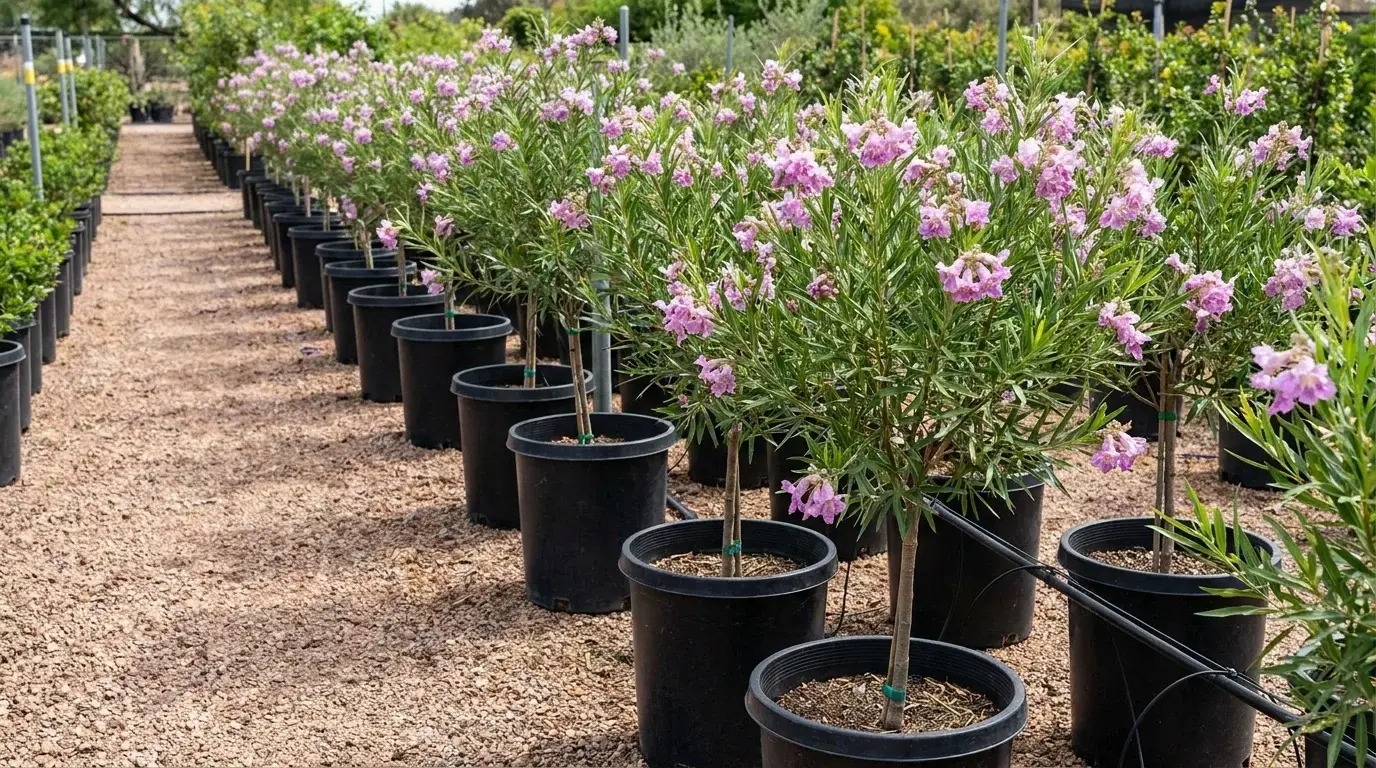
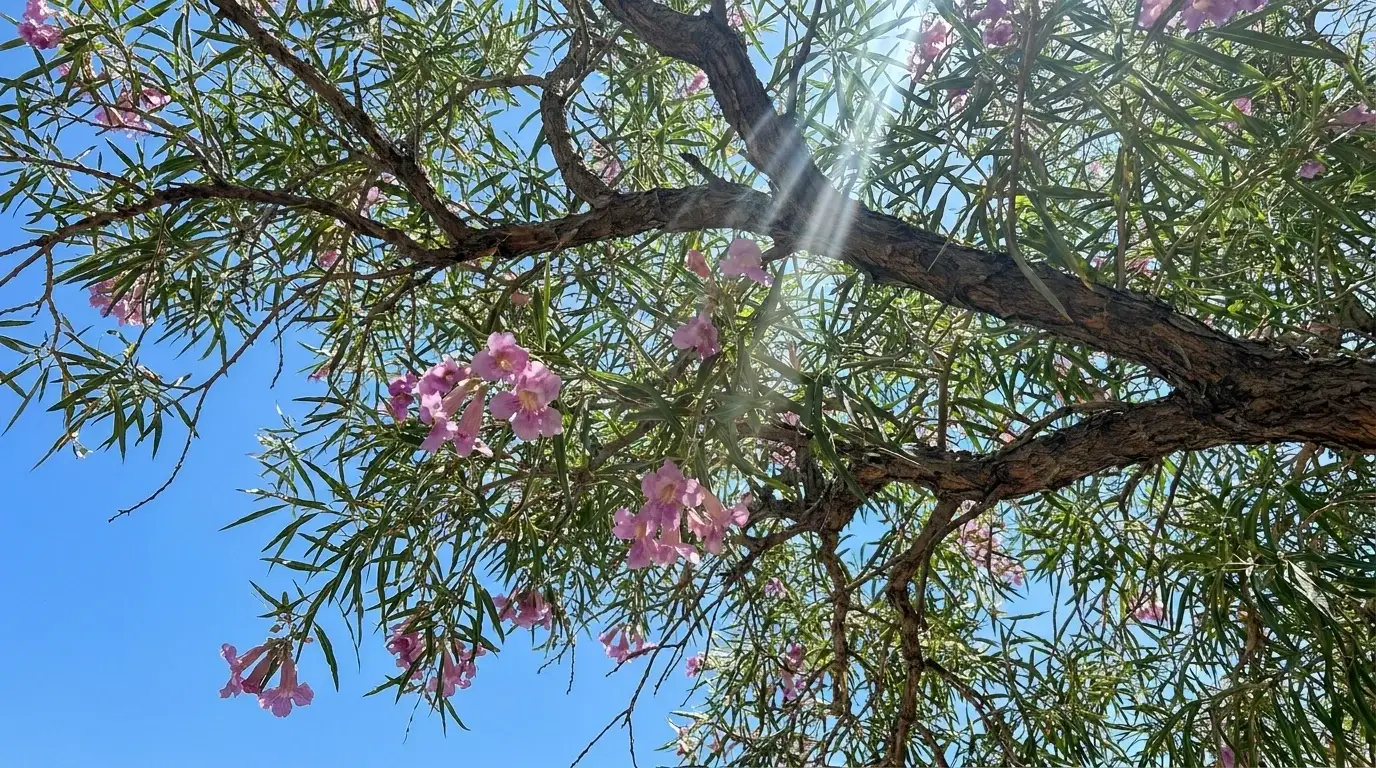
The Desert Willow (Chilopsis linearis) is a graceful native flowering tree that produces stunning pink, purple, and burgundy trumpet-shaped flowers from late spring through fall. It’s one of the most drought-tolerant trees available and thrives in San Antonio’s heat. Alfaro Tree Sales grows Desert Willows at our 40-acre Atascosa nursery.
Desert Willows produce showy, trumpet-shaped flowers in shades of pink, purple, and burgundy from May through October. The long bloom season and hummingbird attraction make it one of the showiest native trees for San Antonio.
Two of SA’s most popular flowering trees compared.
Expected height after planting a 2” caliper tree (6–10 ft at install).
Very minimal once established. Deep soak every 2–3 weeks in the first season. Overwatering can actually reduce flowering.
Thrives in poor, dry soils. Must have good drainage. No fertilizer needed — lean soil encourages more flowers.
Prune in late winter to shape and remove crossing branches. Can be trained as a single-trunk tree. Deadheading spent blooms encourages more flowers.
March through May is ideal for warm-season establishment. Fall planting works too in mild years.
Choose your tree at our nursery or by phone. We deliver it to your property.
Machine-dug hole, native soil backfill, deep watering, and mulch ring installed.
Written care instructions plus a 30-day establishment check from our crew.
Desert Willows grow 2–3 feet per year, reaching 15–25 feet within 8–10 years.
From May through October — one of the longest bloom seasons of any tree in San Antonio. Peak flowering is typically June–August.
No — they’re not related to true willows. The name comes from their narrow, willow-like leaves. They’re in the Catalpa family.
Yes! The trumpet-shaped flowers are a favorite of hummingbirds, butterflies, and native pollinators.
March through May is ideal. They establish quickly in warm soil.
We offer Desert Willows in various sizes. Field-grown at our nursery in Atascosa. Call (210) 622-9875.
Yes. Professional delivery and planting across the SA metro. Request a free quote.
They drop long seed pods in fall/winter and leaves in late fall. The pods can be pruned off if desired. Overall maintenance is low.