
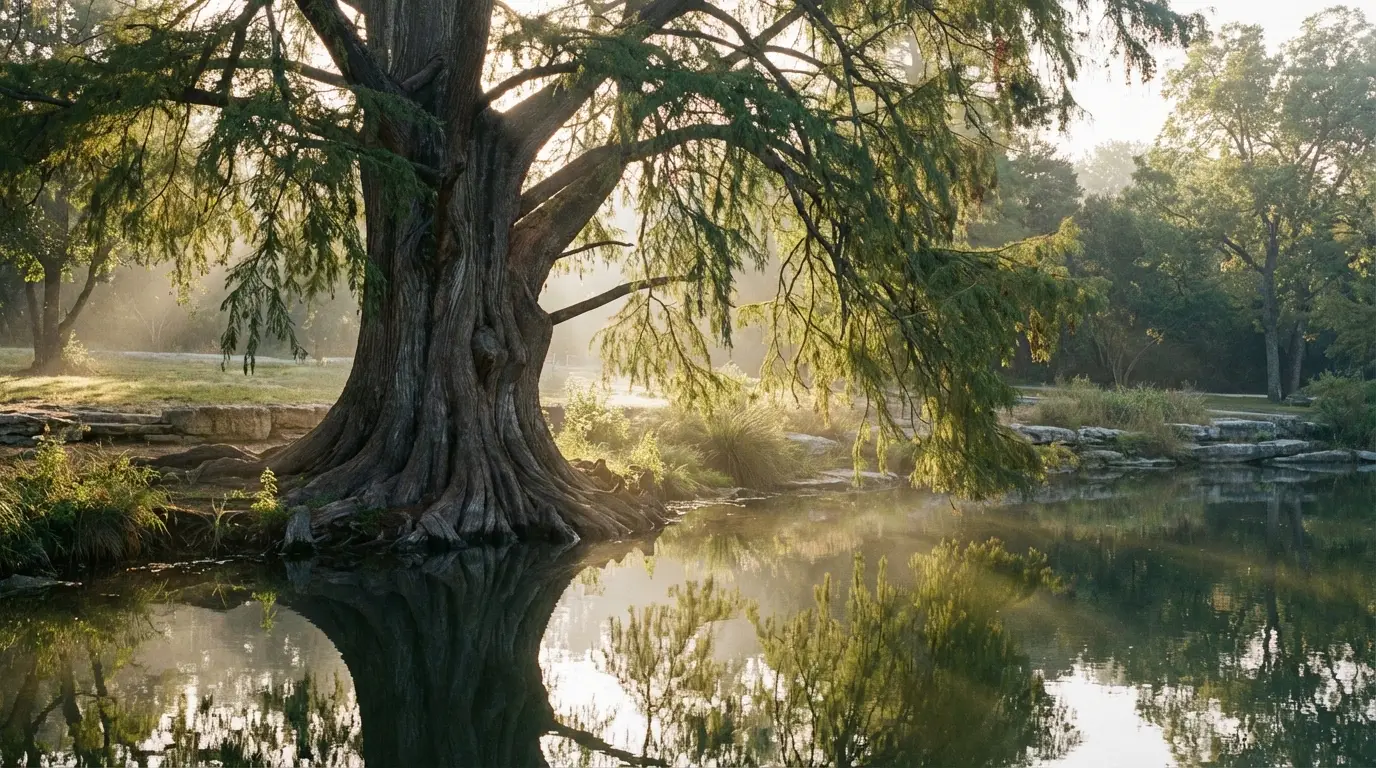
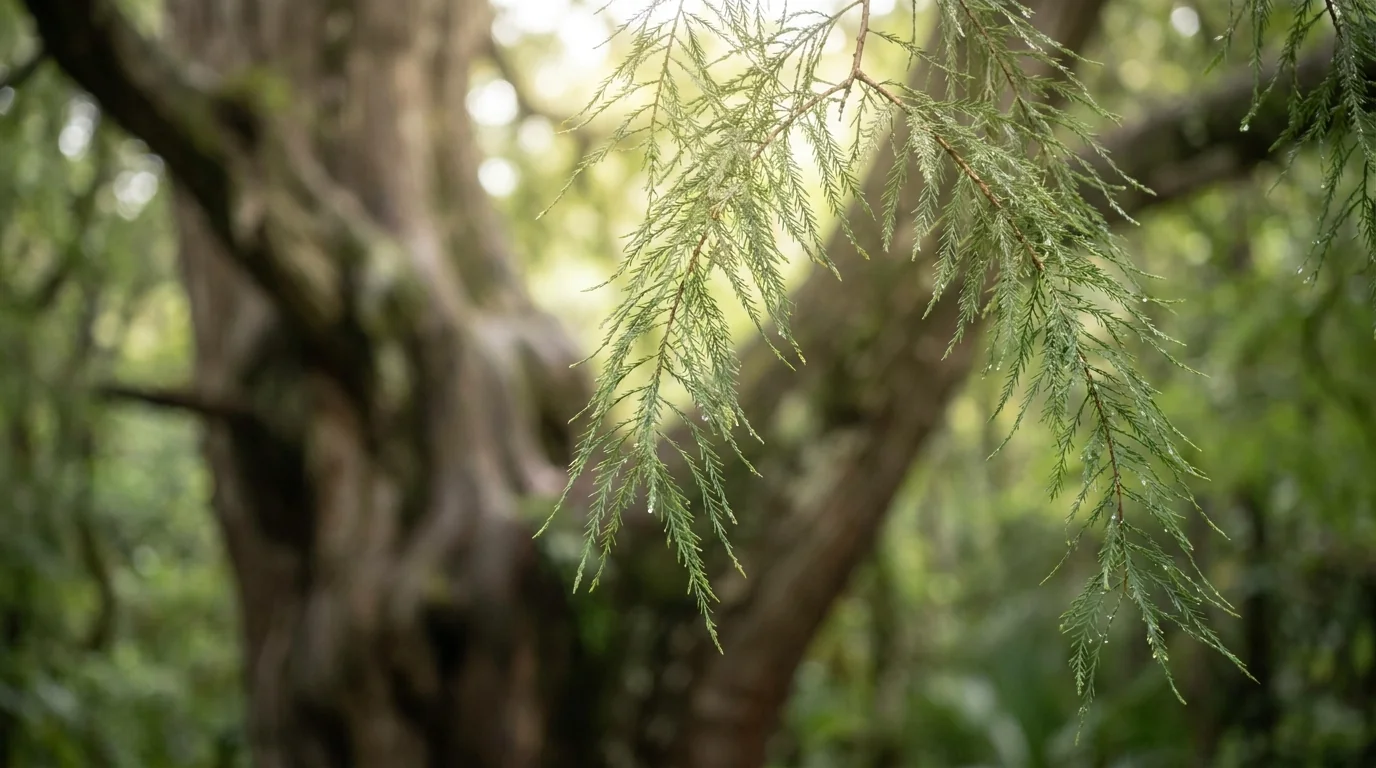
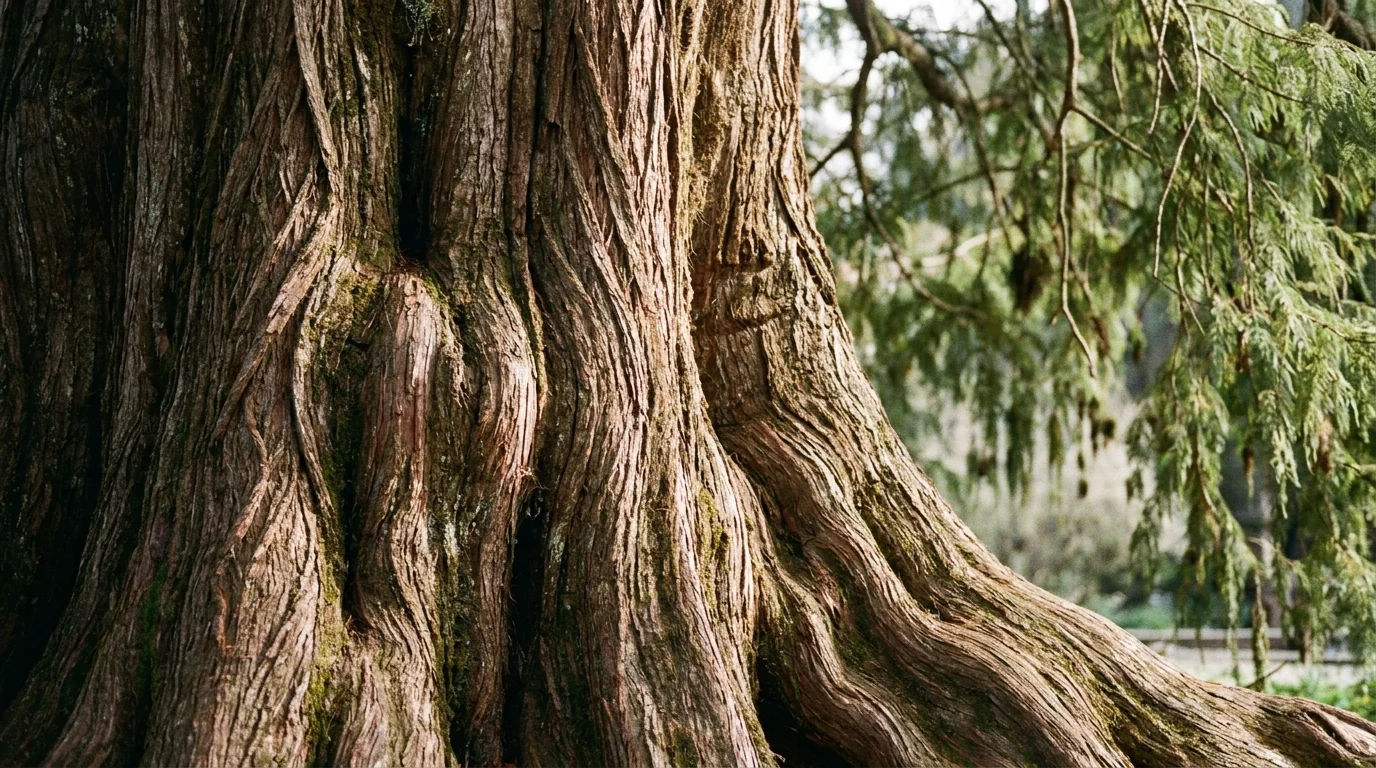
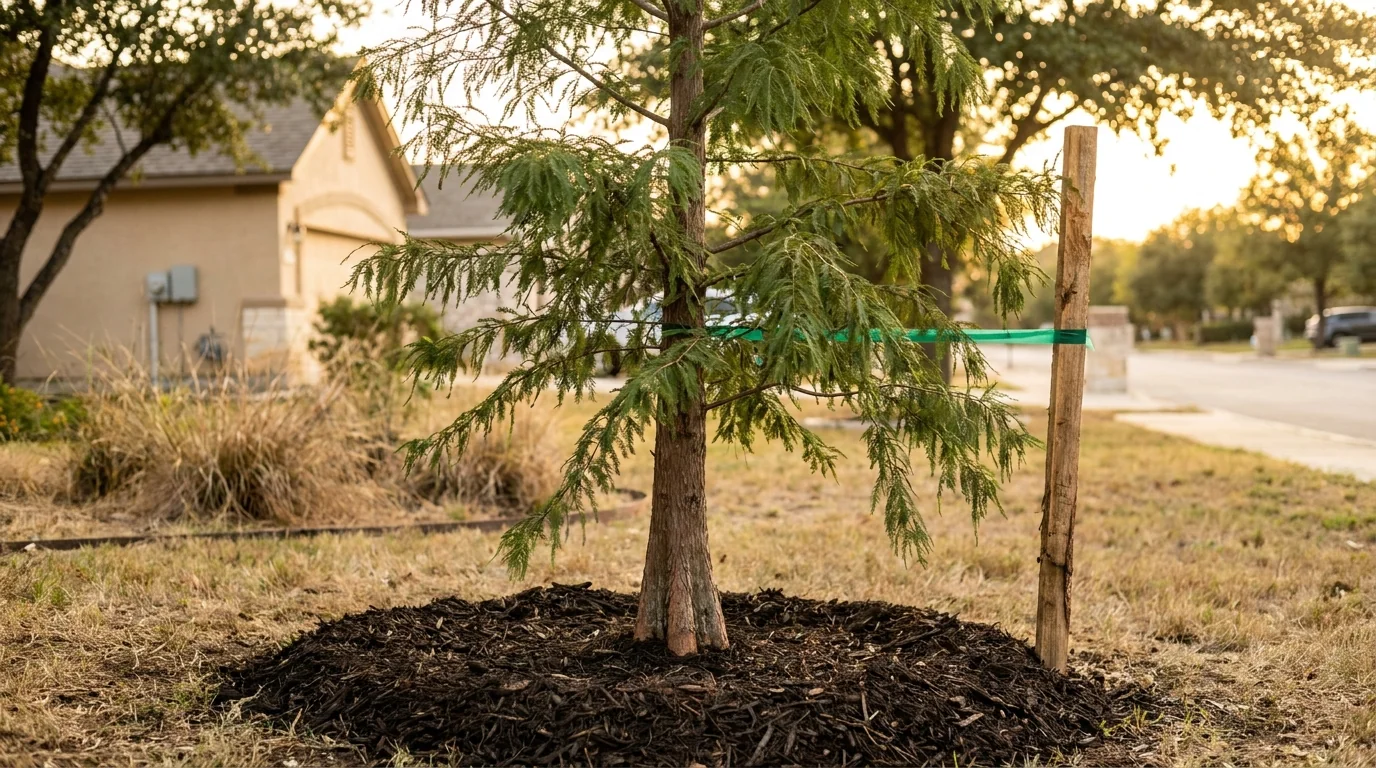
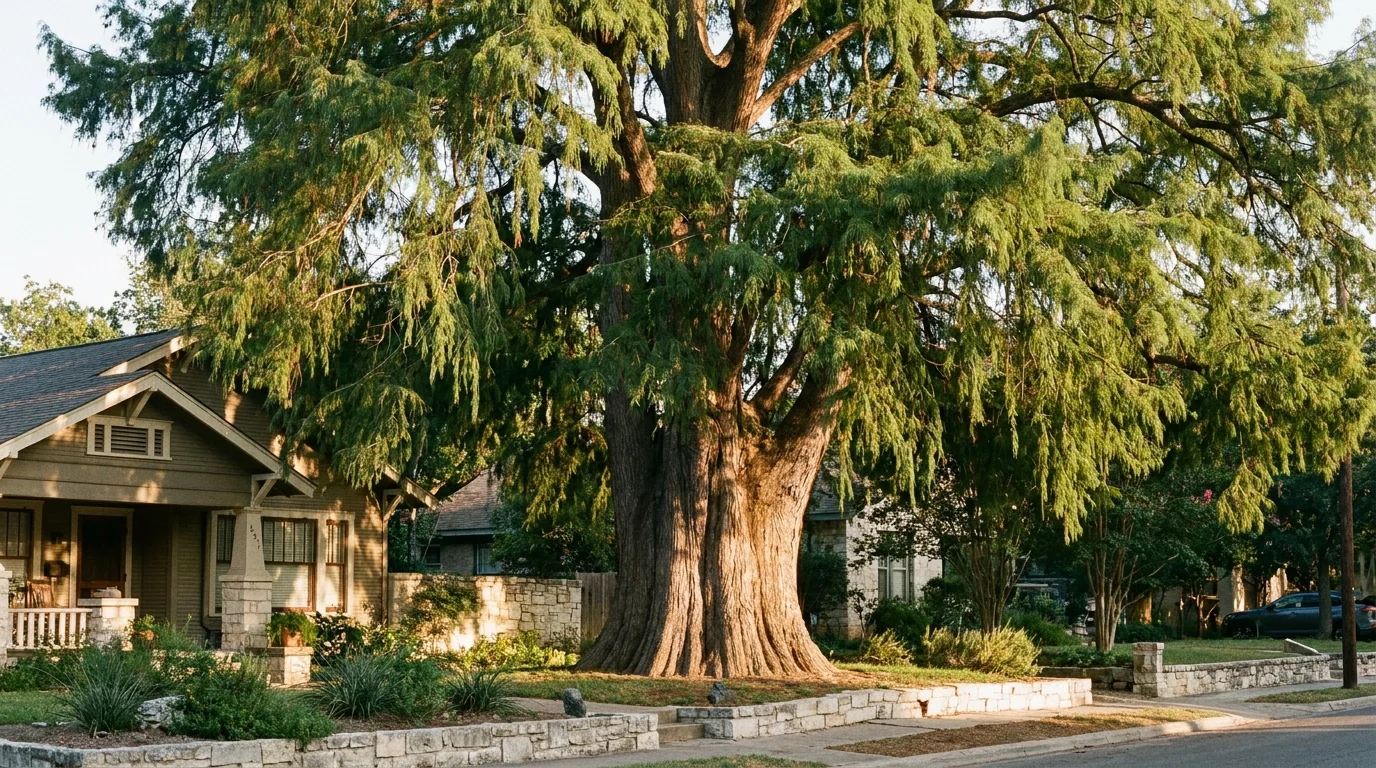
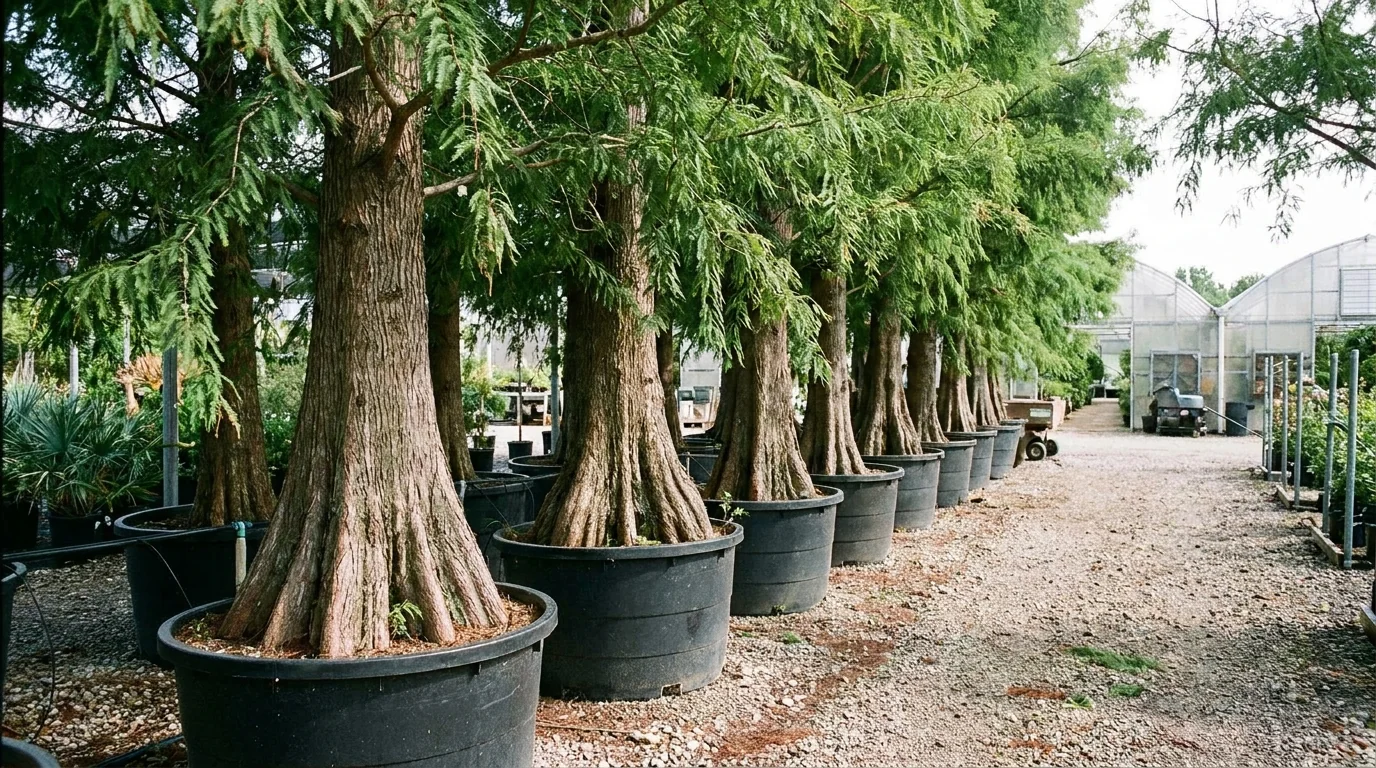
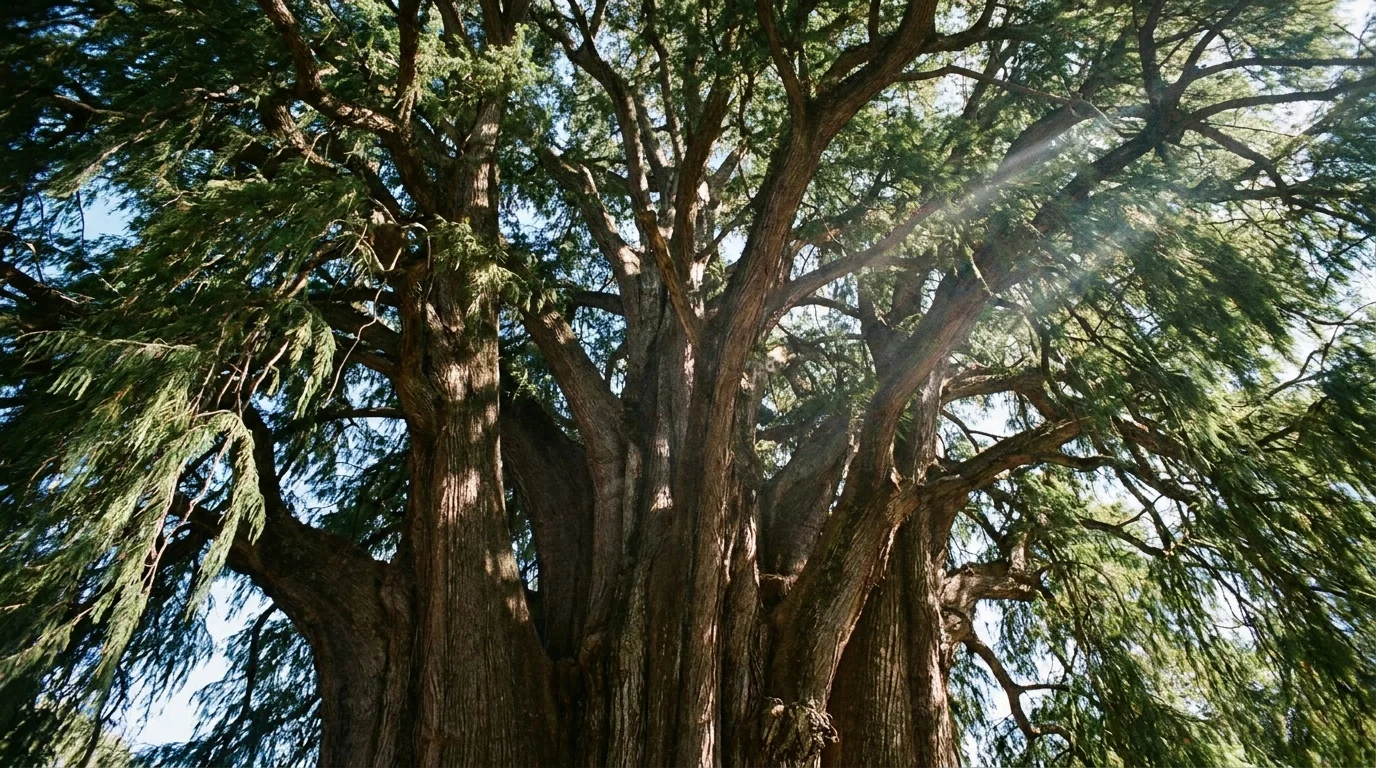
The Montezuma Cypress (Taxodium mucronatum), also called Montezuma Bald Cypress, is a beautiful semi-evergreen tree related to our native Bald Cypress but better adapted to San Antonio’s climate. With a graceful pyramidal form and feathery foliage, it makes a stunning shade tree. Alfaro Tree Sales grows Montezuma Cypress at our 40-acre Atascosa nursery.
Unlike the native Bald Cypress which drops all its needles in winter, the Montezuma Cypress is semi-evergreen — keeping most of its soft, feathery green foliage through San Antonio’s mild winters.
Two related cypress species for SA landscapes.
Expected height after planting a 4” caliper tree (16–20 ft at install).
Regular watering the first 2 seasons. Tolerates wet conditions but also handles moderate drought once established. Appreciates consistent moisture.
Adapts to most soil types, even temporarily wet soils. Balanced fertilizer in spring supports growth.
Minimal pruning needed. Develops a naturally beautiful form. Remove dead or crossing branches in winter.
October through March. Excellent choice near ponds, pools, or rain gardens.
Choose your tree at our nursery or by phone. We deliver it to your property.
Machine-dug hole, native soil backfill, deep watering, and mulch ring installed.
Written care instructions plus a 30-day establishment check from our crew.
2–3 feet per year in San Antonio, reaching 35–45 feet within 15 years.
Related but different. Montezuma Cypress is semi-evergreen (keeps foliage in mild winters), while Bald Cypress drops all needles. Montezuma is also better adapted to SA’s heat.
Rarely. Unlike Bald Cypress, Montezuma Cypress seldom develops knee-like root projections, making them more practical for landscape use.
Moderately. They prefer consistent moisture but handle dry periods once established. Best near water features or with regular irrigation.
October through March is ideal.
We offer Montezuma Cypress in various sizes. Field-grown at our nursery in Atascosa. Call (210) 202-4284.
Yes. Professional delivery and planting across the SA metro. Request a free quote.
Yes — they’re an excellent poolside tree. The semi-evergreen foliage means less litter than deciduous trees, and they don’t typically develop invasive surface roots.