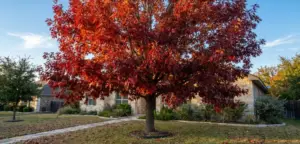
Most homeowners choose a tree based on how it looks. They want shade, or fall color, or something that fills in the backyard. That makes sense. But the tree you want and the tree your soil can actually support are not always the same thing.
In the San Antonio and Central Texas area, the soil changes significantly depending on where you are. A yard on the north side of town near the Hill Country is working with completely different ground than a yard on the south side toward Atascosa. The tree that thrives in one may struggle or fail in the other, not because there is anything wrong with the tree, but because the soil underneath it is telling a different story.
At Alfaro Trees, we have been planting trees in this region for nearly 50 years. We have seen what works and what does not in every soil condition this area has to offer. This guide breaks down the three most common soil types our customers are dealing with, what each one means for tree selection, and how to tell which one you are probably standing on.
Not sure what kind of soil you have? Bring us your site photos or tell us your general area and we can help.
Contact Us Here
The Three Soil Types You Will Find in Central Texas
San Antonio sits at the junction of three distinct geographic zones: the Blackland Prairie, the Edwards Plateau, and the sandy plains to the south. That means the soil under your feet depends heavily on which part of the region you are in.
Here are the three types our crews run into on nearly every job.
| Soil Type | Common Areas | Drainage | Best For Trees With |
|---|---|---|---|
| Heavy Black Clay | Central San Antonio, Blackland Prairie | Slow, holds water | Deep, adaptive roots that tolerate shrink-swell |
| Rocky Limestone | North Bexar County, Hill Country | Fast, thin soil over rock | Wide lateral roots, alkaline-tolerant species |
| Sandy Loam | Southern Bexar County, Atascosa area | Fast, low moisture retention | Drought-tolerant roots, frequent deep watering |
Heavy Black Clay (Houston Black Clay)

This is the most common soil across the San Antonio metro area. Locally it goes by “gumbo” and once you have worked in it, you understand why. It is dark, dense, sticky when wet, and cracks wide open in the dry heat of summer. If you have ever seen deep fissures running through your yard in August, you are standing on black clay.
Houston Black clay is part of the Blackland Prairie that stretches from Dallas all the way down through San Antonio. It dominates the broad middle section of Bexar County, which means the majority of San Antonio homeowners are dealing with it.
What It Means for Trees
Black clay holds water and nutrients extremely well, which sounds like a good thing until you realize it also drains poorly. After a heavy rain, clay soil stays saturated for days. Tree roots sitting in waterlogged clay are at serious risk for root rot, especially in the cooler months when evaporation slows down.
The other challenge is the shrink-swell cycle. When clay dries out it shrinks and pulls away from root balls. When it gets wet again it expands and puts pressure on roots. Shallow or brittle root systems struggle with this constant movement. The species that perform best in clay tend to have deep, adaptive root systems that can tolerate both extremes.
Trees That Do Well in Heavy Black Clay

Cedar Elm
Native to black clay; deeply rooted and shrink-swell tolerant.

Live Oak
Wide-spreading roots anchor firmly in dense clay soil.

Texas Red Oak
Handles clay reliably and adds vivid fall color.
Drainage is the biggest concern. If water pools in your yard after rain and takes more than a day or two to drain, that spot is not a good planting location without correcting the grade or drainage first. Even a clay-tolerant tree will struggle if its root ball is sitting in standing water for extended periods.
Rocky Limestone and Shallow Soil (Edwards Plateau)

If you are on the north side of Bexar County or further north toward Boerne, Bulverde, New Braunfels, or the Hill Country, you are likely dealing with rocky limestone soil. This is the Edwards Plateau, and the soil here developed from millions of years of limestone and dolomite formation.
The defining characteristic is depth, or the lack of it. In many Hill Country yards you hit solid rock six to twelve inches below the surface. Digging a planting hole can require a jackhammer. The soil that does exist on top is thin, alkaline, and often mixed with loose rock and gravel.
What It Means for Trees
Shallow soil limits how deep and how wide a root system can spread. Trees that depend on deep taproots to anchor themselves and reach water may never establish properly because there is simply no room for the roots to go.
The alkaline pH of limestone soil also affects nutrient availability. Some species that need acidic or neutral soil will show iron chlorosis, which is a yellowing of the leaves caused by the tree’s inability to absorb iron from high-pH soil. This is not a watering problem and it is not a disease. It is a soil chemistry mismatch.
On the positive side, rocky limestone soil drains quickly. Overwatering and root rot are far less common here than in heavy clay. The challenge is the opposite: keeping enough moisture available for the tree, especially during establishment.
Trees That Do Well in Rocky Limestone Soil
Live Oak
Lateral roots spread wide, ideal for thin soil over rock.

Mexican Buckeye
Ornamental choice built for shallow, alkaline Hill Country soil.

Texas Mountain Laurel
Compact and alkaline-tolerant, perfect for rocky conditions.
Planting in rocky soil requires different site preparation than planting in clay. The hole may need to be wider rather than deeper, and the tree’s root ball needs to sit at or above grade since you can not go down. This is one of the situations where professional planting makes a significant difference, because getting the placement right in rock is not as simple as digging a hole and dropping in a tree.
Sandy Loam

Sandy loam is found predominantly in southern Bexar County and the surrounding areas to the south, including the Atascosa area where our nursery is located. It is lighter in color, gritty to the touch, and much easier to dig in than clay or rock.
Sandy loam is the easiest of the three soil types to work with from a planting standpoint. Shovels go in without a fight, roots spread easily, and the soil is loose enough that root systems establish quickly.
What It Means for Trees
The defining trait of sandy loam is drainage. Water moves through it fast, which is great for preventing root rot but creates the opposite problem: the soil does not hold moisture long. A tree planted in sandy loam dries out faster than the same tree planted in clay, which means watering frequency and method matter more here than in any other soil type in the region.
Sandy loam also holds fewer nutrients than clay. Trees in sandy soil may need more attention during the establishment period and benefit from mulching to retain moisture and build organic matter over time.
Trees That Do Well in Sandy Loam
Cedar Elm
Deep roots reach moisture that sandy topsoil cannot hold.
Live Oak
A reliable performer across all three Central Texas soil types.

Desert Willow
Smaller ornamental tree with low water needs once established.
Watering is the critical factor. In sandy loam, a light daily sprinkle evaporates or drains through before it reaches the root zone. Slow, deep soaking less frequently is far more effective. Mulching three to four inches around the base of the tree, kept away from the trunk, helps the soil hold onto moisture between waterings.
How to Tell Which Soil You Have
You do not need a lab test to get a general idea of what you are working with. Here are a few quick ways to tell.
The Squeeze Test
Grab a handful of moist soil and squeeze it. If it holds its shape in a tight ball and feels sticky, you are in heavy clay. If it holds loosely but crumbles when you poke it, you likely have clay loam. If it falls apart immediately and feels gritty, you are in sandy loam.
The Puddle Test
Look at your yard after a heavy rain. If water sits on the surface for a day or more, that is clay behavior. If it drains within a few hours, you are likely in loam or sand. If it disappears almost immediately, you are in sandy or rocky soil.
The Dig Test
Try to dig a hole. If you hit rock within a foot, you are on limestone. If the shovel slides in easily and the soil is light colored and loose, that is sandy loam. If it is dark, heavy, and sticks to the shovel like peanut butter, that is black clay.
The Location Check
Check your general location. North of 1604 and toward the Hill Country tends to be limestone. The broad middle of San Antonio is predominantly black clay. South of the city toward Atascosa and beyond tends to shift toward sandy loam. There are exceptions everywhere, but geography is a reliable starting point.
Why This Matters More Than Most People Think
The wrong tree in the wrong soil does not always die immediately. Sometimes it struggles slowly. It grows at half the rate it should. The leaves yellow every spring. It leans because the roots can not grip. It thins out on one side. Homeowners assume the tree is just not doing well and move on, when the issue was a soil mismatch from day one.
The right tree in the right soil does the opposite. It establishes faster, grows stronger, needs less intervention, and looks better year after year. That match between species and soil is one of the most important decisions in the entire process, and it is one of the first things we look at when a customer comes to us.
We Are Here to Help
At Alfaro Trees, we have been matching trees to Central Texas soil conditions for nearly 50 years. We know what thrives in black clay, what handles the rock and thin soil of the Hill Country, and what works in the sandy loam around our own nursery in Atascosa.
When you come to us, we do not just sell you a tree. We ask where you are, what your soil looks like, what your yard’s sun and drainage situation is, and what you are trying to accomplish. Then we recommend the tree that fits all of those conditions, not just the one that looks good on the lot.
We deliver, place, and professionally plant every tree we sell. That means the tree goes in the ground at the right depth, with the right preparation, for the soil it is going into.
Come see us in Atascosa, just south of San Antonio off Highway 35, give us a call at (210) 622-9875. Bring your site photos or just tell us your zip code and we will help you figure out what you are working with and which tree is the right fit.
FAQs
The simplest test is to grab a handful of moist soil and squeeze it. If it forms a tight, sticky ball, you are in heavy clay. If it crumbles loosely, you have clay loam. If it falls apart and feels gritty, that is sandy loam. You can also look at how your yard drains after rain. Water that sits for a day or more indicates clay. Fast drainage points to sand or rock. For a more precise answer, a basic soil test from your local extension office will tell you the composition and pH.
Cedar Elm and Live Oak are two of the strongest performers in the heavy black clay that covers most of the San Antonio area. Both have deep, adaptive root systems that handle the shrink-swell cycle of clay soil. Texas Red Oak also does well in clay and adds fall color. The key is choosing species that tolerate slow drainage and are native or well-adapted to this specific soil type.
Not all trees do well in the shallow, alkaline soil over limestone that characterizes the Hill Country and north Bexar County. Trees that depend on deep taproots often struggle because there is simply not enough depth. Species like Live Oak, Texas Ash, Mexican Buckeye, and Texas Mountain Laurel are well-suited to these conditions. It helps to choose trees with lateral root systems that spread wide rather than deep.
Yes. Sandy loam drains much faster than clay, which means the soil dries out more quickly between waterings. Trees planted in sandy loam typically need more frequent deep watering during the establishment period than the same tree planted in clay. Mulching around the base of the tree helps the soil hold moisture longer between waterings.
In most cases, no. Backfill the planting hole with the same native soil that came out of it. When you create a pocket of rich amended soil inside a hole surrounded by clay, rock, or sand, the roots tend to stay inside that pocket rather than growing outward into the surrounding ground. That creates a confined root system that weakens the tree long-term. The better approach is to choose a tree species that is matched to your existing soil conditions.