Fall is the best time to plant a tree in Central Texas, but planting is only the first step. What happens next determines how well it is established. The most common reason newly planted trees struggle is not disease, poor-quality stock, or bad luck. It is improper watering: too much, too little, or a schedule that does not match the weather and soil conditions.
Established trees need attention in fall too. After a long Central Texas summer of 100-degree days and weeks without rain, even mature trees go into fall stress. How you water them through the transition matters more than most homeowners realize.
This guide covers how to think about fall watering for both situations, the mistakes we see most often, and what you can do now to give your trees the best shot heading into winter.
Why Fall Watering Is Different in Central Texas
Central Texas does not ease into fall the way other parts of the country do. September and October can still bring stretches of 90-plus degree days, and rainfall is unpredictable. Some years you get steady fall rain. Other years it stays dry well into November.
At the same time, the soil is still warm from summer, which means roots are actively growing even though the air is starting to cool. That combination creates a window where trees can build serious root strength, but only if they are getting the right amount of water.
The challenge is that the right amount changes. It is not the same as summer watering, and it is not the same for a tree that just went in the ground as it is for one that has been in your yard for ten years. Homeowners who keep their summer watering schedule running unchanged through fall often end up overwatering, which in cooler soil is just as dangerous as underwatering in summer.
Watering Newly Planted Trees in Fall
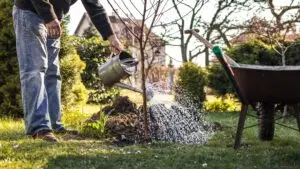
A tree that was just planted, whether last week or last month, does not yet have a root system that reaches into the surrounding soil. It is living entirely off the moisture in and immediately around its root ball. That means it depends completely on you for water until the roots expand outward, which takes time.
The general approach for newly planted trees in fall is to water slowly and deeply at the base of the root ball on a consistent schedule, then gradually space out the frequency over the first several weeks as the roots begin to establish.
How often and how much depends on the size of the tree, the soil conditions in your yard, and how much rain Central Texas is actually getting. A smaller container-grown tree in sandy loam dries out faster than a large balled-and-burlapped specimen in heavy clay. There is no single schedule that works for every tree in every yard.
What stays consistent is the method. Water slowly. Water deeply. Water at the root ball, not against the trunk. And check the soil moisture before each watering rather than relying on a fixed calendar. If you push your finger two to three inches into the soil near the root ball and it feels moist, you can wait. If it feels dry, it is time to water.
- Common mistake: Watering on a set daily schedule regardless of conditions. In fall, temperatures fluctuate and rain can come unexpectedly. A tree sitting in soggy soil because it got watered on its “scheduled day” right after a heavy rain is at risk for root rot. Check the soil first, then decide.
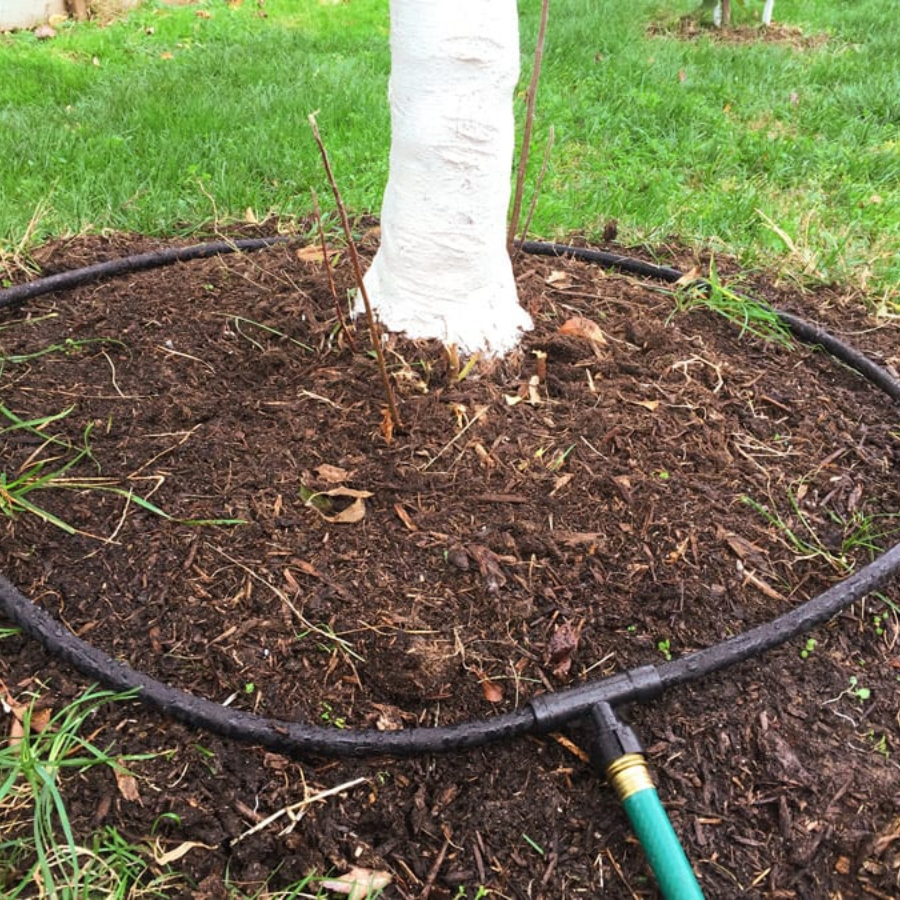
- Common mistake: Relying on your lawn irrigation system. Sprinkler zones are designed for short, frequent cycles that keep grass green. Trees need slow, deep soaking at the root zone, which lawn sprinklers do not provide. Run a separate hose or install a dedicated drip emitter for your tree.
Watering Established Trees in Fall
Trees that have been in the ground for several years have deeper, wider root systems and can handle longer stretches between watering. But after a tough summer, many established trees go into fall already stressed. Leaves may be scorched, wilted, or dropping early. That does not necessarily mean the tree is dying. It often means it used up its water reserves surviving the heat and needs help recovering before winter.
For established trees, fall watering is about giving the root system a chance to rehydrate and store energy before the tree goes dormant. A deep soak every couple of weeks through fall, especially if rain has been light, can make the difference between a tree that comes back strong in spring and one that struggles.
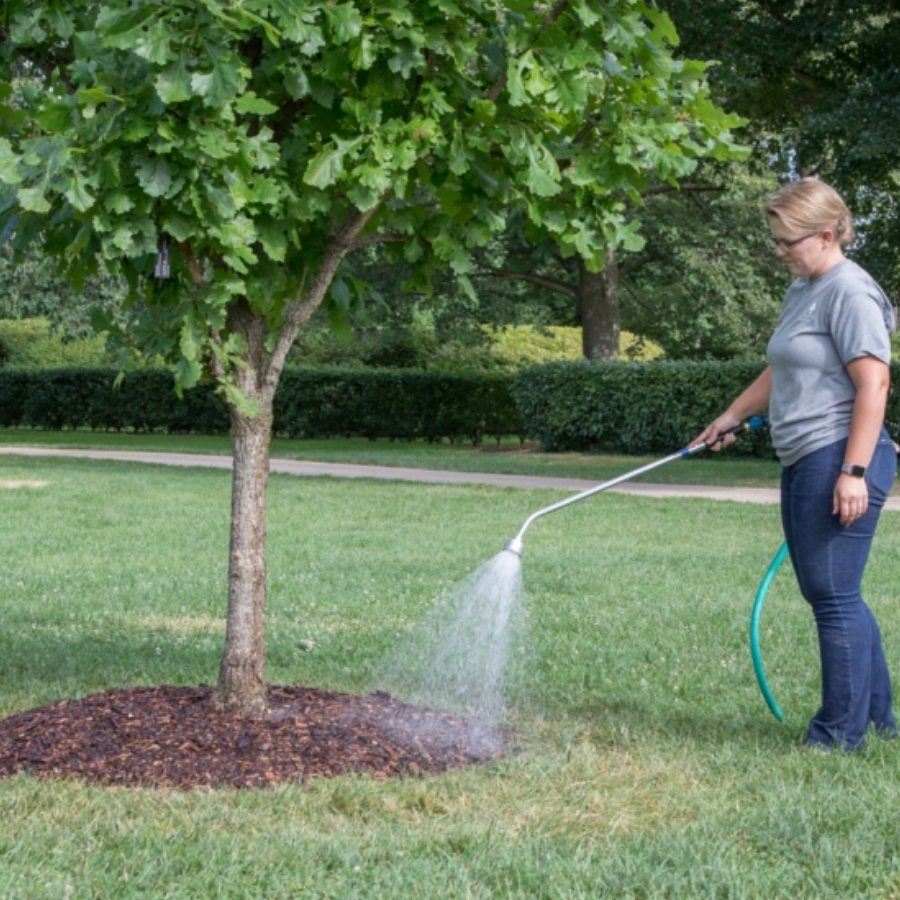
The key word is deep. A quick pass with a sprinkler wets the surface but does not reach the roots that matter. The absorbing roots of a mature tree are out at the drip line, which is the outer edge of the canopy, not at the trunk. Water slowly at and beyond the drip line so moisture reaches 6 to 12 inches into the soil.
- Common mistake: Assuming established trees do not need any supplemental water. In a normal year that might be true. But after a summer where Central Texas hit triple digits for weeks on end with little to no rain, even a 20-year-old live oak benefits from a deep fall soak.
- Common mistake: Watering at the trunk. On a mature tree, the small feeder roots that absorb water are far out from the base. Watering right at the trunk does very little and can actually promote disease by keeping the trunk base wet.
Mistakes That Happen Before Watering Even Starts
Planting too deep. When the root flare, the point where the trunk widens at the base, is buried below the soil line, moisture sits against the trunk and the roots can not get the oxygen they need. No amount of correct watering fixes a tree that was planted four inches too deep. The root flare should be visible and sitting at or slightly above ground level.
Volcano mulching. Mulch piled high against the trunk in a cone shape traps moisture against the bark and creates conditions for rot and disease. Mulch should be three to four inches deep in a flat ring around the tree, starting four to six inches away from the trunk.
Poor drainage. In heavy clay soil, which is common across the San Antonio and Central Texas area, water drains slowly. A tree planted in a low spot where water collects after rain is sitting in saturated soil even if you are watering correctly. Drainage has to be addressed at planting, not after.
No root ball preparation. Circling roots from container-grown trees that are not loosened or corrected at planting will continue to grow in a circle. Over time they strangle the trunk from the inside. This is invisible above ground for years until the tree suddenly declines.
These are the reasons professional planting matters. Getting the depth right, preparing the root ball, managing drainage, and mulching correctly are the foundation. Watering keeps the tree alive after that, but it can not make up for mistakes made at install.
Signs Your Tree Needs Attention
Fall is a good time to pay close attention to how your trees are doing. Here are a few things to watch for.
Wilting or curling leaves in early fall. If temperatures have cooled but the leaves still look stressed, the tree may be dehydrated from summer and needs a deep soak.
Early leaf drop. Some leaf drop in fall is normal, especially for deciduous trees. But if leaves are dropping significantly earlier than usual or are falling while still green, that can be a sign of drought stress or root issues.
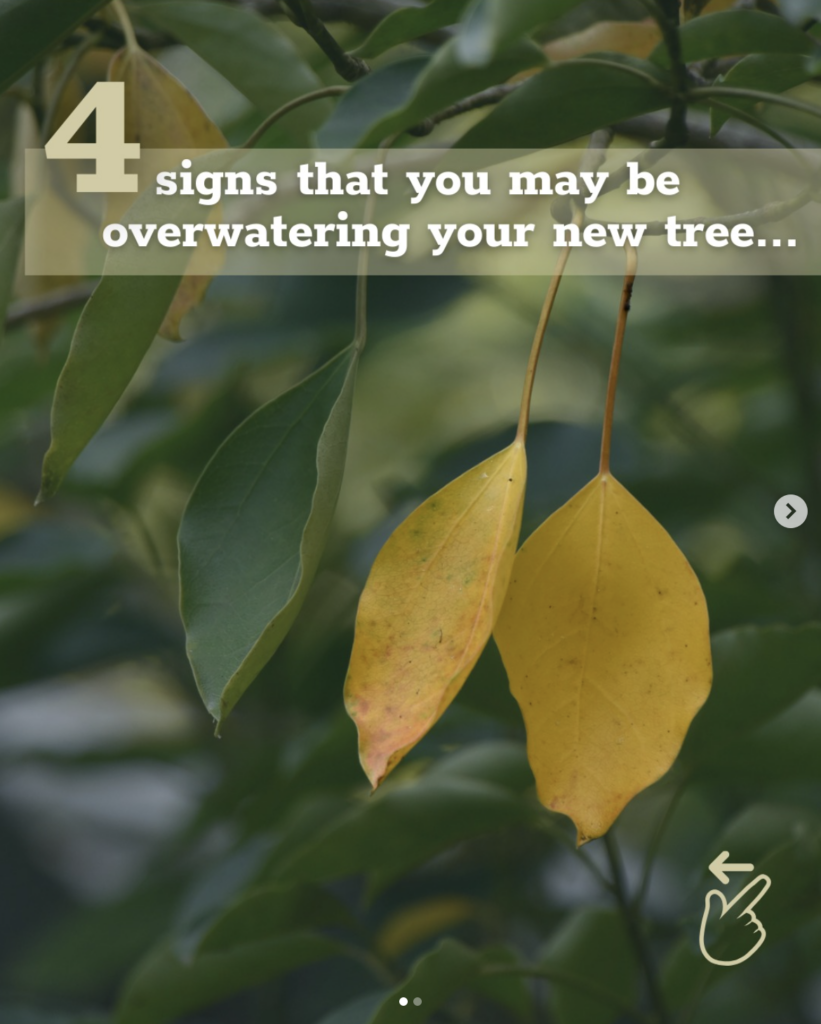
Yellowing leaves on an evergreen. Evergreen trees like live oaks hold their leaves through winter. If they are yellowing in fall, it could indicate overwatering, poor drainage, or root problems.
Cracks in the soil around the base. If the soil has pulled away from the trunk and you can see deep cracks around the root zone, the ground has dried out significantly and the tree needs a long, slow soak to rehydrate the soil.
If you are not sure what is going on with your tree, give us a call. We are happy to take a look and give you an honest recommendation.
We Are Here to Help
At Alfaro Trees, we have been helping Central Texas homeowners find, plant, and care for trees for nearly 50 years. We know this soil, we know this climate, and we know what it takes to get a tree established here.
If you are planning to plant this fall, bring us your site photos and we will recommend the best tree and the best placement for your property. We deliver, place, and professionally plant every tree we sell, so the tree goes in the ground correctly from day one. That means the right depth, the right mulching, and the right setup for your soil and drainage conditions.
Come see us in Atascosa, just south of San Antonio off Highway 35, give us a call at (210) 622-9875, or visit alfarotrees.com/contact. Fall is the prime planting season and availability moves fast.
FAQs
Yes. In Central Texas, fall is the ideal window. The air cools but the soil stays warm, which gives roots the perfect conditions to grow without the stress of summer heat. A tree planted in October through December has the entire cool season to establish before the following summer arrives.
It depends on the size of the tree, your soil type, and how much rain Central Texas is getting. The best approach is to water slowly and deeply at the root ball, then check the soil moisture before each watering. If the soil two to three inches down is still moist, wait. If it is dry, water. The goal is consistent moisture without saturation.
Yes, and it is more common than most people think. As temperatures cool, the soil holds moisture longer than it does in summer. If you keep the same watering schedule you used in July, you can easily waterlog the root zone. In heavy clay soil this is especially risky because clay drains slowly. Always check the soil before watering.
In Central Texas, winter is usually mild enough that established trees do not need regular supplemental watering. Newly planted trees should continue to receive water through winter, especially during dry stretches. Check the soil moisture every week or two and water deeply when it is dry several inches down.
Overwatered trees often show yellowing leaves, mushy soil at the base, or a sour smell from the root zone. Underwatered trees show wilting, curling, or browning leaves, early leaf drop, and cracking soil around the base. When in doubt, check the soil moisture at root depth rather than looking at the surface.