
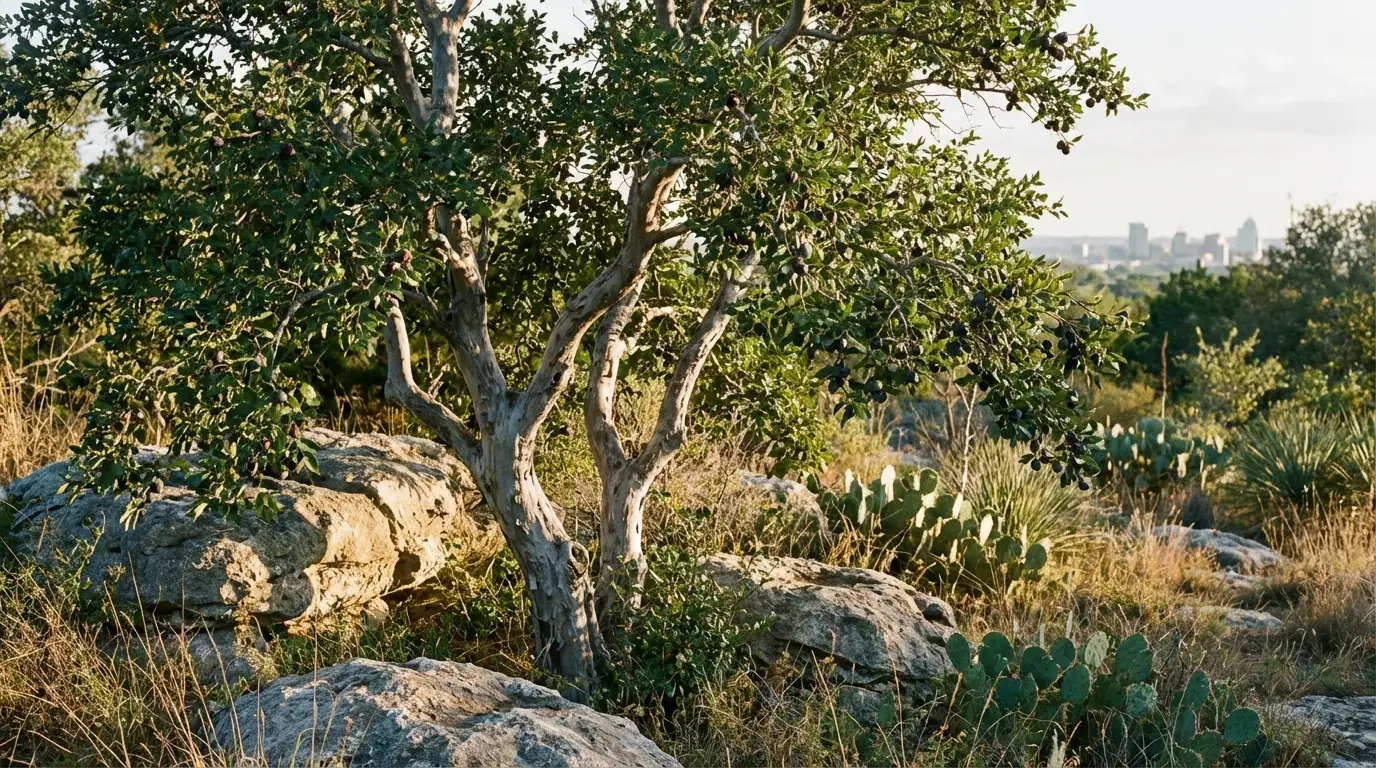
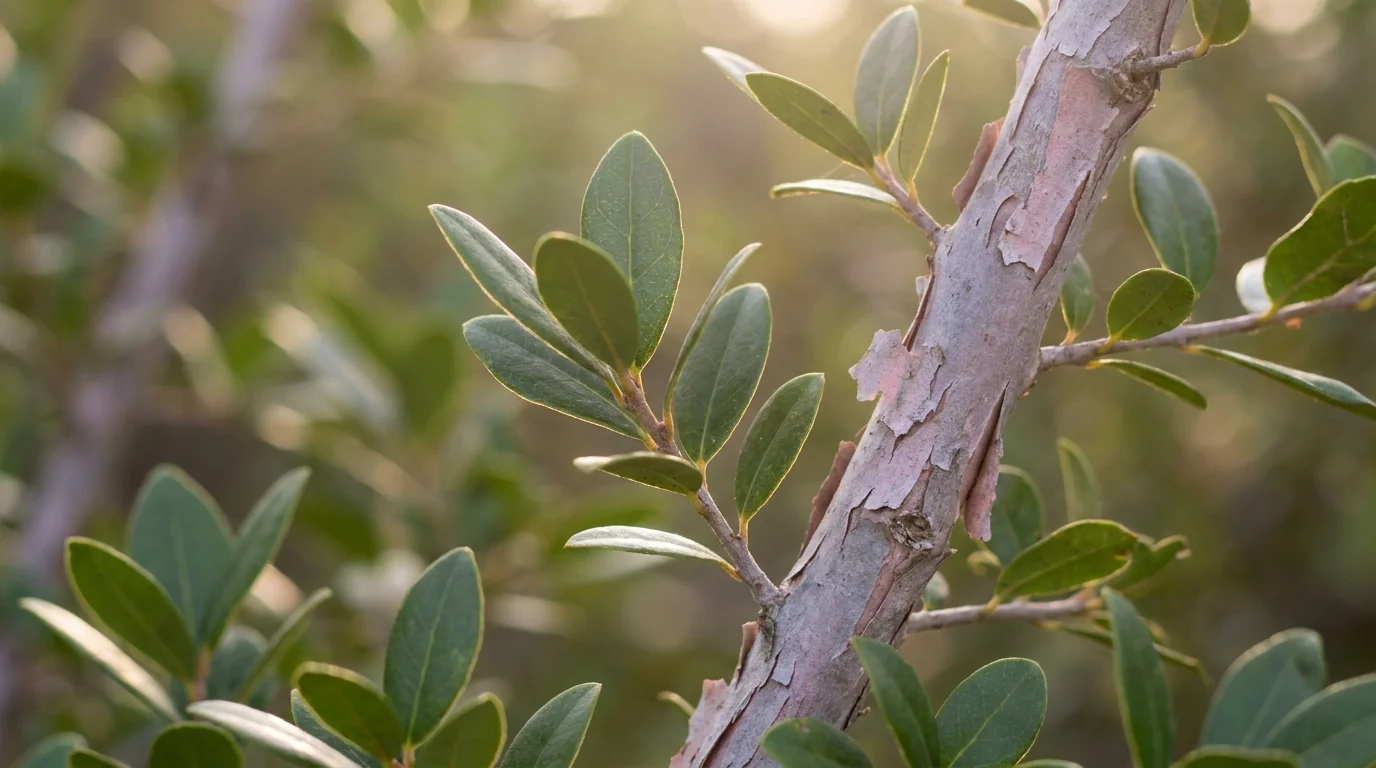
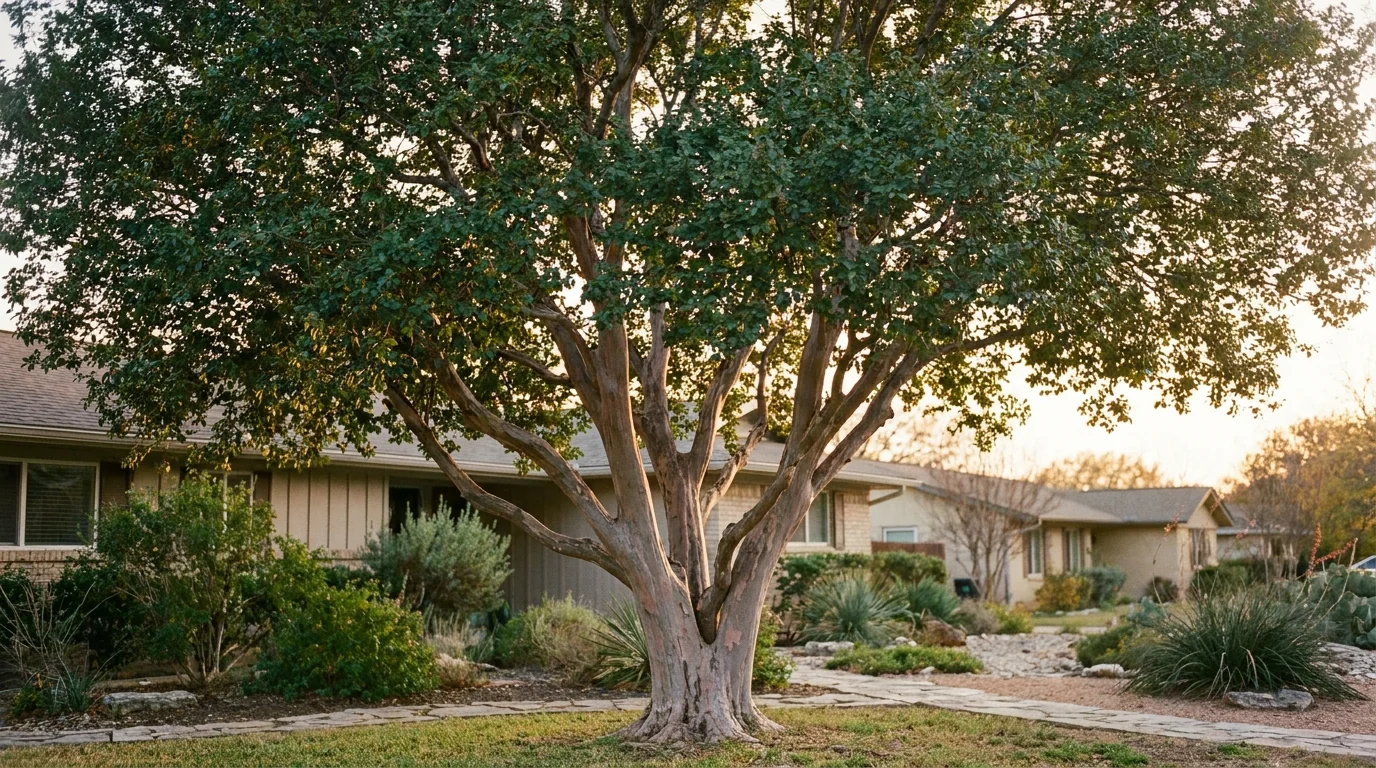
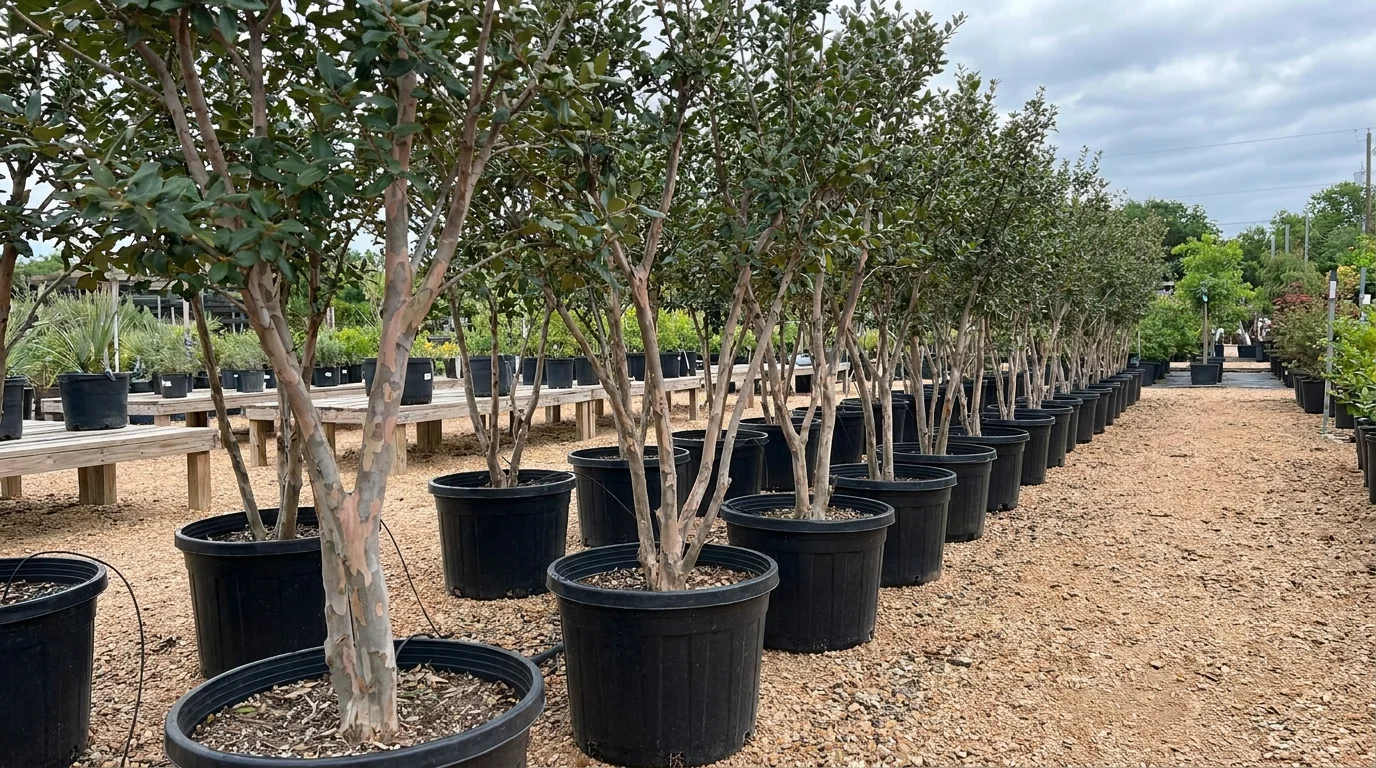
The Texas Persimmon (Diospyros texana) is a striking native tree known for its smooth, peeling gray bark, dark green foliage, and small edible black fruits. Extremely drought-tolerant and compact, it’s a stunning specimen or accent tree. Alfaro Tree Sales grows Texas Persimmons at our 40-acre Atascosa nursery.
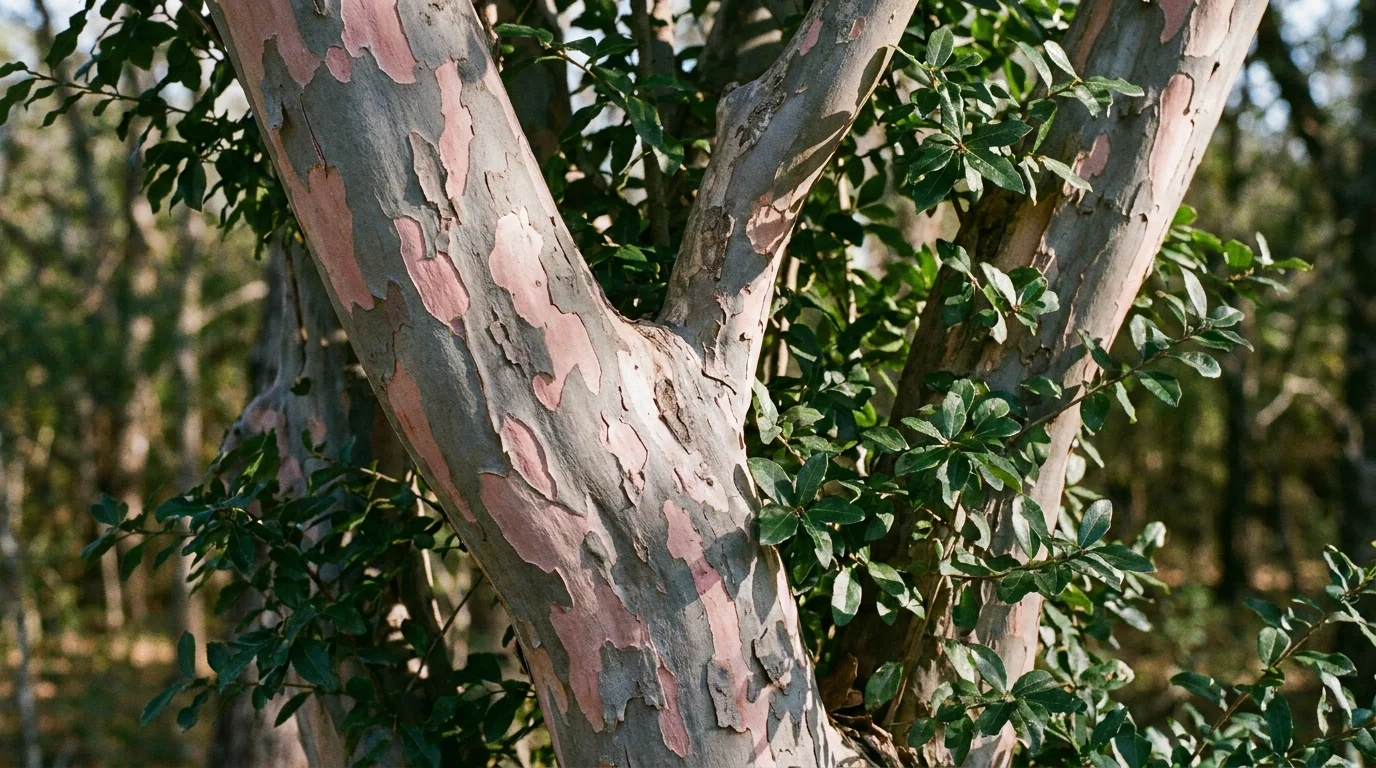
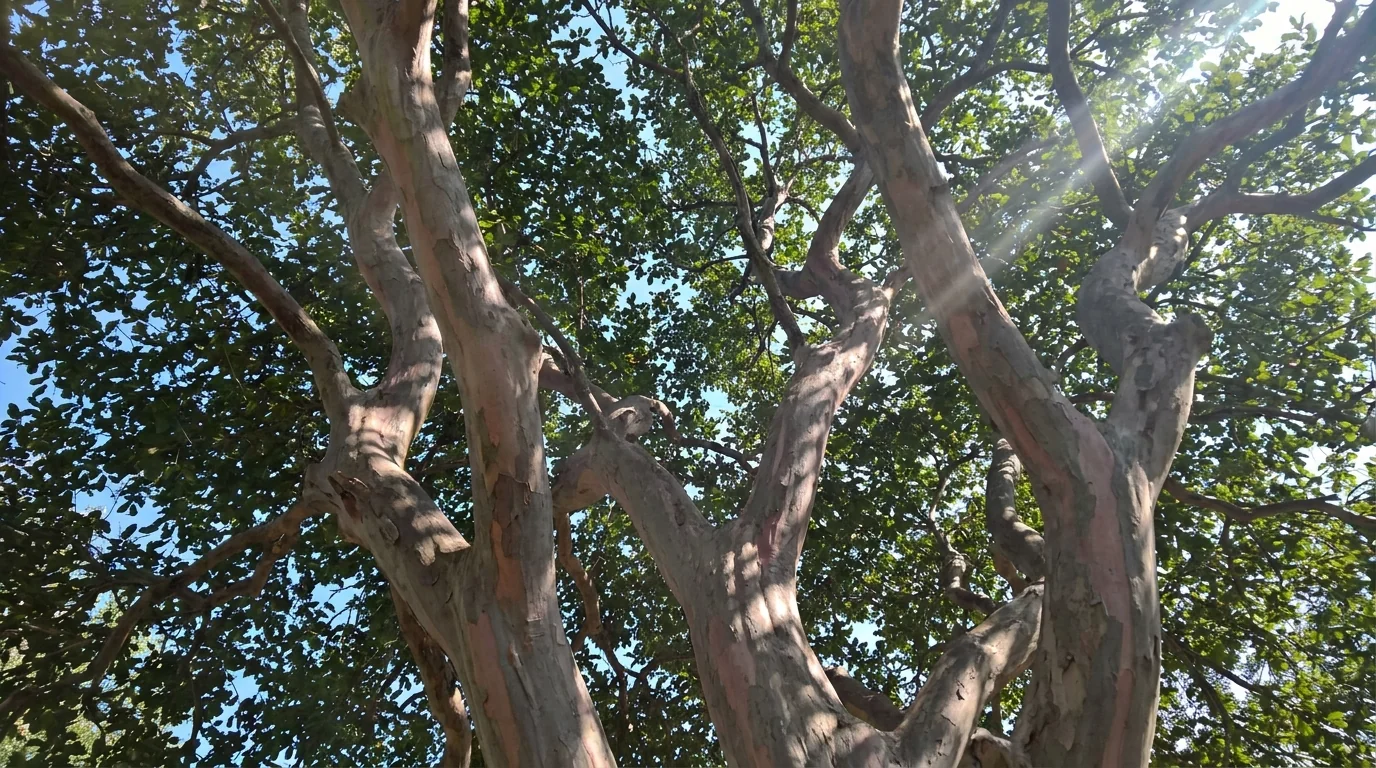
The Texas Persimmon’s most striking feature is its smooth, multi-toned bark that peels in patches to reveal creamy white, gray, and pink underneath. It creates year-round visual interest — especially beautiful when lit by low sun.
Two small, drought-tough native specimen trees.
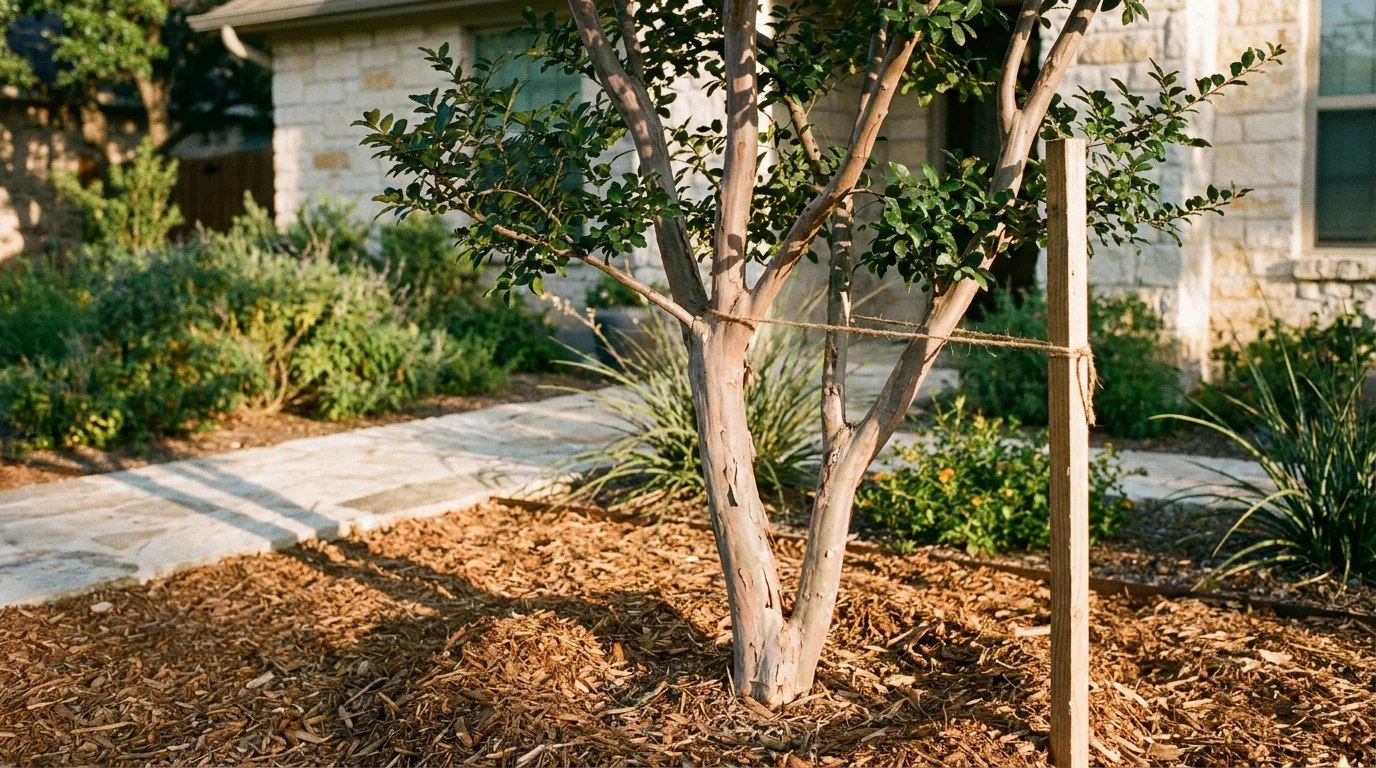
Expected height after planting a multi-trunk specimen (5–8 ft at install).
Minimal once established. Deep soak every 2–3 weeks during the first season. Avoid overwatering.
Thrives in SA’s rocky limestone soils. Requires good drainage. No fertilizer needed.
Minimal pruning. Remove lower branches to showcase the bark. Can be single-trunk or multi-stem.
October through March. Position where the bark can be appreciated up close.
Choose your tree at our nursery or by phone. We deliver it to your property.
Machine-dug hole, native soil backfill, deep watering, and mulch ring installed.
Written care instructions plus a 30-day establishment check from our crew.
Slowly — about ½ to 1 foot per year. They’re valued for their ornamental beauty rather than fast growth.
Yes — female trees produce small black persimmons in late summer that are sweet and edible. They’re also loved by birds and wildlife.
Outstanding. The smooth, peeling bark in shades of gray, cream, and pink is one of the most beautiful of any Texas tree.
Extremely. They’re native to the dry hills of Central and South Texas and need almost no supplemental water once established.
October through March is ideal.
We offer Texas Persimmons in various sizes. Field-grown at our nursery in Atascosa. Call (210) 202-4284.
Yes. Professional delivery and planting across the SA metro. Request a free quote.
Only female trees produce fruit. If fruit production is important, specify a female tree. Male trees are also beautiful for the bark alone.