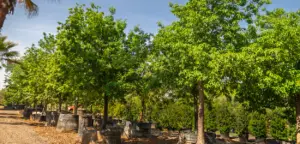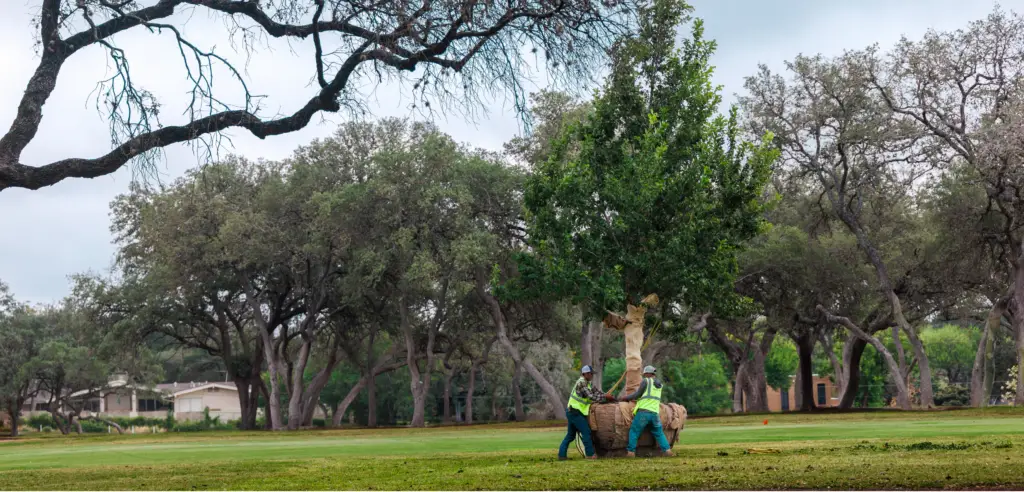
Live oak trees are one of the most popular shade trees in central Texas for a reason. They are tough, long-lasting, and they create that classic wide canopy that cools down a yard. Live oaks are not a “plant it anywhere” tree. To love it long-term, you need to understand spacing, growth, and basic care.
This guide covers:
- Live oak spacing and where to plant it
- Live oak growth rate and waht to expect over time
- Live oak tree care, including watering needs and simple maintenance
Not sure which mature tree is right for your yard? Visit Alfaro Trees and we’ll walk the property with you to help choose your perfect tree.
Live Oak Tree Spacing and Where to Plant
Live oak tree spacing is the biggest factor in whether you love the tree long-term. Live oaks are built to spread, so the right spot gives the canopy room to grown without constant pruning.
Where to Plant a Live Oak Tree?
- Choose an open are where the tree can grow wide in every direction
- Avoid tight side yards, narrow strips between structures, or spots under power lines
Think about future shade. A live oak can eventually shade a big part of your yard, driveaway, or patio.
How Much Distance Should a Live Oak Tree Be Planted From a House?
Plant a live oak tree far enough from the house so the mature canopy does not sit over the roof. If a live oak is too close to a house, you can end up dealing with:
- Tree limbs rubbing on the roff during high winds or storms
- Increased tree debris on the roof and gutters
- Extra pruning as the tree grows
- Root competition with nearby landscaping and hardscape
If you are unsure on where to plant this tree, a rule of thumb is to plant farther out and let the canopy grow toward the house over time.
Live Oak Growth Rate and What to Expect Over Time
Live oaks grow at a moderate rate. It may not be the fastest growing tree in the nursery, but it’s one of the strongest long-term shade trees you can plant in your yard.
What to expect:
- Year 1: The tree focuses on building roots more than top growth.
- Years 2 to 4: You usually see more steady canopy and brand growth.
- Long-term: The tree fills out and spreads wider, creating that classic shade shape.
What helps the most is a strong start. Good planting and consistent watering early will do more for growth than anything else.
Live Oak Tree Care Guide
Live oak tree care is simple if you stay consistent in the early phase of its planting. Most problems come from watering mistakes or skipping basic upkeep.
Live Oak Watering Schedule
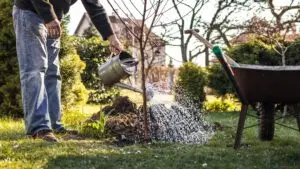
- Newly planted trees need deep watering while roots expand
- Water slowly so it soaks into the roots expand
- Let the soil dry slightly between waterings
- After rain, check soil moisture before you water again
Once established, live oaks handle heat and drought better, but they still benefit from deep watering mistakes or skipping basic upkeep.
Live Oak Watering Schedule
- Newly planted trees need deep watering while roots expand
- Water slowly so it soaks into the root ball instead of running off
- Let the soil dry slightly between waterings
- After rain, check soil moisture before you water again
Once established, live oaks handle heat and drought better, but they still benefit from deep watering during long hot stretches.
Simple Maintenance Plan for Live Oak Trees
- Mulch the root zone to hold moisture and protect roots (keep mulch a few inches away from the trunk)
- Protect the truck from string trimmers and lawn equipment
- Light pruning early helps prevent low, heavy limbs later and support a strong strucutre.
If you want the easiest long-term maintenance, ask Alfaro Trees about placement, watering guidance, and basic shaping based on the based on the size of the tree you are buying.
Once you understand spacing, growth, and care, the next question is: is a live oak the best fit for your yard, or would another shade tree work better?
Live Oak Alternatives Trees to Consider
If you’re deciding between live oak vs. cedar elm or looking at similar trees, these are the top three to compare: Cedar elm, Shumard oak, and Chinquapin oak.
- Cedar elm is a great pick when you want a tough Texas shade tree but needs a more flexible fit, especially in tighter yards or closer planting areas.
- Shumard oak is a strong option if you want an oak look with a more upright shape, which can work better near driveways, streets, or narrower spaces.
- Chinquapin oak is another reliable shade tree known for sturdy branch structure and a canopy that often stays more upright, making it a smart choice when you want long-term shade without the extra-wide spread live oaks are known for.
Conclusion
A live oak can be one of the best long-term shade trees you can plant in central Texas, but it succeeds or fails based on the basics. Give it the right space, set expectations for steady growth, and keep care simple in the early months with deep watering, mulch, and light shaping.
If you are ready to plant a live oak tree, visit us to see our inventory of live oaks, and find the right size for your yard.