If you have noticed yellow leaves on your tree this late spring, something is off and guessing the cause can actually make things worse. Many homeowners accidentally damage their trees by treating the wrong issue.
“Why are my tree leaves turning yellow” is one of the most common questions we hear this time of year. The tricky part is that yellow leaves can mean several different things, and the fix depends entirely on the cause. Treating the wrong problem will not help and can sometimes make things worse.
This guide walks you through the most common causes of yellow leaves on trees in late spring, how to tell them apart, and what to do about each one. Whether you are a homeowner dealing with one tree in the backyard or a landscaper managing multiple properties, this simple troubleshooting guide will help you figure out what you are looking at.
Why Are My Tree Leaves Turning Yellow in Late Spring?
Late spring is actually one of the more confusing times to see yellow leaves because the tree should be at its healthiest. Yellowing in May is usually a signal that something is off with the tree’s environment or nutrient intake.
The four most common causes are overwatering, nutrient deficiency (specifically iron chlorosis), poor drainage, and pest activity. Each one looks a little different, and each one has a different solution. Let’s walk through them one at a time.
Cause 1: Overwatering
Overwatering is probably the most overlooked cause of yellow leaves on trees, because the instinct when a tree looks sick is to water it more. But too much water is just as harmful as too little, and overwatering trees causes yellow leaves by suffocating the roots and preventing them from absorbing the nutrients they need.
How to tell if overwatering is the problem:
- The soil feels wet or spongy even a day or two after watering
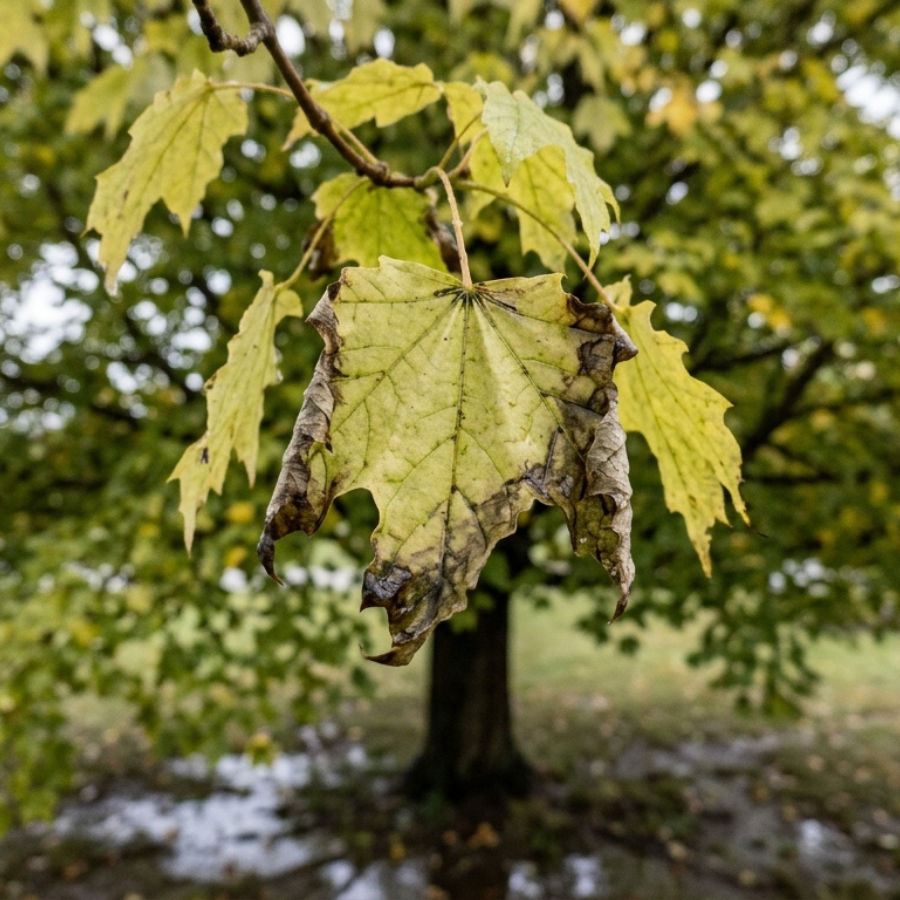
- Leaves are yellow and soft, not crispy
- Yellowing is spread across the whole tree, not concentrated in one spot
- You are watering on a daily or very frequent schedule
What to do: Cut back your watering frequency right away. Let the soil dry out between watering sessions. For established trees, watering once or twice per week deeply is almost always enough.
Unsure how much water your specific trees actually need? Send us a message and we will help you build the right watering schedule.
Cause 2: Chlorosis and Nutrient Deficiency
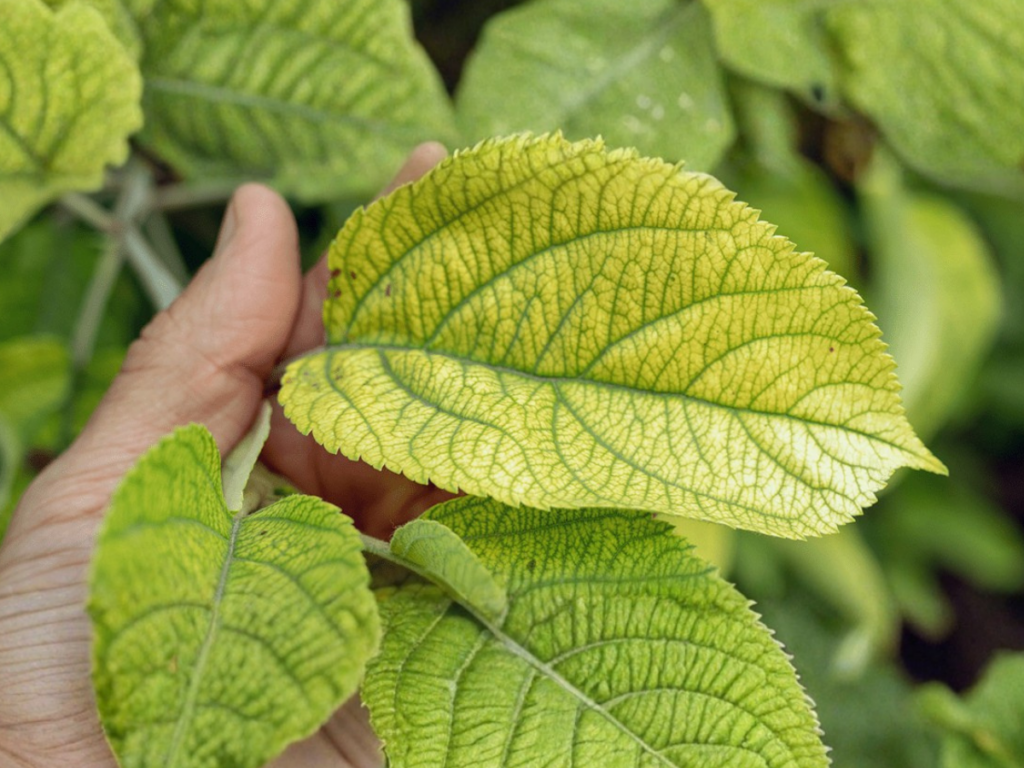
If the leaves on your tree are turning yellow but the veins of the leaf are staying green, that is a very specific pattern called chlorosis. Chlorosis in trees in Texas is extremely common, especially in our alkaline Central Texas soils, and it is usually caused by an iron deficiency.
Here is the simple version of why it happens: trees need iron to produce chlorophyll, which is what makes leaves green. In alkaline soil (soil with a high pH), iron is present in the ground but gets locked up in a form the tree cannot absorb. So even if the iron is technically there, the tree cannot access it. The result is leaves that turn yellow while their veins stay green, a pattern called interveinal chlorosis.
Iron chlorosis treatment usually involves one of two approaches: adding chelated iron directly to the soil or applying a soil acidifier to lower the pH so the tree can access the iron that is already there. Both are available at nurseries and garden centers, and both work best when applied in spring or early fall.
How to tell if chlorosis is the problem:
- Leaves are yellow but the veins running through the leaf are still clearly green
- Younger leaves at the tips of branches are often more affected than older leaves
- The pattern is more visible on newer growth
- The soil in your area tends to be clay-heavy or alkaline
What to do: Start with an iron chlorosis treatment using chelated iron applied to the soil around the drip line. Follow the product instructions carefully and water it in well. If the problem is recurring year after year, a soil pH test can help you understand the bigger picture.
Not sure if you’re overwatering or dealing with chlorosis? Send us a photo and we’ll help you diagnose it.
Cause 3: Poor Drainage
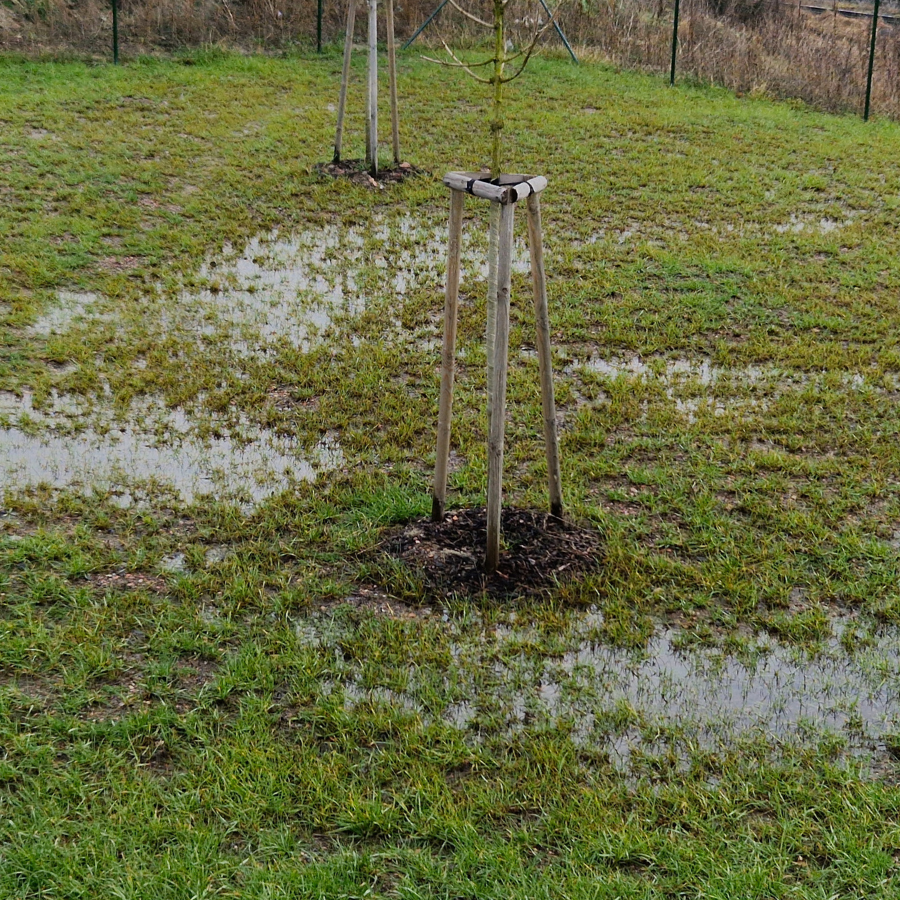
Poor drainage tree symptoms and overwatering often look similar, but they have different root causes. With overwatering, the issue is how much water you are applying. With poor drainage, the issue is that the water has nowhere to go regardless of how much you apply.
In Central Texas, heavy clay soils are a major contributor to this problem. Clay holds onto water tightly and drains slowly, which can create waterlogged conditions around the root zone after even a moderate rain event. If you are seeing tree leaves turning yellow and falling off after periods of heavy rain rather than during dry spells, poor drainage is likely the culprit rather than overwatering.
How to tell if drainage is the problem:
- Water pools around the base of the tree and sits there for hours or days after rain
- The problem gets worse after heavy rain events
- The soil feels compacted and dense
- Reducing watering has not made a noticeable difference
What to do: Improving drainage is a longer-term fix. Adding organic matter, aerating each spring, and mulching consistently all help over time. In more severe cases, a French drain or raised planting area may be needed. When in doubt, get a professional opinion sooner rather than later.
Dealing with drainage issues on a larger property or job site? Reach out to our team and we can talk through solutions.
Cause 4: Pest Activity
Some insects, particularly sap-sucking pests like spider mites, aphids, and scale insects, can cause tree leaves to yellow and fall off by feeding on the tree’s nutrients and disrupting how it moves water and energy internally. Pest-related yellowing tends to look a little different from nutrient or water issues.
The Bottom Line
Yellow leaves on your tree in late spring are a signal worth taking seriously but the most important thing is not to guess and not to panic. The most important thing is not to guess and not to panic. Overwatering, iron chlorosis, poor drainage, and pests all cause yellowing but each one looks a little different and responds to a different solution. Take a close look at the pattern of the yellowing, check your soil moisture, and use the troubleshooting flow above to point yourself in the right direction. The sooner you identify the real cause, the sooner your tree can start recovering. And if you are not sure, getting a second set of eyes on it is always the right call.
How to tell if pests are the problem:
- You see small insects, sticky residue, or tiny webbing on the leaves or branches
- Yellowing is patchy or concentrated on specific branches rather than spread evenly
- Leaves look distorted, curled, or spotted in addition to being yellow
- You notice leaves dropping before they should
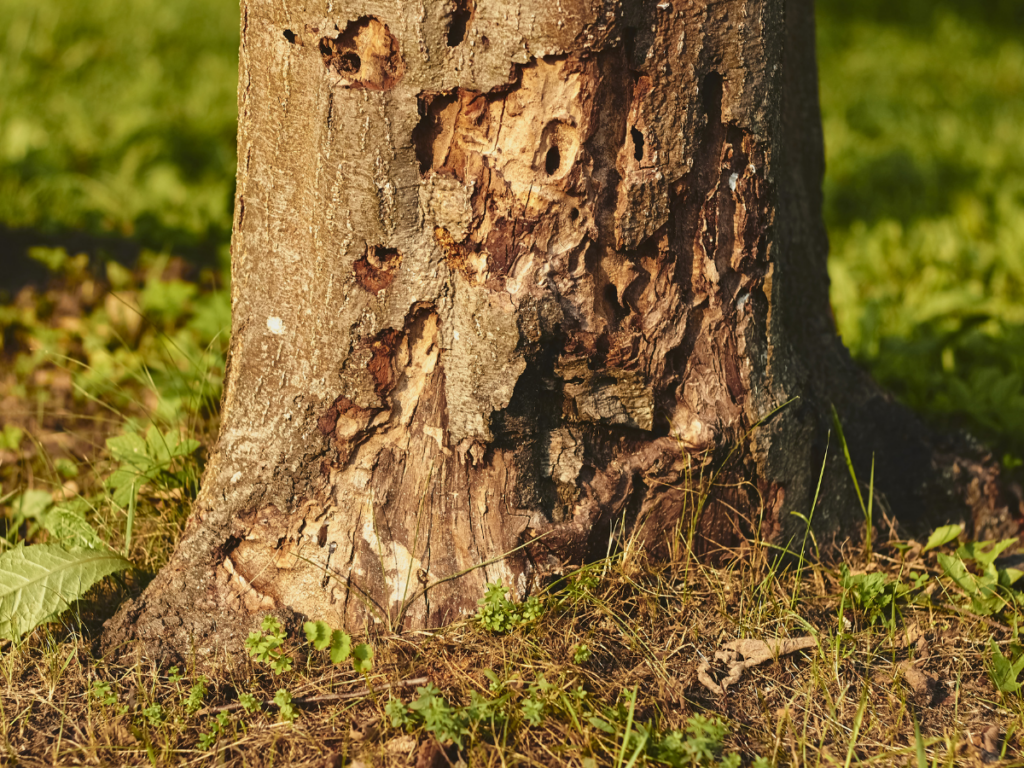
What to do: Start by inspecting the underside of the leaves and the joints where branches meet the trunk. Many pest problems can be addressed with horticultural oil or insecticidal soap, both of which are low-impact and widely available. For larger infestations or trees that are significantly affected, a professional assessment is worth it before the problem spreads.
We Can Help You Figure It Out
At Alfaro Tree Sales, we have been helping Central Texas homeowners and landscaping professionals diagnose and solve tree problems for nearly 50 years. If you are seeing yellow leaves and are not sure what is causing them, come see us in Atascosa. Bring a photo, describe what you have been seeing, and we will help you figure out the right next step.
Getting the diagnosis right the first time saves you time, money, and a lot of frustration.
Visit us just south of San Antonio off Highway 16, or reach out today.📞 (210) 622-9875 🌐 Request a Free Quote at alfarotrees.com/contact
FAQs
Check the soil first. If it feels wet or spongy even without recent watering, overwatering is likely the culprit. Leaves from overwatering tend to look soft and droopy rather than crispy, and the yellowing is usually spread across the whole tree rather than concentrated in one spot.
Chlorosis is when your tree’s leaves turn yellow but the veins stay green. It is usually caused by an iron deficiency and is very common in Central Texas due to our alkaline soils. Fix it by applying chelated iron to the soil around the drip line or using a soil acidifier to help the tree absorb the nutrients it needs.
Not always, but if the veins are still green while the rest of the leaf is yellow, iron deficiency is the most likely cause. That specific pattern is the key thing to look for. If the whole leaf is yellow, the problem may be something else like overwatering or drainage.
It depends on the cause. If the yellowing is from chlorosis, a targeted iron treatment can help. But if the cause is overwatering or poor drainage, adding fertilizer will not fix anything and can add unnecessary stress to an already struggling tree. Diagnose the problem first before reaching for fertilizer.
Yes. Heavy clay soil drains slowly and can trap water around the root zone for days after rain. When roots sit in waterlogged soil for too long, they lose their ability to absorb nutrients properly, which leads to yellowing leaves. Aerating, mulching, and amending your soil over time are the best long-term solutions.