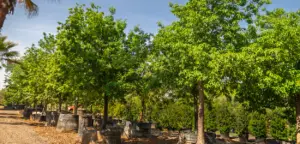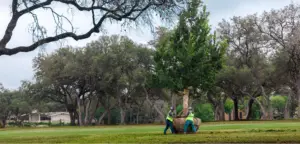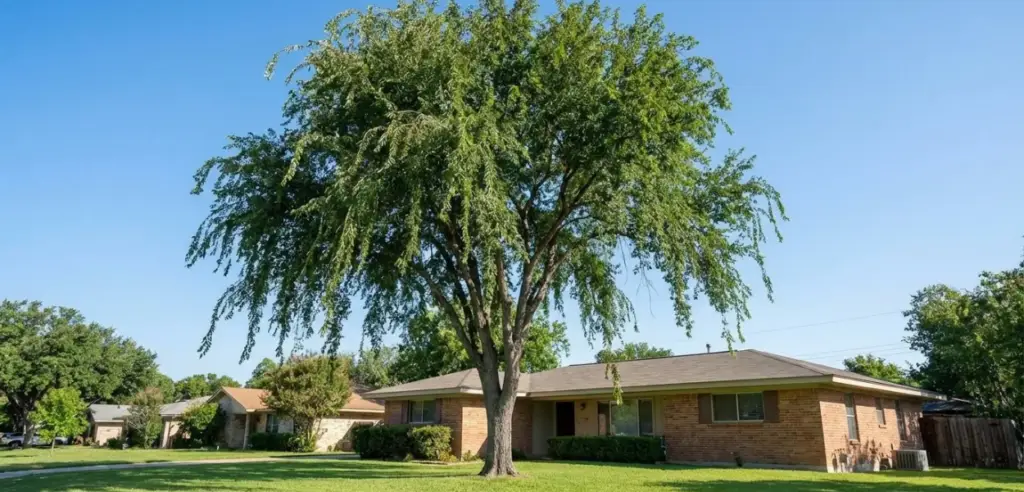
If you are looking for a shade tree that is built for Central Texas, Cedar Elm deserves a serious look. It handles the heat, tolerates drought once established, adapts to the heavy clay soil most of us are working with, and grows at a pace that gives you noticeable shade within just a few years of planting.
Cedar Elm is one of the most reliable native shade trees in our region, and it is one of the trees we recommend most often at Alfaro Trees. It does well in conditions that stress or kill other species, it requires very little intervention once it gets going, and it fits a wider range of yard sizes than most people expect.
This guide covers everything you need to know about Cedar Elm in Central Texas: how big it gets, how fast it grows, how far apart to space them, how to water it, and how it compares to live oak for homeowners deciding between the two.
Ready to see Cedar Elm in person? Come visit us in Atascosa, just south of San Antonio off Highway 35.
Contact UsWhy Cedar Elm Thrives in Central Texas
Cedar Elm is native to Texas. It did not have to be adapted or imported for this climate. It evolved here, which means it is already built for the exact conditions that make Central Texas difficult for many other tree species.
Heat tolerance. Cedar Elm handles sustained summer temperatures above 100 degrees without the kind of leaf scorch and stress that non-native species show. While other trees are wilting in August, a healthy Cedar Elm holds steady.
Drought tolerance. Once established, Cedar Elm is one of the most drought-tolerant shade trees in the region. It has a deep, extensive root system that reaches moisture other trees can not access. During dry stretches it may drop some interior leaves to conserve water, but it recovers quickly once moisture returns.
Clay soil adaptability. The heavy clay soil that is common across the San Antonio and Central Texas area gives a lot of tree species trouble. Cedar Elm thrives in it. It also performs well in rocky, alkaline, and poor soils, which makes it one of the most forgiving trees you can plant in this region.
Wind and storm resistance. Cedar Elm develops a strong branching structure with good natural crotch angles. It handles high winds better than many shade trees its size, which matters in a region that sees severe storms regularly.
Cedar Elm Mature Size
Cedar Elm at a Glance
Actual size of a Cedar Elm depends on soil quality, water availability, and how much room the tree has to grow. A Cedar Elm in deep soil with space to spread will reach the upper end of that range, while one in a tighter space or shallow rocky soil may stay smaller, which is not necessarily a bad thing depending on your goals.
Cedar Elm Tree Spacing
Getting the spacing right is one of the most important decisions when planting Cedar Elm, and it is one of the questions we get asked most often.
For a single tree in a yard: Plant at least 20 feet from any structure, including the house, garage, fence, and driveway. Remember that the mature canopy will spread 40 to 60 feet wide, so measure from the trunk to the nearest structure and think about where that canopy edge will be in 15 to 20 years.
For multiple Cedar Elms in a row: Space them 30 to 40 feet apart, center to center. This gives each tree enough room to develop a full canopy without crowding. If you are planting along a property line or as a shade corridor, 35 feet apart is a good target that balances coverage with room to grow.
Near utilities: Keep Cedar Elm at least 15 to 20 feet from overhead power lines. The mature height of 50 to 70 feet means it will grow into utility lines if planted too close, which leads to aggressive utility pruning that ruins the canopy shape.
Near foundations and driveways: The root system is extensive but not typically aggressive enough to damage foundations or lift concrete the way some species do. That said, planting 15 feet or more from a foundation is still the safe recommendation. Closer planting is possible but should be evaluated on a case-by-case basis depending on the soil and the structure.
Not sure about spacing for your property? We will help you figure out the placement and amount of trees for your yard.
Ask us about Cedar Elm AvailabilityCedar Elm Tree Care
One of the best things about Cedar Elm is how little it asks of you once it is established. Here is what to know about caring for it in Central Texas.
Watering Needs
Newly planted Cedar Elms need consistent watering while the root system establishes. Water slowly and deeply at the root ball on a regular basis for the first one to two growing seasons. The exact frequency depends on the size of the tree, your soil conditions, and how much rain Central Texas is getting. Check the soil moisture before each watering rather than relying on a fixed schedule.
Once established, Cedar Elm’s watering needs are low. It can handle extended dry periods without supplemental irrigation in most years. During severe drought, a deep soak every few weeks will keep it healthy, but it is far less dependent on regular watering than many other shade trees.
Soil
Cedar Elm performs well in almost any soil Central Texas has to offer. Heavy clay, rocky limestone, alkaline, and poor soils are all manageable for this species. It prefers well-draining conditions but tolerates slow-draining clay better than most trees its size.
Backfill the planting hole with native soil mixed with compost. This gives the roots a healthy start while helping the tree adapt to the native soil it will be growing in for the next several decades.
Pruning
Cedar Elm benefits from structural pruning when young to establish good branch spacing and a strong central leader. Once the framework is set, it requires very little ongoing pruning. Remove dead, damaged, or crossing branches as needed, but the tree naturally develops a clean, balanced shape without heavy intervention.
The best time to prune is late winter through early spring before new growth starts.
Fertilizing
In most Central Texas soils, Cedar Elm does not need regular fertilization. If growth seems unusually slow or the leaves are pale and undersized, a soil test can tell you if something is missing. Otherwise, the tree draws what it needs from the native soil.
Do not fertilize at the time of planting. The tree needs to focus on root development first, not pushing new leaf growth.
Cedar Elm vs Live Oak
This is one of the most common comparisons we hear from homeowners deciding on a shade tree. Both are excellent choices for Central Texas, but they serve different situations.
| Factor | Cedar Elm | Live Oak |
|---|---|---|
| Growth rate | 2-3 ft/year (faster) | 1-2 ft/year |
| Mature size | 40-60 ft wide | 40-80 ft wide |
| Leaf behavior | Deciduous, drops in fall | Nearly evergreen |
| Drought tolerance | Excellent, deep roots | Excellent |
| Soil adaptability | Forgiving of poor, rocky, alkaline soil | Prefers deeper, better-draining soil |
| Best for | Faster shade, tough soil, winter sun | Massive iconic canopy, year-round coverage |
Growth rate: Cedar Elm grows faster. At 2 to 3 feet per year it delivers shade noticeably sooner than a live oak, which grows about 1 to 2 feet per year. If getting shade quickly is a priority, Cedar Elm has the advantage.
Mature size: Live Oak spreads wider, often reaching 40 to 80 feet across. Cedar Elm is slightly more contained at 40 to 60 feet wide. Both are large trees, but live oak can take over a yard in a way that Cedar Elm usually does not.
Leaf behavior: Live Oak is nearly evergreen, holding its leaves through most of the winter and dropping them briefly in spring. Cedar Elm is deciduous and drops its leaves in fall. If year-round shade and screening matter to you, Live Oak has the edge. If you prefer seasonal leaf drop with more winter sunlight, Cedar Elm is the better fit.
Drought tolerance: Both handle drought well once established. Cedar Elm may have a slight edge in extreme drought conditions because of its deeper root system, but in practice both are strong performers in Central Texas.
Soil adaptability: Cedar Elm is more forgiving in poor, rocky, and alkaline soils. Live Oak prefers deeper, better-draining soils and can struggle in very shallow or rocky conditions.
Best for: Cedar Elm is the better pick for homeowners who want shade faster, have challenging soil, or want a deciduous tree that lets winter light through. Live Oak is the better pick for homeowners who want a massive, iconic canopy and year-round coverage and have the space and patience for slower growth.
Both are excellent investments for a Central Texas yard. If you are not sure which one is right for your situation, come see them in person at our nursery and we can walk you through the differences based on your yard, your goals, and your timeline.
Is Cedar Elm Good for Small Yards?
Cedar Elm can work in a smaller yard, but it depends on how you define small and how much of the yard you want the tree to eventually fill.
At 50 to 70 feet tall and 40 to 60 feet wide, a fully mature Cedar Elm is a large tree. In a compact yard it can dominate the space, shade the entire lot, and potentially crowd structures or neighboring properties.
That said, many homeowners in smaller yards plant Cedar Elm intentionally because that kind of coverage is exactly what they want. If your goal is to shade as much of the yard as possible with a single tree, Cedar Elm delivers that efficiently.
If you want shade but need a tree that stays smaller and more contained, we carry other species that might be a better fit. Come talk to us and we can help you match the tree to the space.
We Are Here to Help
At Alfaro Trees, we have been growing, selling, and planting trees for Central Texas homeowners for nearly 50 years. Cedar Elm is one of the trees we know best, and it is one of the species we recommend most often for good reason. It is tough, it is beautiful, and it is built for exactly the conditions you are working with here.
If you are considering Cedar Elm for your yard, come see our current selection in person. We can help you choose the right size based on your goals, your budget, and how quickly you want shade. We deliver, place, and professionally plant every tree we sell so it goes in the ground correctly from day one.
Come see us in Atascosa, just south of San Antonio off Highway 35, give us a call at (210) 622-9875. Bring your site photos and we will help you figure out the right tree, the right size, and the right spot.
FAQs
Cedar Elm typically reaches 50 to 70 feet tall and 40 to 60 feet wide at maturity, with a trunk diameter of 2 to 3 feet. Actual size depends on soil depth, water availability, and how much space the tree has to grow. It is a large shade tree that can cover a significant portion of a residential yard.
For multiple Cedar Elms in a row, space them 30 to 40 feet apart, center to center. For a single tree near structures, plant at least 20 feet from the house, garage, or driveway. Always space for the mature canopy width of 40 to 60 feet, not the size the tree is at planting.
Yes. Cedar Elm is one of the most drought-tolerant shade trees in Central Texas once it is established. It develops a deep, extensive root system that accesses moisture other trees can not reach. Newly planted trees need regular watering for the first one to two growing seasons, but after that the tree requires very little supplemental water in most years.
Cedar Elm is deciduous and drops its leaves in fall, so there is seasonal cleanup involved. It does produce small winged seeds in late summer and fall, but they are not large or fleshy like fruit-bearing trees. The leaf and seed litter is manageable compared to species like pecan, mulberry, or sweetgum.
It can work, but it is a large tree at maturity. In a compact yard a single Cedar Elm can eventually shade the entire lot, which may be exactly what you want. If you need something more contained, there are other species that stay smaller and fit tighter spaces better. We can help you match the right tree to your yard size and goals.