Not every yard has room for a 60-foot live oak. And not every homeowner wants one. If you have a smaller lot, a narrow front yard, a courtyard, or a space where a tree needs to fit between the house, the driveway, and the fence, you need a tree that stays in proportion to the space it is going into.
The problem is that most trees look manageable at the nursery. A 6-foot ornamental in a container seems like it will fit anywhere. But every tree has a mature size, a root spread, and a canopy width that you will not see for five or ten years. By then, a tree that was planted too close to the sidewalk is lifting concrete. A tree that was too big for the front yard is blocking windows, crowding the roofline, or shading out the entire lot.
Choosing the right tree for a small space starts with understanding what “small” actually means at maturity. At Alfaro Trees, we help customers find the best trees for small yards every week, and the best results always come from matching the tree to the space before anything goes in the ground.
Ready to find the right fit? Bring your yard measurements and come see us.
Contact Us HereWhat “Small” Means When It Comes to Trees
When we talk about small trees, we are generally talking about species that reach 10 to 25 feet tall and 10 to 20 feet wide at maturity. That is still a meaningful tree. It provides shade, privacy, curb appeal, and seasonal interest. It just does it without taking over the yard.
There is also a category of very compact trees that stay under 15 feet. These work for the tightest spaces: narrow side yards, courtyard gardens, areas between structures, and spots directly adjacent to patios or walkways.
The key number to focus on is not just height. It is canopy spread. A tree that grows 25 feet tall but only 10 feet wide fits very different spaces than one that grows 25 feet tall and 25 feet wide. When you are working with limited square footage, the width of the tree at maturity matters more than the height.
What to Consider Before Choosing
Before looking at specific trees, there are a few things to think through based on your yard.
Distance from Structures
How close is the planting spot to your house, garage, fence, or any other structure? For small trees, a minimum of 8 to 10 feet from a structure is a safe starting point. For anything that reaches 25 feet wide or more at maturity, move that number out to 15 feet or more.
Planting too close is the most common small-yard mistake we see. The tree looks perfect for the first few years, then the canopy starts pressing into the roofline, the roots start affecting the foundation, and the homeowner is stuck with a removal or a relocation.
Planting Near Sidewalks, Driveways, and Patios
If you are planting near a sidewalk, driveway, or patio, root behavior matters as much as canopy size. Some trees send out aggressive surface roots that lift and crack concrete over time. Others keep their roots deeper and are much safer near sidewalks, driveways, and patios.
Choosing trees with non-invasive roots is one of the smartest things you can do in a small yard where the tree will inevitably be close to pavement or walkways. We will cover specific species below, but this is a question to ask before any tree goes in the ground near a driveway or sidewalk.
Sun Exposure
Small yards sometimes mean more shade from surrounding structures. If your planting spot gets full sun for most of the day, you have a wide selection of trees for small spaces in full sun to choose from. If the spot is partially shaded by the house or a neighboring structure, you need a species that tolerates part shade and still performs well.
Overhead Utility Lines
If power lines run over or near your planting spot, the tree needs to stay well under the line height at maturity. Utility companies will prune any tree that grows into their lines, and that pruning is aggressive and one-sided. It ruins the shape of the tree permanently. Choosing a tree that stays under 25 feet tall eliminates this problem entirely and is one of the most practical reasons to go with a compact species.
Our Top Picks for Small Yards in Central Texas
These are our picks for the best trees for small yards in Texas, specifically for customers working with limited space in the San Antonio and Central Texas area. Each one is well suited to our heat, drought conditions, and soil, and each one stays in proportion to a smaller yard. Every tree listed below is available at Alfaro Trees.
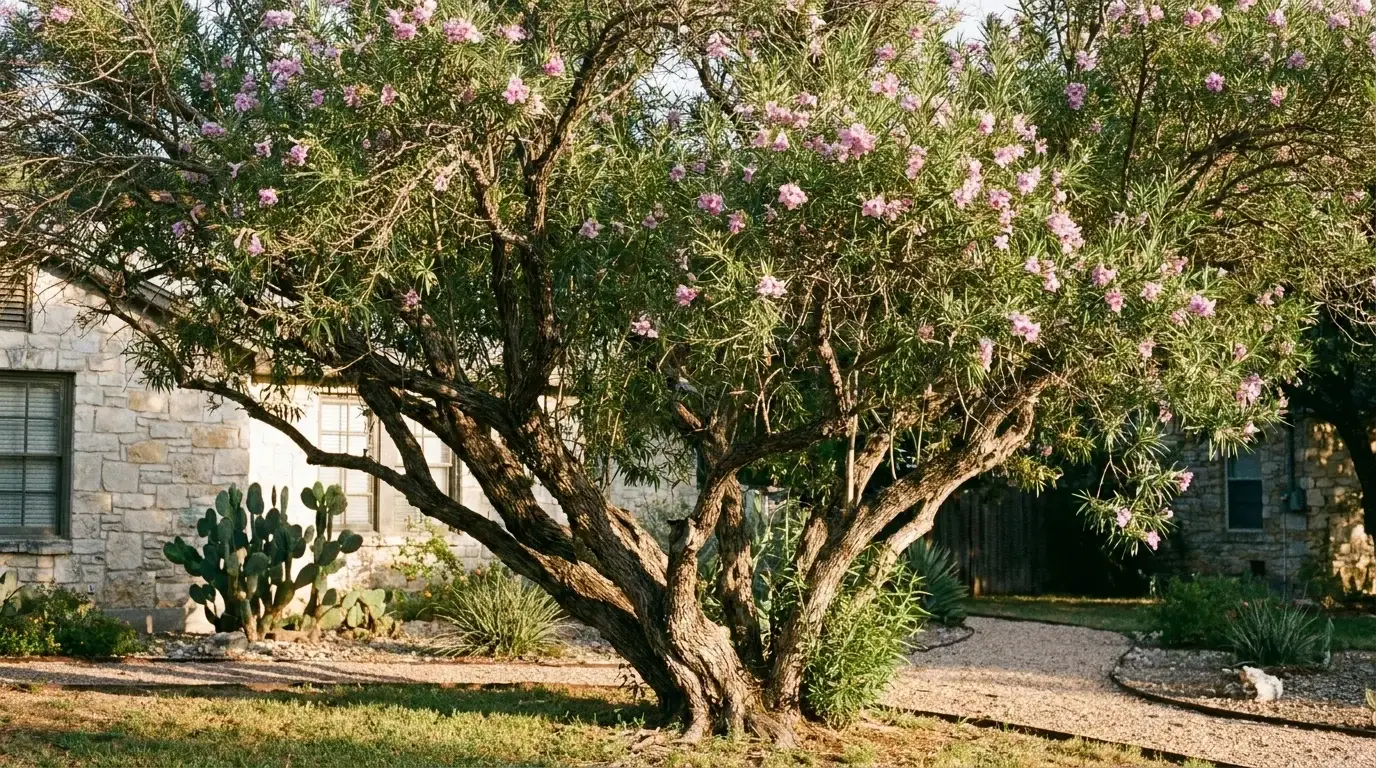
Desert Willow
15 to 25 ft tall. Extremely drought tolerant with showy pink and purple flowers from spring through fall. Non-invasive roots, safe near patios and driveways.
Water: Very low
Best for: Small yards, xeriscaping, under power lines

Mexican Plum
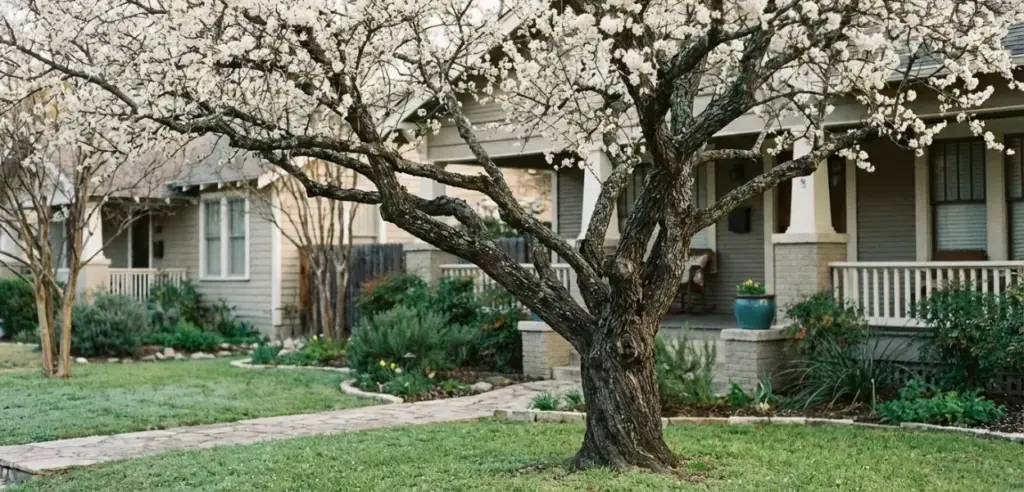
15 to 25 ft tall. Native ornamental with fragrant white spring blossoms and orange-yellow fall foliage. Non-invasive roots, safe near walkways and patios.
Water: Low
Best for: Front yards, near walkways, spring and fall color

Texas Redbud
15 to 25 ft tall. One of the best small shade trees for Central Texas with bright pink spring blooms. Handles both sun and shade. Non-invasive roots.
Water: Low to moderate
Best for: Shaded yards, small to mid-size lots, spring color

Eve’s Necklace
20 to 30 ft tall. Lesser-known native with elegant multi-trunk form, fragrant pink spring flowers, and distinctive black seed pods. Compact and graceful.
Water: Low to moderate
Best for: Courtyards, narrow spaces, ornamental accent
Not sure which one fits your space? Bring your yard measurements and site photos and we will narrow it down. Ask us about small tree availability.
Trees to Avoid in Small Yards
Just as important as knowing what to plant is knowing what not to plant. These are trees that we regularly see causing problems in small yards around San Antonio.
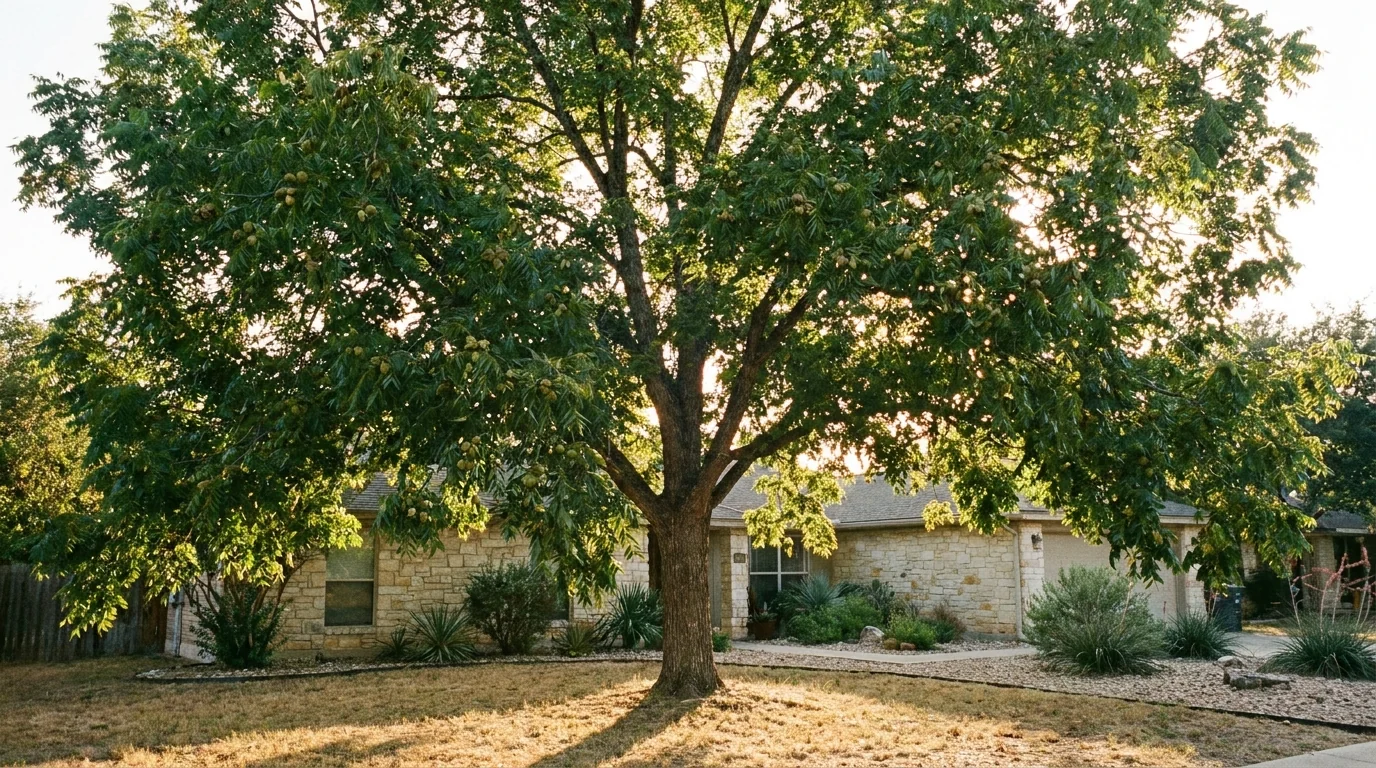 Avoid
Pecan
Grows 70 to 100 feet tall with an aggressive root system. It will outgrow any small yard within a decade and the roots will find every pipe and foundation in range.
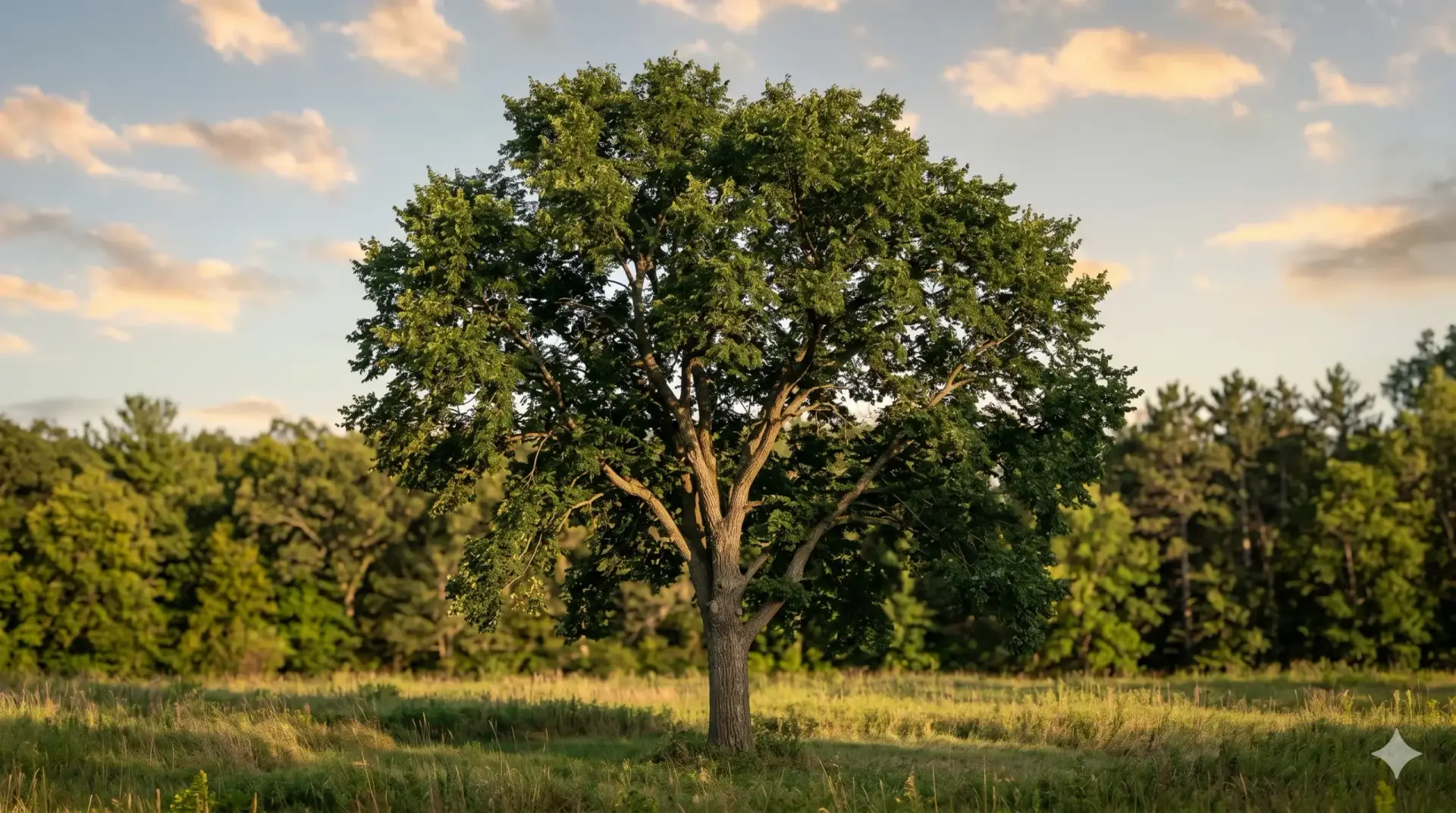 Avoid
Hackberry
Drops seeds and berries, stains hardscape, and sends out surface roots that lift sidewalks and driveways. In a small space near pavement it is a constant problem.
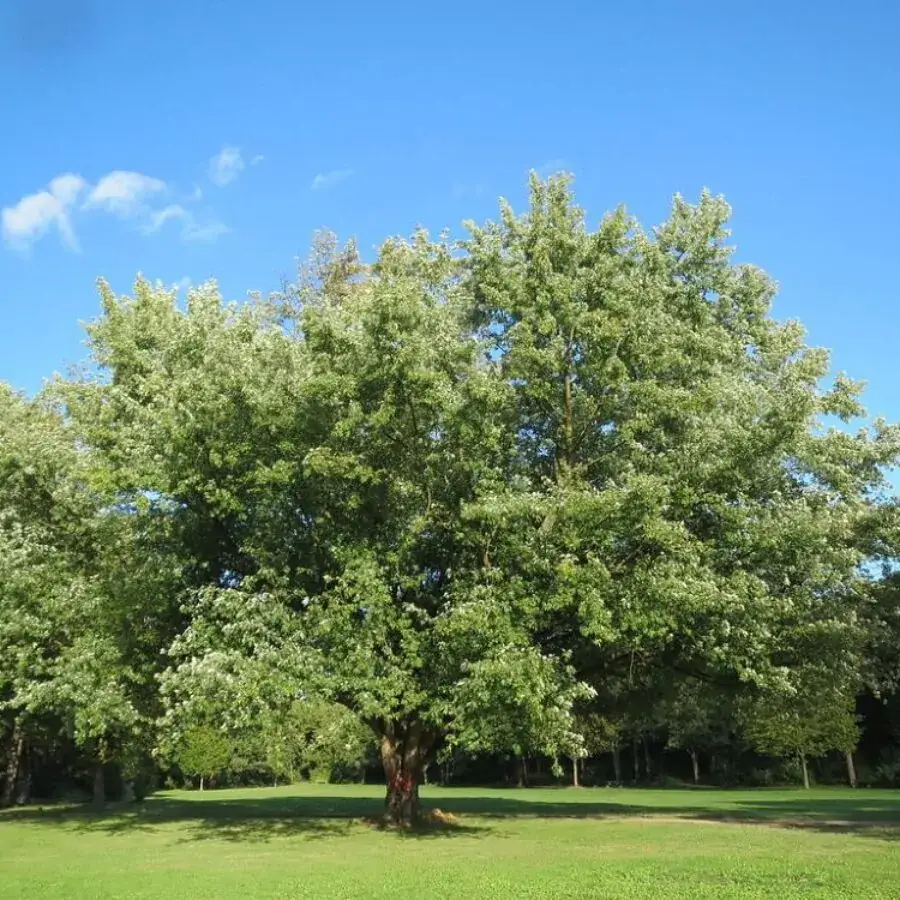 Avoid
Silver Maple
Fast growth comes with weak wood that breaks in storms and an aggressive surface root system that destroys hardscape. Not recommended for Central Texas.
 Avoid
Chinese Tallow
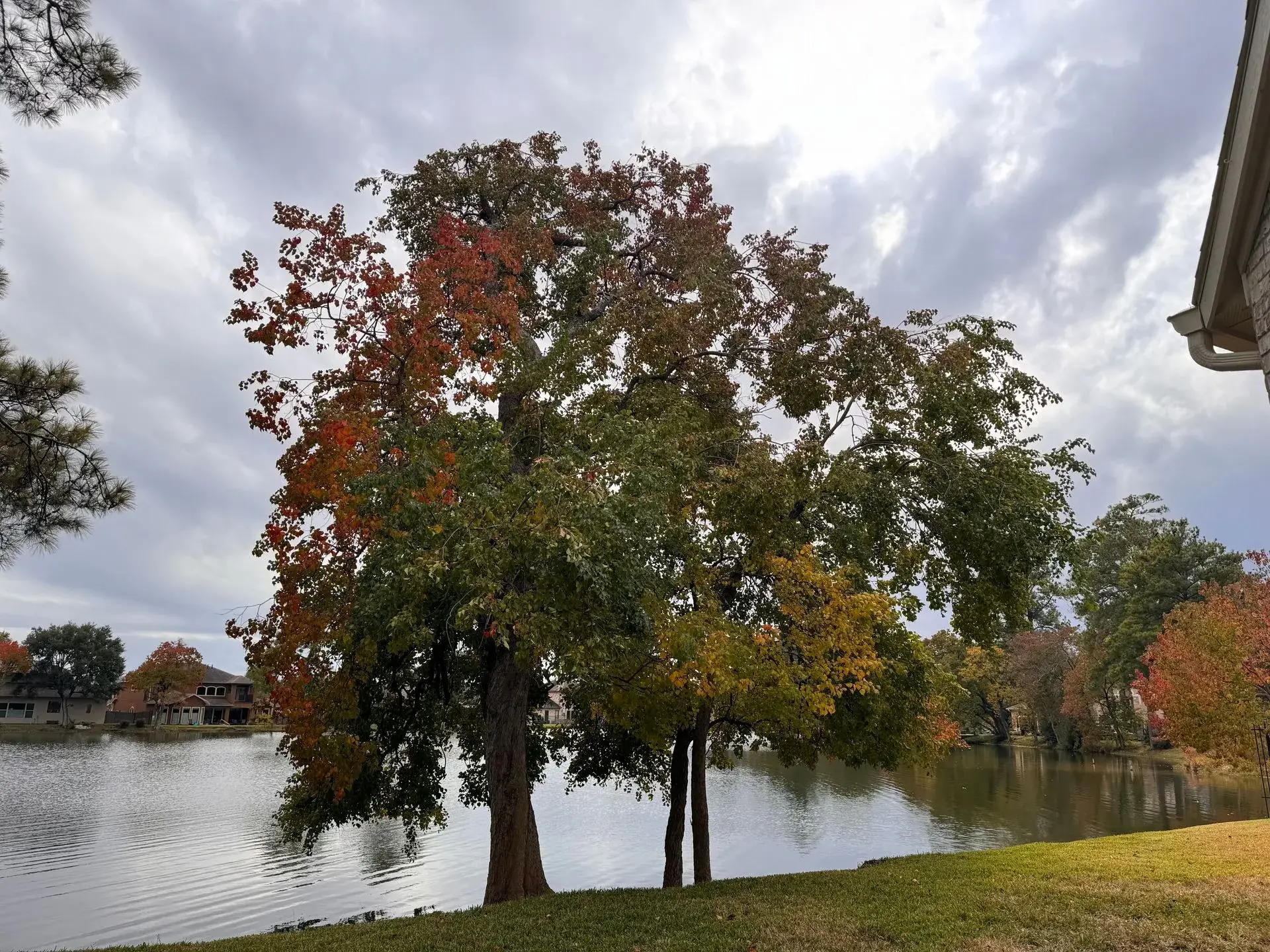
Invasive in Texas. It grows fast, spreads aggressively through seeds, and crowds out native species. It does not belong in the landscape.
Placement Rules of Thumb
Here are the spacing guidelines we walk through with every customer planting in a small yard.
At least 8 to 10 feet for trees with a mature canopy under 20 feet. At least 15 feet for anything wider.
At least 4 to 6 feet from the edge of the pavement for compact trees with non-invasive roots.
At least 3 to 5 feet so the canopy does not grow entirely into the neighbor’s side.
Choose species that stay under 25 feet tall. If you must plant near a line, go with 15 to 20 feet.
We Are Here to Help
At Alfaro Trees, we have been helping Central Texas homeowners choose the right tree for the right space for nearly 50 years. We know which trees stay compact, which ones have well-behaved roots, and which ones are going to cause problems ten years from now if they go in the wrong spot.
Bring us your yard measurements, your site photos, and your goals, and we will recommend up to three trees that fit. We will tell you the mature size, the spacing, and where exactly it should go in your yard. We deliver, place, and professionally plant every tree we sell, so it goes in the ground at the right depth and in the right position from day one.
Come see us in Atascosa, just south of San Antonio off Highway 35, give us a call at (210) 622-9875, or visit alfarotrees.com/contact. Ask us about trees that are safe for sidewalks, patios, and driveways. We will help you find the perfect fit.
FAQs
For small trees with a mature canopy spread under 20 feet, 8 to 10 feet from the foundation is a safe minimum. For anything larger, move out to 15 feet or more. The key is to account for where the canopy and roots will be at full maturity, not where they are at planting. Planting too close is one of the most common mistakes in small yards and one of the hardest to fix later.
Several trees commonly recommended for small yards in Central Texas have well-behaved root systems that are unlikely to damage sidewalks, driveways, or foundations. Desert Willow, Mexican Plum, Texas Redbud, and Eve’s Necklace are all strong choices available at Alfaro Trees. The trees to watch out for are fast-growing species like silver maple and hackberry, which send out aggressive surface roots that crack and lift hardscape.
Texas Redbud is one of the best options if shade is the primary goal and you want a tree that stays under 25 feet. It provides a rounded canopy, early spring blooms, and handles both full sun and partial shade. For something more compact, Mexican Plum offers lighter shade in a tighter footprint and adds spring blossoms and fall color.
Any tree that stays under 25 feet tall at maturity is generally safe to plant under or near power lines. Desert Willow, Mexican Plum, and Texas Redbud all fit within that range. Choosing a compact species eliminates the risk of utility pruning, which can permanently damage the shape and health of a tree.
Small trees generally range from 10 to 25 feet tall with a canopy spread of 10 to 20 feet wide. The exact numbers depend on the species, soil conditions, and how much room the tree has to grow. When planning for a small yard, canopy spread is often more important than height because width is what determines how much of your yard the tree will occupy. Always ask for the mature width before buying.