
(What to Know Before Fall in Central Texas)
If you have a mature tree in the wrong spot, you have probably asked yourself the same question most of our customers do: should I move it, or should I start fresh with a new one?
It is not always an easy call. A tree that has been in the ground for 10 or 15 years has real value. Years of growth, an established root system, and shade that you can not get overnight from something off a truck. But relocation is not always the right answer either. Sometimes a new, professionally planted specimen gets you where you want to be faster, healthier, and for less money.
At Alfaro Trees, we handle both. We relocate mature trees and we sell, deliver and plant new ones. That puts us in a good position to help you figure out which option actually makes sense for your property. Here is how we walk through that decision with our customers.
When Relocating Your Tree Makes More Sense
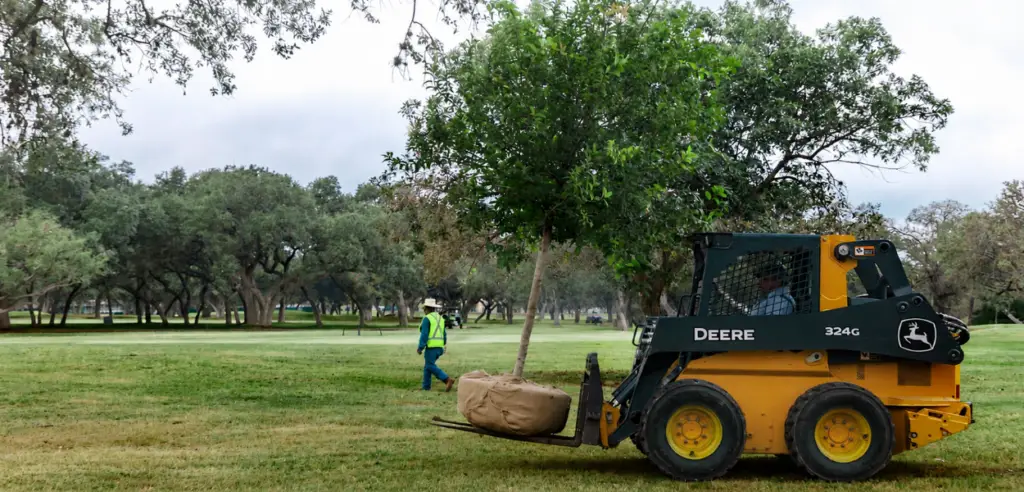
Tree relocation means physically moving an established tree, root ball and all, from one location to another. That could be across your yard or to a completely different property. It requires specialized equipment, experienced crews, and careful timing. Most nurseries and landscapers do not offer this service, which is why so many homeowners do not even know it is an option.
Relocation is usually the better choice in these situations.
1) The Tree Has Significant Size or Maturity
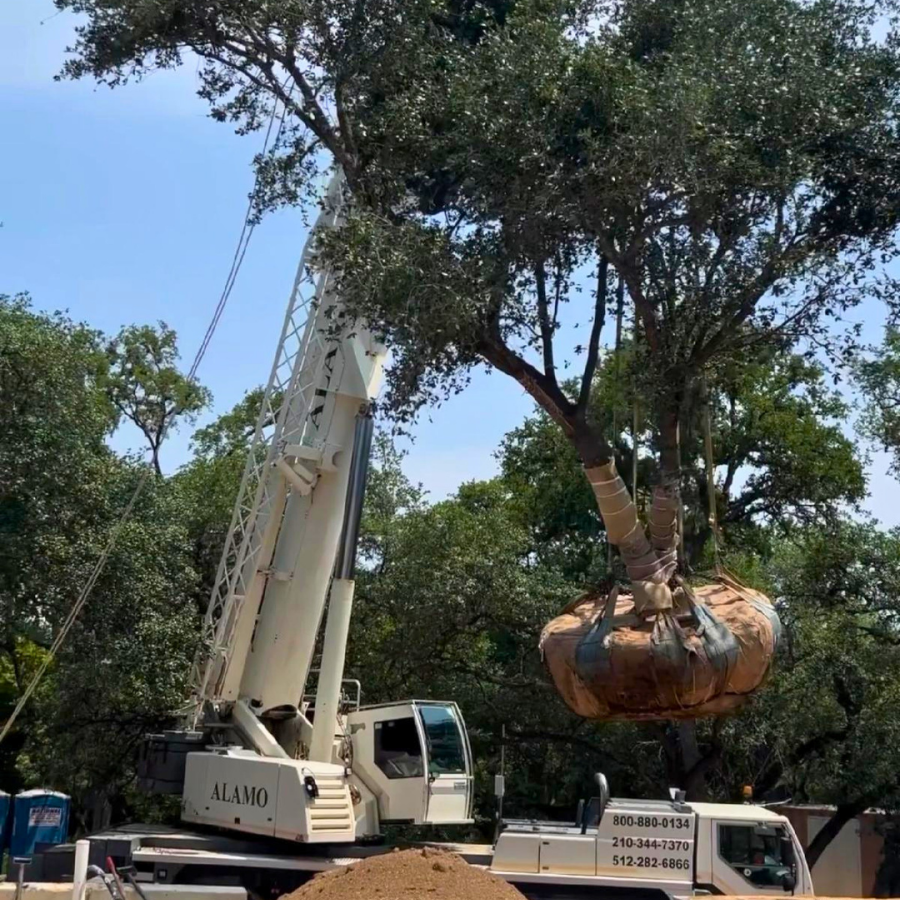
A 20-foot live oak with a 6-inch trunk diameter represents decades of growth. Replacing that with nursery stock means starting at a fraction of the canopy, even with a large container or balled-and-burlapped tree. If keeping that size and presence matters for shade, curb appeal, or property value, relocation preserves what time already built.
- Best for: Homeowners who want to keep existing shade and canopy
- Typical tree size: 4 to 12 inch trunk diameter
- Key benefit: Instant impact in the new location
2) The Tree Is Healthy but in the Wrong Spot
Construction projects, property redesigns, new pools, driveways, fence lines, and foundation work can all put a healthy tree directly in the way. Removing it and starting over wastes a perfectly good tree. Moving it 30 feet might be all it needs.
3) The Tree Has Sentimental or Historic Value
We have relocated trees that families planted when their kids were born, trees that were part of original homesteads, and trees that had anchored a property for generations. You can not replicate that with a new purchase. If the tree means something beyond its shade, relocation keeps that story alive.
When Replanting with New Stock Is the Smarter Move
Relocation is not always the answer. In several situations, buying and planting a new tree is the more practical, more cost-effective, and sometimes healthier choice.
The Tree Is Already Stressed or Declining
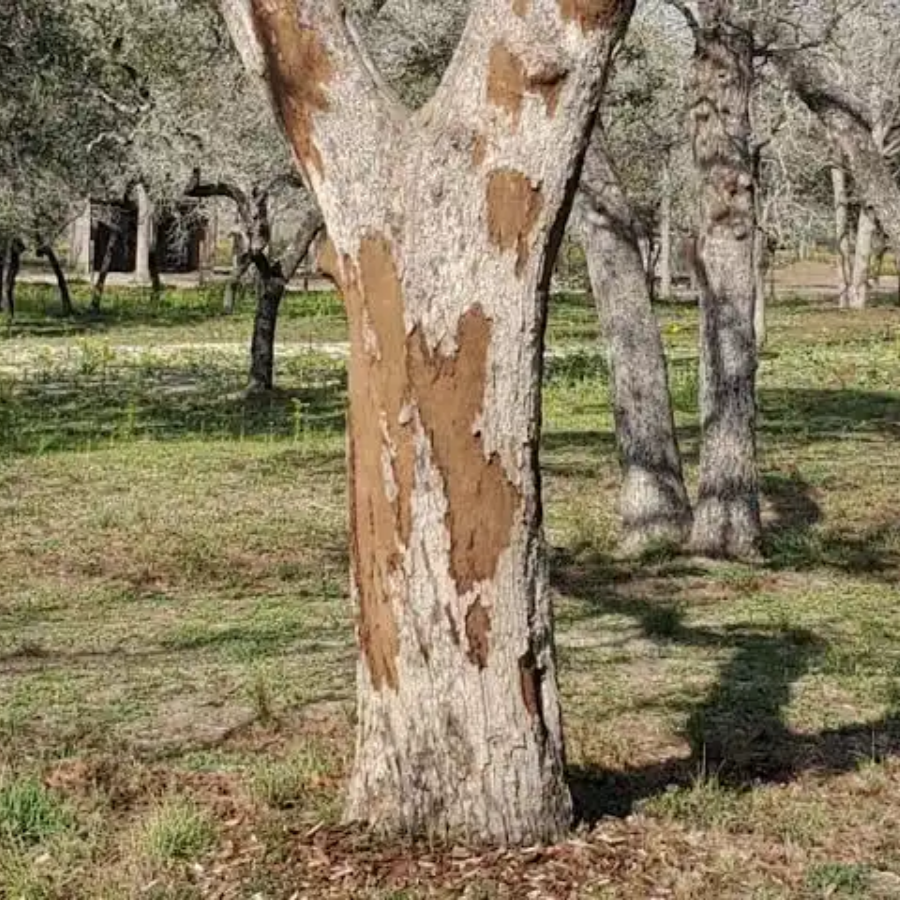
Moving a tree puts real stress on the root system, even under ideal conditions. If the tree is already dealing with oak wilt, hypoxylon canker, drought damage, or root issues, relocation adds trauma to an already compromised organism. A healthy new specimen planted correctly has better long-term survival odds.
The Root Zone Can Not Be Preserved
A successful relocation depends on getting an intact root ball out of the ground, proportional to the tree’s size. If the roots are tangled in utilities, foundation footings, or rock, or if the equipment can not get close enough, the root ball may not come out clean. That significantly drops survival rates.
The Tree Is Small Enough That a Replacement Matches It Quickly
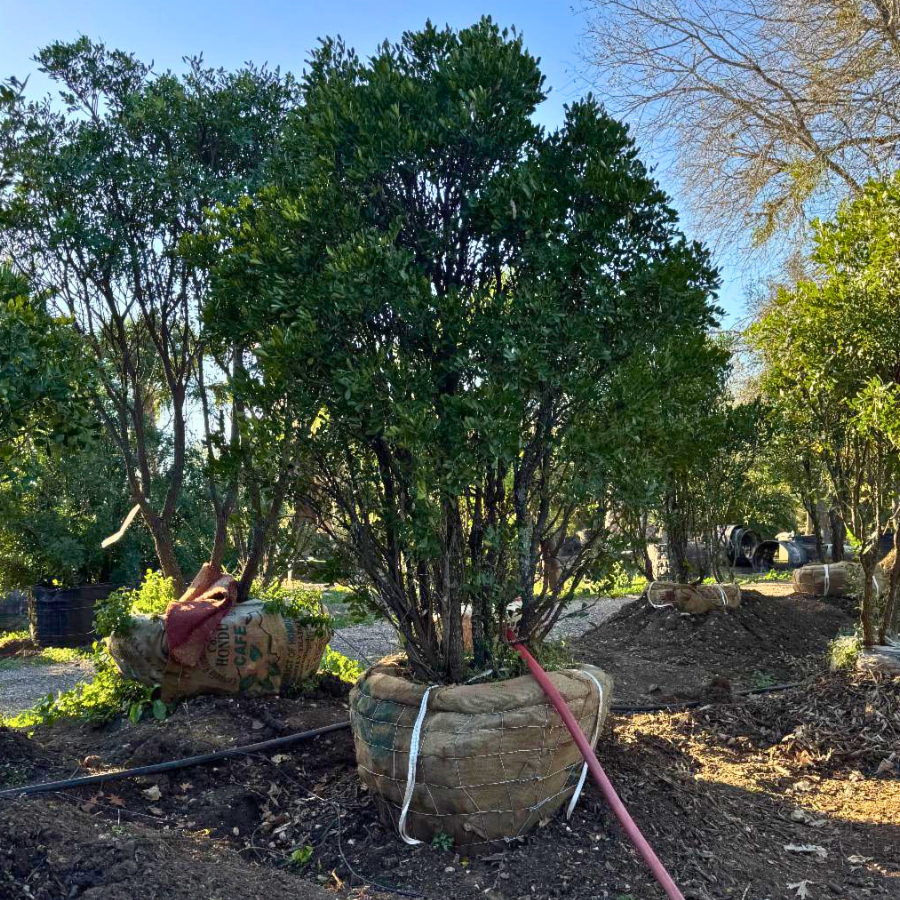
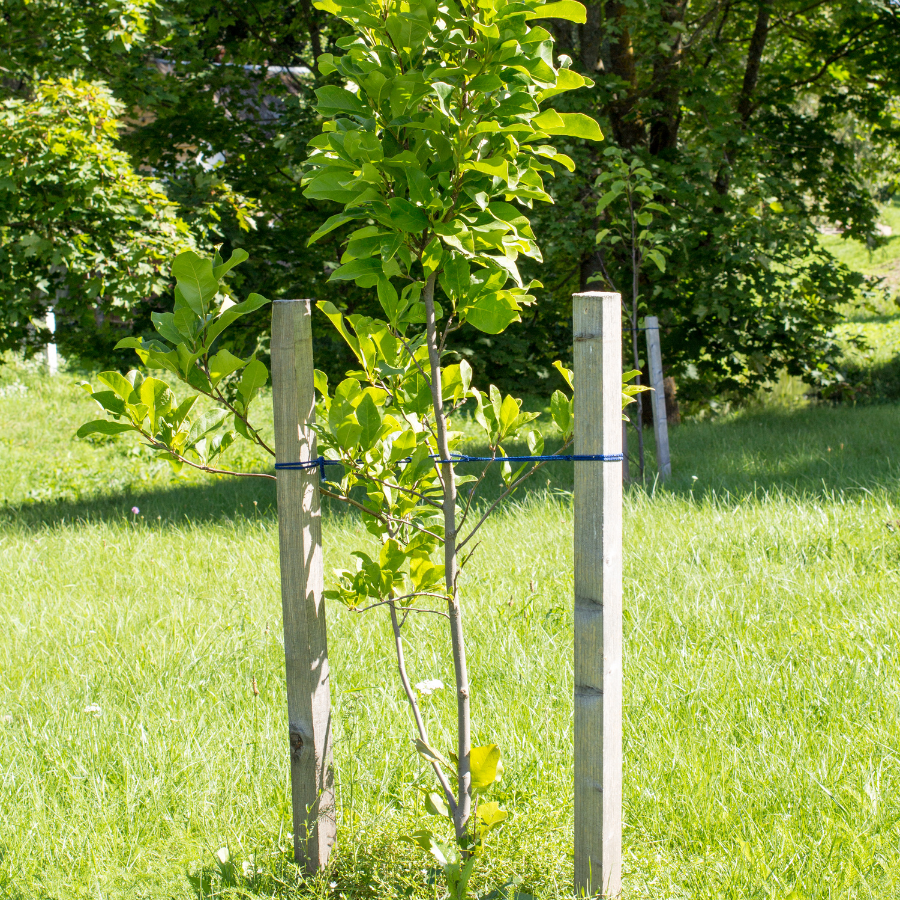
If we are talking about a 6-foot ornamental that has been in the ground for two years, the cost of relocating it may exceed the cost of buying a comparable or larger specimen and having it professionally planted. At that size, you are not losing decades of growth. You might actually gain size by going new.
Budget Is the Main Factor
Relocation requires specialized hydraulic equipment, larger crews, and more site preparation than a standard delivery and planting job. For the same investment, you could potentially get two or three new trees professionally planted instead of relocating one. If maximizing tree count or coverage matters more than preserving a single tree, new stock stretches the dollar further.
How to Decide: Five Factors We Walk Through with Every Customer
When someone asks us which direction to go, we look at five things before making a recommendation.
Species: Some Central Texas trees relocate exceptionally well. Live oaks are famously resilient, and cedar elms handle the move reliably. Others, like pecans with deep taproots, are far riskier to move once established. Sometimes the species alone settles the question.
Size and age: There is a practical window for relocation. Too small and the equipment cost is not worth it. Too large and the root ball becomes unmanageable or the survival risk climbs too high. Most residential relocations we handle fall in the 4 to 12 inch trunk diameter. Big enough to be worth saving, manageable enough to move safely.
Timing: In Central Texas, the best window for tree relocation is late fall through early spring. That means after the worst of the summer heat but before active spring growth kicks in. Relocating in July is significantly riskier because of heat stress on the tree, and it is not something we recommend. If your timeline forces a summer move, a new fall planting may be the smarter path.
Site conditions: We evaluate both the origin and the destination. Soil type, drainage, sun exposure, clearance for equipment access, overhead utilities, and irrigation availability all factor in. A perfect tree in an impossible access situation is not a good relocation candidate. If your yard has heavy clay soil, which is common across much of the San Antonio and Central Texas area, that affects how we approach the root ball and how we prepare the new planting site.
Honest survival expectations: We will always be straight with you. Relocation carries inherent risk. Even done perfectly, a moved tree goes through transplant shock and needs careful watering and monitoring through one to two full growing seasons. We stand behind our work with a warranty, but we will not recommend a move if we do not think the odds are in your favor. Sometimes the honest advice is to let us plant you something new instead.
Why Fall Is the Best Time to Make This Decision
If you have been going back and forth on this, fall is the window to act, whether you choose to relocate or replant.
For relocation, cooler soil temperatures reduce transplant shock. Fall rains help the root system get established before winter dormancy. And the tree gets an entire cool season to settle in before the next Central Texas summer arrives. Summers here regularly hit 100 degrees or higher, and a tree that has had six months to root in before that heat is in a much stronger position than one planted in April.
The same logic applies to new plantings. A tree planted in October has roughly six months of mild weather to establish before it faces July. Waiting until spring means planting into rising temperatures. Waiting until next fall means another full year without the shade, privacy, or curb appeal you have been wanting.
The second-best time to plant is right now, before the next summer arrives.
We Are Here to Help
At Alfaro Trees, we have been helping Central Texas homeowners find, plant, and relocate trees for nearly 50 years. Whether you need to move a mature tree to a better spot on your property or you are ready to start fresh with new stock, we can walk you through your options and give you an honest recommendation.
We are one of the only local companies with the equipment, crew, and hands-on experience to handle large-tree relocation, and we will always tell you when it makes sense and when it does not. We also sell, deliver and plant a wide selection of shade, ornamental, privacy, fruit, and palm trees suited to Central Texas and the greater San Antonio area.
Come see us in Atascosa, just south of San Antonio off Highway 35, give us a call at (210) 622-9875, or contact us at alfarotrees.com/contact. We love helping homeowners find the right tree for the right spot.
FAQs
It depends on the tree’s size, species, health, and your budget. Relocating preserves years of growth and gives you instant shade, but it costs more and carries transplant risk. A new professionally planted tree is often more cost-effective for smaller or stressed trees. At Alfaro Trees we handle both and can help you decide which option is the better fit for your property.
Tree relocation costs vary based on trunk size, distance, and site access. Most residential relocations in Central Texas involve trees in the 4 to 12 inch trunk diameter. The best way to get an accurate estimate is to contact us for a free on-site assessment so we can evaluate the tree, the access, and the destination.
Late fall through early spring is the ideal window. Cooler soil temperatures reduce transplant shock, and fall rains help the root system establish before summer heat returns. We can relocate trees during other seasons, but the risk is higher and the aftercare demands increase.
No. Some species handle relocation well. Live oaks and cedar elms are strong candidates in Central Texas. Others with deep taproots, like pecans, are much riskier to move once established. Tree health, root zone access, and equipment clearance also factor into whether relocation is a good option. We will always give you an honest assessment before recommending a move.